Showing posts with label writing. Show all posts

Monday, November 2, 2015

Bring out your WIP!

It's NaNoWriMo time again. I am rewriting a novel whose first draft I started in April's NaNoWriMo and finished sometime around Midsummer. While there were definitely elements in there I really liked, the plot ended up being kind of a mess, the characters being illogical, and the settings unsatisfying. So pretty much everything goes into the rewrite bin and NaNoWriMo is perfect to help with getting that done!

All this being said, here is the first page or so of my second seriously written novel, The Avatar Legacy.

---

The sight of the corpse told Miki Kim that it was time to leave home. Again.

Victoria Bleedwell wasn’t the first corpse Miki had seen, nor was she even the first corpse of a friend and crewmate. Victoria’s wasn’t even the worst she’d seen. But as she stepped fully into the chill of the medical bay currently housing Victoria’s body Miki promised herself that Victoria’s would be the last corpse she would ever see.

Victoria’s nanocolony swarmed over her body, visibly making the remainders of her clothes shift. They were looking for something to fix, just as their programming directed them to. There was nothing wrong with Victoria anymore. Beyond her being dead.

Miki cupped Victoria’s cheek.

“I’m sorry,” she said.

She half expected Victoria to grin and wink at her like she had so many times. When nothing happened, Miki took her hand away and squeezed it into a fist. No room for sentimentality. Not in this life, or this home.

She walked around the table, keeping her eyes off the body. She pushed a wall cabinet open and grabbed a habitat container. She turned to another cabinet and added some feed into the habitat before turning back to the body to coax the colony inside the habitat. They would need to be fed by something and Victoria was no longer producing new skin cells to create dead ones. Miki had once seen what a colony could do to a body when left to sit too long and she wasn’t eager to try that again.

The colony moved into the habitat in waves and soon Miki had to brace the container against the operation table to make sure she didn’t drop it. The colonies always weighed more than she expected them to.

Once no more visible waves were forthcoming, Miki took the container away and sealed it. It would automatically maintain a suitable environment to keep the colony relatively active while also lowering their mobility to the point that they wouldn’t burn out before they were applied to someone else.

Monday, October 5, 2015

Diving into process

I still haven't quite found a novel writing method that reliably works for me. I inevitably end up pulling apart huge chunks of my first drafts because they make no sense, structurally speaking. My characters do things that make no sense and apparently I'm unable to see that in the outline or while I'm writing. So I'm still tweaking.

I wrote the first draft of the novel I'm currently editing, The Avatar Legacy, using Cathy Yardley's Rock Your Writing method and while it's significantly better than what I had at the start of editing the novel I'm currently querying, Familiar Phantoms, I'm still going to have to rip out the entire middle of the book, which I'm frankly not too happy about. Which is not to say that it's the fault of the process at all. Regardless, for my revision outline, I'm trying out a different approach. Libbie Hawker's book Take Off Your Pants looks like an interesting take on story structure. It's largely based on John Truby's The Anatomy of Story, although Hawker presents her method in a much more approachable way.

Hawker describes her method as a three-legged stool. The three legs are character arc, theme,and pacing. Without any one of them the story will not stand, or it will be wibbly wobbly. The story's core has five elements; a character (1) who wants something (2), something that prevents them from getting what they want easily (3), leading them to struggle against that force (4) leading to either success or failure (5). That's the very basics of the method, but the book goes into more depth and is absolutely worth reading.

This is the third process I'm trying out for novel writing. Well, fourth, to be completely accurate, since I pantsed my way through the first two novels that I wrote that will never see the light of day, at least not as they are now. My first was the one covered in Rachel Aaron's 2k to 10k, parts of which I'll be likely to use pretty much always since they really help me focus in on what I want to say with the book I'm writing. I used Cathy's Rock Your Writing method to revise that book and write the next one, the one I'm now using Hawker's method to revise. I'm planning to use Hawker's method to write the next one (a project with no name about a fairy godmother temp agency).

What do I want off my noveling process? I want to be able to identify possible problems earlier. I want to be able to consistently and fairly easily create an outline that helps me get through the book faster. Part of this is most likely a matter of experience too, but anything that can help me get there faster is a-okay in my book. I keep getting these vague concepts that I can't figure out the actual story to and from what little I've seen from Hawker's method, I think it might get me closer to that than my previous ones. I doubt that this will end by being the last time I tweak my noveling process, but at least it's a step forward. The idea is to keep tweaking until I manage to find a process that consistently works for my needs. Take the things that work and discard the ones that don't.

What is your novel writing process? Are you happy with it? If not, what are you using to develop it further?

Monday, September 21, 2015

McGuffins and sexy lamps - Lessons from Mad Max: Fury Road part 3

Yes, I am still on about Mad Max: Fury Road! This time we're talking about ancillary characters. Before we really get started, let's define two concepts:

MacGuffin (a.k.a. McGuffin or maguffin) is a term for a motivating element in a story that is used to drive the plot. It serves no further purpose. It won't pop up again later, it won't explain the ending, it won't do anything except possibly distract you while you try to figure out its significance. In some cases, it won't even be shown. It is usually a mysterious package/artifact/superweapon that everyone in the story is chasing.

- Read more: http://tvtropes.org/pmwiki/pmwiki.php/Main/MacGuffin#ixzz3mLYYlk8Y
and:
If you can replace your female character with a sexy lamp and the story still basically works, maybe you need another draft.

- Kelly Sue Deconnick
Which means that it's time to talk about The Wives!


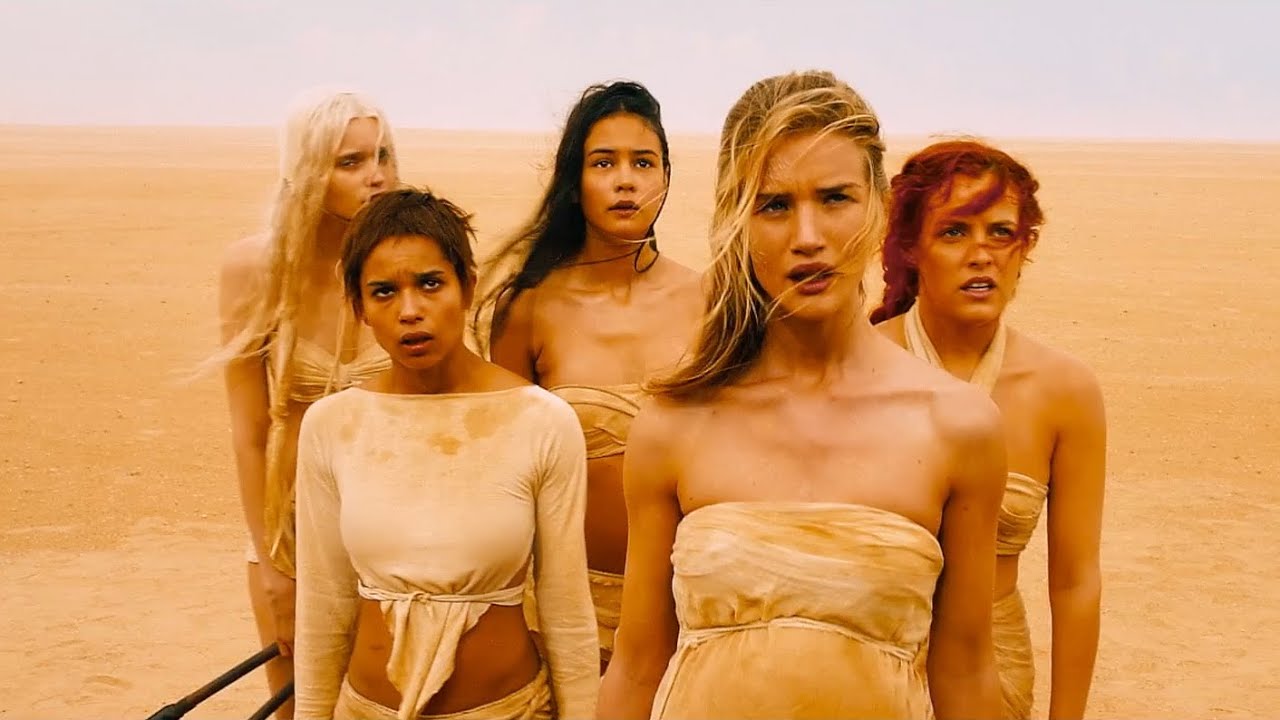
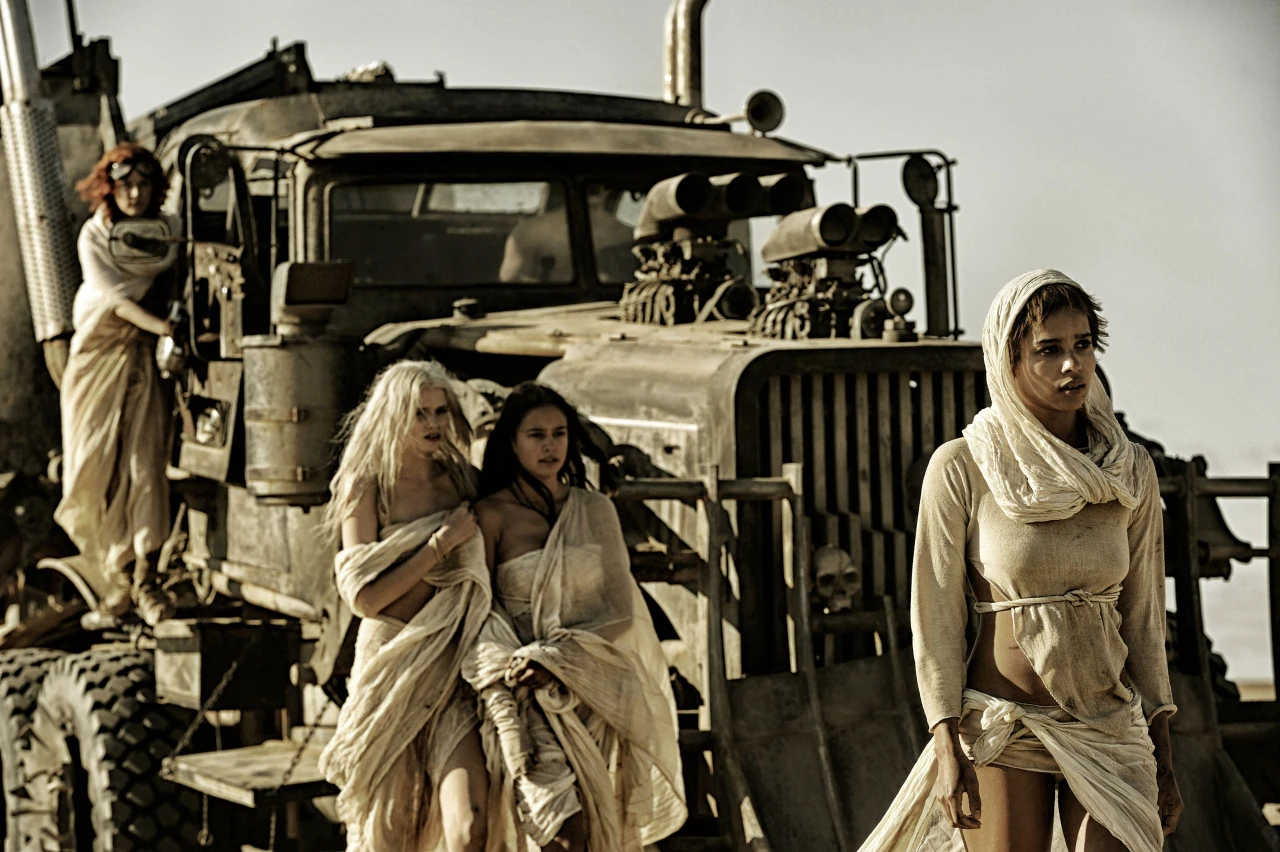
The Wives are a fairly traditional McGuffin. Everyone is after them. For Immortan Joe they're a precious commodity, for the Warboys they are a way vehicle into Immortan Joe's good graces and for Furiosa they're a way to hurt Joe in a way he'll remember being hurt. Many storytellers, I would go as far as to say most Hollywood storytellers, would be content at that. In other words they would be happy writing sexy lamps.

What makes Fury Road unique is that the Wives all have their own opinions, wants and needs. They effect the events of the story by their actions which are based on their own motivations. They use what little power they have to cause changes in the world around them.
So how can you do this in your own story? First of all

Know what your characters want

It always seems to come down to that, doesn't it? Have your characters want something and want it badly. Even if it is for their lives to remain the same, the kind of thing they're comfortable with. Everyone wants something and everyone considers themselves to be the main character in their own lives. On Fury Road the Wives want to live free, and they're willing to die for that.

Make them unique

Let's start with the notion that McGuffins are people too. On Fury Road, the Wives form one huge McGuffin with many limbs in terms of plot. But each of them has something they're good at, something the others don't have. Toast is good with guns, Capable is good at listening, Cheedo has an actual arc that goes from being afraid to being brave while The Dag is all about the future.


Give them agency

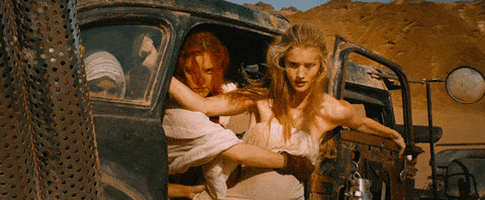
This is a seriously hard thing to do. Characters with agency cause disruptions. They make your neat and tidy plot into a rambling mess. They also breathe life into the story. They create conflict when what they want collides with what the main character wants. This can cause problems if you're not careful since the ancillary characters can easily take over the entire story. But that might also be a sign that your main character is not interesting enough. On the Fury Road the Wives' agency shows up in Cheedo distracting Rictus so she can help Furiosa, in Angharad's lean out of the cab to mess up Joe's shot, in Capable harboring Nux and many other small ways. They don't steal the show because Furiosa and Max are much more interesting than anyone else on the screen.

Homework

You knew this was coming too. Take whatever thing you're working on. Grab one of the peripheral characters you (meaning not the main character or the antagonist), preferably one that has some dialog lines. Grab whatever scene they're in and rewrite it from the point of view of that ancillary character.

Friday, July 3, 2015

writing IS living

By Deborah Moore

Being a writer can be terrifying. It’s scary to send off queries. Deadlines can feel ominous and cause panic*. There’s also that lingering lost feeling. That worry about not writing well enough, fast enough or often enough. Paradoxically, the idea of success is also enough to elicit anxiety. 

My computer, stretching out on the table soaking in some rays and enjoying the view. 


The idea of not writing eclipses them all. Whenever I feel lost and like giving up, I take a moment to consider the alternative. There is nothing quite as sobering as imagining my life without telling stories. A place where I ignore the ideas and characters in my head. 

The Edge - U2

To give up on writing would be like deciding to give up on air, food or the company of people. This isn’t an exaggeration either. I feel exhausted and bitter when I don’t take the time to let the stories in my head spill out onto the keys of my computer**. The weight of ignored ideas weighs me down mentally and physically. 

Conversely, when I sit down and write I return to the world as a happier person. I’m a better wife, mother, friend and all around person. 

Me looking happy, and not just a little bit crazy. 


That’s why I can’t think of writing as a hobby. I don’t make money eating, breathing or drinking water. No one is going to praise me for taking care of these basic needs. That doesn’t make them irrelevant. 

No one is going to say, “You’re wasting time with that eating hobby of yours again?”*** It would seem silly. I encourage you to defend your life force with the same intensity. Maybe you’ll make money or receive notoriety from it, maybe you won’t. If it truly is a deep passionate part of yourself, it won’t matter. It’s not about if I will make a living as a writer. Being a writer is living. 

I’d love to hear from you. What is your life force? How do you foster it? What’s your favorite flavor of ice cream?**** 

That last one was mostly there to see if you’re still paying attention. If not, I won’t blame you. As I said earlier, I tend to get…ooo look there’s a katydid on my window screen. 

*It has dead right in the word. It’s like the word diet and die. Some things warn you right away. 
**It can be messy, but ultimately it’s worth it. 
***Well, I’m sure there’s someone who would say that in the world.  There’s always that one person. You know who I’m talking about. 

****Mine is strawberry.

Saturday, June 13, 2015

A re-run, sounds in fiction

This month our topic is very interesting, we're planning to write about Broken Characters, a meaty subject for sure. Sadly, I've run out of time today and don't want to again fail to post (it's been a busy month already and I'm not quite halfway through!) so I thought I'd bring you an interesting re-run, partly because I'm still working on the novel I mention in this post from 2 years ago, sigh. ;)

I will work on my Broken Characters post for my next posting slot, two weeks from today - stay tuned!

Sounds and Other Sensory Details in Writing


Friday, April 10, 2015

Real Job

I am currently working on getting a certification to become a group fitness instructor. It's been consuming a large portion of my life.

Shooo-za! Bonus points if you know what I'm talking about. 


“What does this have to do with writing or reading?” the sceptical reader asks.
“I will get to that. Don’t worry it ties in.” I say. The sceptic rolls their eyes. 

As I was saying, I’ve been studying for this certification. I mentioned this fact to one of my friends at the gym a week ago. Connie* said that it sounded like a fun job, which I agreed with. I also told her how much I appreciated the flexible hours. Then she said that it was something she thought about doing a few years ago, but she is a full-time nurse. 

“I might do that if I didn’t have a real job already,” she said and walked off. I think Connie said goodbye, but honestly I can’t remember. Instead I was amused by her wording. I wasn’t offended by her calling my future career a fake job. I’m a stay at home mom who loves to write. I’m pretty used to that mentality. It just struck me as funny.

What is it that makes someone think of a job as real? Does the American Society only value work that involves a steady paycheck? I’m not sure if this translates to other countries. I’ve traveled to several countries, but I’ve never been lucky enough to spend enough time to fully absorb the perspective of a ‘real’ job.

Did you know that the celebrity, Tim Gunn didn’t get paid for the first two seasons that he worked on Project Runway? He wasn’t well off or anything like that. In fact he was struggling financially, but believed in the show so much that he was willing to work without pay at first until their budget grew. Does that mean that he didn’t have a real job there for those two years because he wasn’t paid? I certainly don’t think so. 

When work, jobs and careers get too tied up in money it stifles so many options out there. If you’re a writer how often have you heard someone make a remark belittling what you do? Perhaps they referred to your passion as ‘just’ a hobby. When you sat down to write did someone interrupt and demand your time because you’re ‘just’ writing.** 

“See I told you that there was a tie-in” I say.
“Took you long enough,” the reader says. 
Me typing or at least attempting to while taking the picture with my other hand. 

I’ve had plenty of people tell me that I will never make it. Some of these comments started when I was in third grade and mentioned that I wanted to be a writer. It is something that I will probably hear all of my life. There are always people who thrust their unsolicited advice. 

Brilliant idea, perhaps we should all make t-shirts that say, “No solicitors. Opinions only by request.” How snarky would that be? Chances are someone’s already made something similar. After all there’s a t-shirt for everything, but I digress.  

In the end the amount of naysayers or people who don’t get it, doesn’t matter. The fact is that anyone can tell someone what they are doing is hopeless, a lost cause or waste of time. It’s incredibly easy to do. 

What does matter is what you believe. Other people might call your writing a hobby. That is their prerogative. What you shouldn’t let them say is that you didn’t write. That you didn’t sit down and let the words flow from your fingers onto the page. 

I won’t stop studying to be a group fitness instructor because someone might not think it’s a real job. At the same time I won’t consider the time I write as a waist even if the project I finish isn’t accepted for publication. To me writing isn’t about social validation. Don’t get me wrong, it’s nice to be noticed and appreciated. The real fact though is that fitness and writing are part of my core identity. The idea of not writing, no matter how futile it can feel at times, would be like asking me to stop eating. After all I don’t get paid for that either. 

The truth is that a lot of life is about perception and cheering yourself on. You don’t have to shout that you are a writer and should be taken seriously. Instead you can quietly create people and worlds with the power of your mind.


*Name protected, because it’s the decent thing to do.


**As a side note I hate the word ‘just’ and try to keep it out of my families vocabulary as much as possible.

Saturday, April 4, 2015

From Polished to Published - Karen

There is still a lot of mystery in the writing field about how we writers go from a finished work (when is it finished??!) to something tangible in the world, a piece of writing that others can read, maybe even others beyond just our family and friends who we force into reading our work.

Let's talk about a few aspects of that process.

My self-published novel, Convergence, available online everywhere!


First, the finished work. When is a project finished? This one is funny. As a writer who is constantly evolving, whose interests change over time, and whose skills are (hopefully!) improving over time, looking at a piece of my writing almost always creates in me a desire to change it. I can tweak until the cows come home, quite literally. Seeing as how I don't live on a farm, this could be forever.

So I have to create an arbitrary deadline for myself to get out of the "constantly editing" cycle of doom. Sometimes it's a pledge to submit to a certain market (the Writer's of the Future contest is helpful for it's quarterly deadlines.) Sometimes it's a plan to complete a piece during a specific time interval - e.g., this week when I have few outside commitments. Sometimes the deadline is completely self-imposed by a desire to get a piece self-published. And sometimes other criteria enter the equation such as waiting on critiques or a cover from a cover designer.

Having a deadline of some sort, though, is essential to me getting anything finished. Without a deadline, my projects lie forever in a 3/4 done state. Literally I have 6 novels in that state, I might have a problem.

For me with my current goals, once a piece is finished, I have to decide if I'm going to pursue a traditional publishing route with it, or if I will indie publish it myself. I am still on the fence about this, there are so many moving parts to the publishing world and I continue to hear stories from friends with crap deals coming out of traditional publishing, I tend to teeter over to the indie side more often than not, but I remain open to the possibility of a traditional publishing deal. Best not to burn bridges.

Since I don't have a current traditional publishing deal, though, let's talk about what indie publishing entails. This isn't meant to be an exhaustive list, but rather an overview for those who might be considering this route. I'm sure I'll accidentally omit a few steps (see, even blog posts are never finished!) so please add them in the comments.


  1. Finish your piece! See aforementioned need to have an arbitrary deadline as my secret to getting something finished. 
  2. Create accounts on the sites that permit self publishing. I have author accounts on amazon.com, bn.com, smashwords.com, and have a need to create ones on kobo.com and apple. To create accounts most require some level of personal information because selling books means income in the US - consider whether you might want a separate business banking account and if you need to get a P.O. box for professional writing correspondence. Now would be a good time to set those things up. 
  3. Edit your work with an eye toward final polish. This may mean hiring an editor, or asking several detail-oriented (anal-retentive!) friends to read through with a fine-toothed comb. Reading your work aloud can help you identify last lingering typos, too. While you can upload revised versions of your manuscript later if you find issues, most readers are easily frustrated by simple mistakes particularly early in the book. Don't frustrate your readers, spend time on this step!
  4. Choose a cover for your work. There are many great cover designers who create stock covers that are reasonably priced and have quick turnaround. (I recommend The Cover Counts and Mallory Rock. There are also groups of designers like Cover Art Collective.)  If a stock cover isn't for you, get on a cover designer's schedule 4-6 weeks in advance of when you hope to put your book out (popular cover designers may have even longer design schedules, contact them early in your process!) Sometimes a cover may be one of the arbitrary deadlines that helps you move your writing to completion, don't forget this step early in your process. 
  5. Format your project for your desired platform. Formatting can seem like an insurmountable task. I recommend a writing program like Scrivener to help simplify the process. Scrivener lets you save your project (compile it) into all the different formats (.mobi for amazon, .epub for everywhere else) that ebook publishers require. The basic process you will need to follow is to compile your project into the proper format, upload it onto your author account on that platform, then preview the work to see if it looks right (all the sites have some sort of viewer for this, or you can load your formatted project onto an e-reader to check yourself.) Other writer friends use In Design, but I find I can do what I need to within Scrivener 99% of the time. 
  6. If you are doing a print-on-demand version, work on that formatting via Create Space (I recommend downloading the template for the cut size you plan to print at. I do not have a ton of experience with this yet, so I welcome input for what other tools people use to format POD books.) 
  7. Press done! Wait 24-48 hrs for your project to go through final approvals on the publishing sites. Then tell *everyone* about your available work (but don't spam us. Once a day for a few days and then once a week or less after that.) 

Saturday, February 21, 2015

Karen's Secret Weapons

We're writing in February about Secret Weapons in writing. Shh. They're Seeeeeecrit. Actually, not really. Here's some of my fellow Prosers' posts about their secret weapons in writing:


(yes, in case you were wondering, Melanie and I do have a complex about the fact that our names don't end in an "a.")

I have to admit, I'm suffering from Where-I-Am-Right-Now tunnel vision, something that often afflicts writers, I think. I also suffer from it in reading, wherein the *last book I read* is my favorite book and the one I recommend to everyone. Unless we're talking Code Name Verity, in which case I might strap you down and use a Clockwork Orange-style device to keep your eyeballs on the page. Theoretically. Because it's that good.

But ANYWAY - where I am right now as a writer is knee-deep in revisions on my novel, ABNORMALS, which I haven't written the blurb for but is basically about teens with superpowers.

I have a few things I do to make revisions easier, since I really truly hate editing with a burning fiery passion. I thought I'd share them as secret weapons, because they're part of how I motivate myself to do the editing.


First, I edit on dead-tree paper. I do! I'm a tree-hugger environmentalist most of the time, but for my primary editing runs on novels I print the buggers out.

Next, I put the dead-tree paper into a binder. Cool binders are helpful, as I look nifty carrying around this read faux leather number, don't you think? (Sidenote: Office Depot or Max, I don't remember which, and it was only about $7-8! And reusable for the next novel!)

Third, LOTS of red pens. Lotsa. That's a word my kids invented when they were small, and we still use it even though they've long since learned proper diction. It conveys *so much.* How many M&Ms do you want? Lotsa. How many kids were on the bus? Lotsa. How many times should we ride the Harry Potter ride at Universal? Lotsa. See? Very useful word. I use lotsa red pens because it enables me to get the feel I want. One funny thing about working in paper is I can be fussy about the pen, the paper, etc. in a way you just can't be with typing. It's a great way to waste more time! And money if you're as addicted to office-supply shops as I am.


Speaking of paper - I really like grid paper or graph paper. I'm a visual-spatial person (do you know about visual-spatial learners? If not please go check out Linda Silverman's site and see her info about us weird folk) and found long ago that grid paper helps me orient myself on the right/left (east/west) axis of my page the way horizontal lines orient you on the top/bottom (north/south.) I feel better when I write on grid paper, so I have sought out good grid paper for years. This pad happens to be a Levenger (note, price is for a pack of 5. Still ridiculously expensive. I think I received these as a gift…) brand pad, they definitely make the best paper out there but it's the spendiest.

And so, there it is, my super secret writing weapons, a bunch of analog world items that help me survive the editing phase. To be honest, I do the same thing with planning/outlining (dead-tree planning) but without the red colored pens, I use black or blue or ticonderoga #2 pencils (black barrel/eraser preferred. I'm very fussy!) and some really nice paper or a new notebook. I love the smell of a new notebook, and the fresh feeling of possibility I get when opening a new one. Ah, if only that would actually write the words, eh?

What are your favorite meat-world writing tools?

Monday, February 9, 2015

Find your tribe part 2: Writing groups

February is secret weapons month here at The Prosers. At first I was going to write about weapons development for fiction because I'd revealed all of my secret weapons, hadn't I? But then I realized that no one had written about writing groups on the blog before, including me. So I'm going to raise the hem again and show you the last little bit.

Why groups?

If you want to develop as a writer it's not enough to just write until your fingers bleed. You must strive to do better with each story. But Nina, you say, how do I know what I need to work on? Well this is where other people come in. Preferably other people who also read a lot in your genre. And while your family and friends may be a source of great joy they most likely won't be able to give you the sort of hard feedback you need. A good group will have writers at around the same level of proficiency with slight variance. That way everyone can benefit from each other and really know what the others are going through craft and career wise.


Groups can also form around a similar agenda. Right now I'm in two writing groups; one that meets twice a week to chat and write and another that formed around the idea that all of us have novels that we want to workshop. Since one of my goals in writing and in life is to win the Writers of the Future competition and this will hopefully be my final year of eligibility, I'm looking to start a third group with people trying to accomplish the same goal. A group can console you when you're down, celebrate your victories with you as well as spur you on to greater achievements.

All writing groups were not created equal

Not all writing groups will work for all people. If you need the critique you get to be mostly encouraging and you end up in a group that is all about the straight talk with zero pussyfooting, you'll end up miserable and vice versa. If your group consists of literary types and you're all about the purple unicorns? Back away slowly. You love urban fantasy and your group is filled with people who vehemently dislike the first person POV. Not your implementation of it, just the very concept of someone writing in a first person point of view? That is probably not the group for you. The same goes the other way of course. A gorup of YA and urban fantasy writers is probably not the place for you if you consider the very idea of first person to be unprofessional.

All of this is basically to say that if you've tried being in a group before and found the experience frustrating, it may just be a factor of you being in the wrong group. So try, try again.

How can I get one?

So right now, I'm in two writing groups both of them a direct result of having taken Mary Robinette Kowal's class Writing on the Fast Track. I was in the class my friend Andy has dubbed "the human trials" which is to say the second time Mary ran the class. The first class had formed a writing group and kindly took us under their wings. The second happened after Mary thought to bring all her alumni to one Facebook group. 

You can find writing groups on social media, bars, coffeeshops, colleges, libraries. Pretty much anywhere that writers congregate. Or you can form one of your own! Anything can happen. Go into the light.

Saturday, January 10, 2015

Karen's Writing Goals: 2015 version

For whatever reason, I'm dreading this post. I'm having trouble staying motivated as a writer. It's been a hard slog the last few years and writing down what I want to do is sometimes demoralizing, if I compare it to the list of things I wanted to do last year and realize it's 50% the same, for example.

But I've also made a pretty good run of doing New Year's Resolutions related to writing (it was a NY Resolution that initially got me into writing, in 2007.) So time for a new batch. What's on your list of things to do for 2015? Any places where we can overlap or share resources?
Photo credit: Flikr user: Dafne Cholet
https://www.flickr.com/photos/dafnecholet/

Straight out writing goals:

  • Finish Jak the AI killer short story, send to F&SF via CC Findlay's e-submissions
  • Finish Guide Me Through the Deep Space Night, 2014's nano project and the sequel to a prior Nano project, A Star to Lead Me (which is actually complete!) These books are very fun space-set SF and in Guide Me I've introduced aliens for the first time (even though I write a lot of SF, I have avoided aliens because so much of their treatment in SF is cliche. Let's hope I can avoid the traps.) 
  • Finish False Magic (another unfinished Nano project.) This is my only fantasy novel and has a really interesting magic system and I'm very excited about it. At World Fantasy Con 2014 I had a conversation with a researcher/lecturer in warfare and I got several ideas for how to manage the final conflict in this one. The book is 90% done, I stopped right before the final conflict. My thinking at the time was something like, "Oh, I know what will happen now. Plus this is such an exciting spot. No WAY I won't get right back to this project." Um. er. (this was my 2012 Nano project, I believe…) 
  • Finish Abnormals. What, another Nano project that isn't quite complete? How *strange*! This is my superhero story from 2013. A writer/artist friend has a great piece of art that I was planning to license to use as a cover, so the motivation here would be to finish this book and then publish it myself. 
  • One more pass on Adrift. This is the only novel I wrote at a time OTHER than National Novel Writing Month aka Nano. I wrote it one summer a couple of years ago. It's a middle grade SF novel and takes place in the same "universe" as my other space-set SF novels (Convergence, A Star to Lead Me, Guide Me, etc.) It's a cute story, it's finished but I keep going back to it because I know it could be stronger than it is. I have shopped this around traditional publishing and received some encouraging rejects, but rejects all the same. I'm not sure what I hope to achieve with another pass on this, but I'm midway through it so I might as well complete the pass. Afterwards I need to decide if I want to try submitting it again or if I should just publish it myself. My awesome cover designer has a cover about 80% of the way finished for it that I *adore.* 

Whew. I'm exhausted already. ;) Each of these projects alone isn't a huge amount of work. They need 5,000-10,000 new words, but I will have to re-read the books to get to where I'm ready to write the new words. While I'm re-reading I might as well do my first pass mark-up edit (I edit on paper, so this is an amusing phase where I carry a binder around with me everywhere for a month or two, mostly not reading the novel but just carrying it with me like a boat anchor. The ways we torture ourselves as writers are many and sundry.) 

In addition to all those goals, which I'm having difficulty sorting into an appropriate order of which comes first, I also need/want to be doing more to sharpen my writing and keep myself in a creative mindset. 

To that end, some "sharpen the saw" (if you don't know about Steven Covey's 7 Habits stuff, go check it out at the link. Hugely supportive and positive life coachy stuff from way before there were people whose job titles were Life Coach.) goals and activities for 2015:
  • Maintain my involvement in my online writing group. Get back into the saddle w/my in person writing group (I've missed our meetings for several months due to incredibly bad overlaps in schedule. February I should be able to get back into these twice monthly meetings.)
  • At least one writing-related thing each day. Options include:
    • New words
    • New story ideas (sketched out roughly)
    • Reading about writing (I have several very good books about writing that I should be reading and am not…like for instance:)
    • Listening to podcasts about writing
    • Watching videos of writing (particularly the Write About Dragons stuff of Sanderson's. He seems to have outlining down to a science and that's my kryptonite, so I'd like to get through more of this material and see what I can pull into my own process.) 
    • Journaling, with some eye toward documenting progress on writing goals or other meta-writing
  • Another writing class, probably a virtual class. I don't anticipate traveling for writing workshops or conferences this year but that may change as the second half of the year takes shape. I'm most strongly considering a Dave Farland class, but there are many others. If I were to go to an in-person workshop, I'd probably consider the Superstars Writing Seminars first. The Writing Excuses cruise sounds great, but I can't take that much time away from my family. 

Saturday, November 15, 2014

Work in Progress - Karen

Oy, have you missed me? I've missed me, have you seen my October and first half of November? Shoot. Me neither. Nor has my nanowrimo project seen me…I'm a few…thousand words behind, alas.

But have no fear, I'm here now, and I have WORDS to SHARE!

And what a week in which to share them! This week, humans have landed a SPACE SHIP on a COMET! Are we awesome or what? I love it when I'm writing science fiction and the scientists go off and make science fact. Best part of this job. The Philae is now sleeping, as it unfortunately bounce-landed into a spot that makes it difficult to charge its batteries, but I predict this isn't the last we'll hear of the little lander, nor its orbiter, Rosetta. Cool stuff.

I'm working on a sequel to my 2009 Nanowrimo project ('09 project is called A Star to Lead Me.) This year's project is called Guide Me Through the Deepspace Night. (Ridiculous side note: This is a trilogy, the three titles make a haiku. I'm a word nerd. I changed the title of this project this month and had to keep it 7 syllables. You'd be surprised at how many 6 and 8 syllable book titles you can come up with when trying to find a 7 syllable one.)

I'm slow this November because I've been overtaken by events (World Fantasy 14 in D.C. last weekend, the kids' school's book fair all last week. Lots of books to sell! Always interesting to be a bookseller for a week and see what people are interested in, what they buy.)

And now I'm trying to get back into the habit. Funny how difficult it can be to get into a writing habit when you're not in a daily routine. I have talked before about how I'm a burst writer versus a daily writer, something that's a little different than what you'll hear many writers spout as the One True Thing About Being A Writer (the whole "write every day" business) -- but yet there is some wisdom to that thing!

I'm really quite certain most of Guide Me is pretty terrible at the moment, but here's a bit from the story as-is. Quick plot recap/summary: Brynne is on a colony spaceship headed for the Gliese 876 system with 6000 of her close personal friends (not.) When her ship enters the solar system orbiting the Gliese star, all the adults and anyone thirteen and over on the spaceship falls into a mysterious sleep. Brynne and the other kids have to figure out how to operate the ship and keep chaos from descending, oh and while they're at it they should probably figure out what that unknown energy signature making a beeline for them is. Aliens? Brynne's going to have to figure it out and soon - her thirteenth birthday is in a couple of days!

In this scene, Brynne has been talking to Hunter and Sampriti, two friends who are spearheading the work on the ship's navigation systems:

“And a pilot?” Brynne asked. 
“Yeah, we’ve got … where is she?” Sampriti said, looking around the room, her eyes finally resting on the girl laying on her back on the table. “Oh, there she is. Halley. Named after a comet and now she’s going to have a chance to pilot us out of this mess. She’ll work the engine burn. We’ve run,” she sent a wry look in Hunter’s direction, “dozens of scenarios and her reflexes are fastest and she’s got most of the equations in her head already.”
Brynne looked back at the girl, still gazing at the ceiling. Upon reflection, Brynne realized that perhaps rather than staring at the shadows of her fingers, perhaps the girl was drawing ship trajectories in the air. But she looked so young. Before she could vocalize the thought, though, Brynne squashed it. The girl doubtless was young, as were all of them. Age ceased to matter when the stakes were life or death. Either burn the ship’s engines in the right manner and sequence to change the Selenium’s trajectory, or meet certain doom in the debris field or planet atmo of the gas giant they were current pointed at. 


Saturday, October 4, 2014

Staying Fresh as a Writer

We’re working on monthly themes on The Prosers, and for October we’re talking about Writerly Education, or as I've titled it, Staying Fresh as a Writer.

For your visual enjoyment, here is a photo of fresh tomatoes, mozzarella, and basil. Nom nom.


I’ve covered this topic in two ways before – once discussing writing workshops, and another time talking about getting unstuck/addressingwriter’s block.

Today I’ll take a different approach. One of the ways I’m trying to keep my overall writing skills fresh is by tackling non-fiction writing in addition to the fiction projects I have going.

Non-fiction writing is a different beast entirely, but I find a lot about what draws me to fiction, the process of unfolding a story, the beginning, middle, endness, etc. is applicable to non-fiction writing. I think my fiction experience makes me a better writer of all kinds of words, fiction or not. Ask yourself how many times you’ve forced yourself through an article you need to read for work or because it covers a topic you’re interested in, but find your mind wandering? What could the author have done to include more anecdotes, personal stories, or even introspection akin to that inner monologue that makes so many novels so interesting? Did the author have a clear sense of where their piece was going, and did he/she do the right things to bring the reader along on the journey?

Another aspect of non-fiction that is potentially of interest to writers is that there are many many markets for non-fiction writing, and most of them pay at least a little. The trend in non-fiction markets has been toward greater and greater use of freelancers over the last several years. This is a double-edged sword, as it means companies are trying to cut corners and pay less, offering no benefits to those who sweat words for the pages of their digital or physical copies.

But with the onset of “digital editions” of major newspapers and magazines, there are even more opportunities open for non-fiction writers. The online sites tend to pay less than print, but they often do pay. If you write fast and develop relationships with several editors, you can often cobble together a reasonable career out of freelance. Those who are open to corporate writing can find even more paycheck-enhancing work. The general feel in the non-fiction groups I operate in is that a combination of some corporate clients and some regular magazine or online site gigs plus some pitching to new markets is the best way to keep your portfolio diversified and to keep the paychecks coming in.

There’s an entire industry around pitching to non-fiction publications, including great coursework. I highly recommend the online class How To Pitch (which I would appreciate a mention if you sign up – I get a little bonus…) from The Thinking Writer, which is where I learned most of what I know about non-fiction writing.

And because there are more paying markets, while there is still plenty of rejection in the non-fiction space, there are occasional wins! I sold two articles this year (having pitched about 8.) I haven’t sold any short or long fiction in quite a while, though that’s also because I haven’t submitted any in quite a while. Still, my hit rate on fiction was never as high as 2 out of 8.

So from an ego perspective, non-fiction writing is a little easier on my poor bruised writer brain. I also find that there is much to be gained from the discipline of paying close attention to what I’m writing, going back through with a fine-toothed comb (much of the non-fiction I pitch is pre-written essays, though most pitches are done on a summary level.) Looking for mistakes. Fixing words. Focusing on the words I’m using to express my ideas. Being clear. These are skills that readily translate to my fiction writing.

This week I had a major hit when an article I pitched to theNew York Times’ The Motherlode column was bought. It was a timely piece about an internet brouhaha and the whole process took less than a day. I wrote a pitch (including the full article) in the morning, sent it to the editor by 11 AM, she called me at 3:45, a few edits and a signed contract later and it was live on the site before 6 PM. It was tremendously exciting and an excellent addition to my non-fiction portfolio.

They even used one of my photos of my daughter's lip glosses and lip scrubs, I'm famous in multi-media!


One big issue w/non-fiction work is the need to have clips to get clips. I suggest here that you choose a sample of some of your best writing that is readily available online, personal blogs or what have you, and write up an “about me” blurb that covers the basics of you (where you are, what your platform is, etc.) and include links to those few articles you think represent your best work. If you have any actual bylines, include those as well. I have one that’s uncredited, but it’s a piece I’m very proud of so I include it in my about me and reference it as uncredited. If you have a website, add a freelance page so that you have one place to direct potentially interested editors.

But most of all, what you’ll hear from writers of all stripes, is to keep writing!


How about you – have you dipped your toes in the non-fiction writing space beyond your personal or group blog? Have any niche interests you can exploit or that you love to talk about?  

Saturday, September 20, 2014

Ewww - Kissing!

 So with where I appear in the Prosers publication cycle, when we decide on a new theme to use, I get to debut it. Isn’t that fabulous? OR, it could be the other ladies decide to use me as a guinea pig and if my post flops/makes no sense they go in completely different directions? Hmm….<contemplates my fellow prosers posting habits carefully.>

AT ANY RATE – this cycle, we got chatting about romance in novels, and particularly KISSING. Although some Prosers may take this theme and talk about romance and conflict in romantic plots more generally, I plan to talk about kissing. Who doesn’t like to talk about kissing, right?

Well, I’ll be honest. This mother of a thirteen year old does not always like to talk about kissing. The older my kids get and more likely to experience the kinds of things I write into my books, the more my heart lurches as the idea of them having these kinds of experiences! Putting aside the existential-angst-by-proxy of imagining my babies EVER entangled romantically with other folks, though, I will focus more on how and what I do about romance (and KISSING) in my YA and MG stories.

First, here’s my philosophy as a mother, woman, writer, and massive reader of YA and MG stories. I think middle grade books sometimes over-emphasize romantic subplots. I think it’s realistic to include crushes and boys/girls thinking about (obsessing about?) each other, but to go beyond hand-holding or chaste kisses is wrong, IMHO. That’s not the kind of thing I want my own tweens thinking is normal for kids their age, and kids base a lot of what they think is normal/acceptable behavior off what they read in these kinds of books. Plus it's not all that reflective of the real inner lives of 11 and 12 year olds. 

These two share one of the bigger big-screen kisses of recent memory.

In YA books, which are meant for teens, I think some amount of heart-racing is appropriate. But I really don’t want my kids having sex. This is where I diverge from many popular YA titles in, as there’s quite a bit of sex in YA. In many popular series’, the sex is done in a “fade to black” way. That’s a better way of handling it than crossing over into erotica, but since most kids “read up” (as they age kids always want to read about kids that little bit older than themselves) it’s a source of frustration. I am not sure I want my 12 year old reading about 16 year olds having sex. Then again, for many writers it seems to be the only way they can figure out how to culminate romantic plots. It’s the “will they or won’t they” question. The last Divergent book stands out to me as an example.

I feel that this sort of thing is an easy way out. It’s like the idea of killing off the parents (also a technique Divergent used) as a way to up the stakes for the characters in a YA or MG book. It frustrates me. I’d rather see the difficult work of portraying a changing relationship between tween/teen and his/her parents than the author just arbitrarily offing the parents to remove them from the scene, to up the stakes for the MC, and to make it so the MC has to take all the actions in the book (not get “saved” by adults in the story.) Fair points, but again feels a bit like a cheat to me.

I think I need some examples to help illustrate.

First, from my own novel, CONVERGENCE, here’s the bit at the end where the two main characters kiss. It’s a YA novel and this is the only kissing, though there’s some heart-flutters earlier.

Her arm felt like it was on fire. From this close angle, Anya could look directly into his eyes. Her voice was hoarse. "You have to feel that, too." 
Bruce didn't say anything, but nodded, still looking at her, still holding onto her arm.
"I'd like to, you know, like, try out something a little more than friends." Anya said, clearing her throat. 
Bruce's eyebrows shot up. "Really? I thought, I just thought, you know, well when you didn't say anything." 
Anya silenced him by putting her lips on his. They were as soft as they looked, and she relaxed into him, feeling the warmth as he put his other arm around her and they kissed for several long seconds. She felt her new Identity clank into Bruce's. Anya tried to memorize everything about the moment, her first kiss. She felt a little dizzy, and lighter than the low-gravity of the school hall.

And here’s a bit from one of my all-time favorite books, The Hero and the Crown, by Robin McKinley:

“Yes-of-course-I’ll-marry-you,” said Aerin, and when he caught her up in his arms to kiss her she didn’t even notice the shrill pain of burst blisters.

Less than I thought, actually. I’ll have to dig around and see if there’s one more kiss elsewhere in the book, but… well that’s one example from a Newberry winner published in 1984.

A book I read recently had a different (more along the lines of modern sensibilities, frustratingly) take. I joke that it seems like it oculdn’t figure out if it was a fun steampunk adventure tale, or YA bodice-ripper. For example:

“Her laughter brought a smile to his lips that made Charlotte’s breath quicken. 
“Shall I take you upstairs?” Jack asked. Something about the question sent warmth pooling into Charlotte’s belly. 
“Please,” she whispered. 
Jack kept her hand in his as he escorted her up the grand staircase. They stopped at her bedroom door, shrouded in darkness. 
“Charlotte,” Jack murmured. 
She could barely make out his face, but she felt his hand against her cheek. Without thinking, Charlotte leaned her cheek into his palm, turning her face so her lips brushed the heel of his hand. She heard Jack stifle a groan. 
Charlotte quickly straightened, shocked by her own behavior. What had she done? Was she so wanton as this? She’d practically swooned into Coe’s arms earlier that night, and now she was playing the seductress with Jack. 
“I should say good night.” Charlotte’s voice cracked. 
But the weight of Jack’s hands rested on her waist, then moved to her lower back, drawing her forward. The silk of her gown rustled when her body pressed against his.

(and then our young lovers get interrupted, THANK HEAVENS since I was feeling a little over-warm just re-reading that passage.)

This is a book with 16 year-old protagonists, set in an alternative history America of the nineteenth century (with all the steampunk trappings.) In the fourth chapter Charlotte more-or-less does a striptease with Jack, pushing the sexual tension far beyond my comfort level for a book that is advertised as an alt history adventure/thriller. (The book is The Inventor’s Secret by Andrea Cremer. There really isn’t anything wrong with it other than my complaints about this overly mature content in a book marketed in a young-tilting way, but your mileage may vary.)

Last example is from Princess Academy by Shannon Hale, also a Newberry Honor book.

Peder shook his head as if giving up on words, reached out and took her hand. Miri bit her lip to keep herself from pulling away. She was certain he could feel her heartbeat in her fingers and would know that inside she was trembling and sighing. Then after a time she stopped worrying. She could feel his heartbeat, too, and it was as fast as a fleeing hare.
 When they entered the village, Peder still kept hold of her hand. Frid stared as they passed, Esa blushed for them, Gerti and her three younger sisters giggled and chased after, chanting about a kiss for every miri petal. Twice Miri relaxed her hand in case he wanted to leave her, but he held on even tighter.

No kissing at all, as it turns out, but the scene shows a great example of saying much without saying much at all. By this point in the story we know the characters quite well and the reactions of Frid, Esa, and Gerti are as important as the main character, Miri’s, thoughts about holding hands with Peder.


So there are three really different examples from books all aimed at a 12 and up audience. What are your thoughts on kissing or public displays of affection in YA and MG fiction?