Showing posts with label Nina Niskanen. Show all posts

Monday, November 2, 2015

Bring out your WIP!

It's NaNoWriMo time again. I am rewriting a novel whose first draft I started in April's NaNoWriMo and finished sometime around Midsummer. While there were definitely elements in there I really liked, the plot ended up being kind of a mess, the characters being illogical, and the settings unsatisfying. So pretty much everything goes into the rewrite bin and NaNoWriMo is perfect to help with getting that done!

All this being said, here is the first page or so of my second seriously written novel, The Avatar Legacy.

---

The sight of the corpse told Miki Kim that it was time to leave home. Again.

Victoria Bleedwell wasn’t the first corpse Miki had seen, nor was she even the first corpse of a friend and crewmate. Victoria’s wasn’t even the worst she’d seen. But as she stepped fully into the chill of the medical bay currently housing Victoria’s body Miki promised herself that Victoria’s would be the last corpse she would ever see.

Victoria’s nanocolony swarmed over her body, visibly making the remainders of her clothes shift. They were looking for something to fix, just as their programming directed them to. There was nothing wrong with Victoria anymore. Beyond her being dead.

Miki cupped Victoria’s cheek.

“I’m sorry,” she said.

She half expected Victoria to grin and wink at her like she had so many times. When nothing happened, Miki took her hand away and squeezed it into a fist. No room for sentimentality. Not in this life, or this home.

She walked around the table, keeping her eyes off the body. She pushed a wall cabinet open and grabbed a habitat container. She turned to another cabinet and added some feed into the habitat before turning back to the body to coax the colony inside the habitat. They would need to be fed by something and Victoria was no longer producing new skin cells to create dead ones. Miki had once seen what a colony could do to a body when left to sit too long and she wasn’t eager to try that again.

The colony moved into the habitat in waves and soon Miki had to brace the container against the operation table to make sure she didn’t drop it. The colonies always weighed more than she expected them to.

Once no more visible waves were forthcoming, Miki took the container away and sealed it. It would automatically maintain a suitable environment to keep the colony relatively active while also lowering their mobility to the point that they wouldn’t burn out before they were applied to someone else.

Monday, October 19, 2015

Swagalicious

Swag! Everyone wants some! The time for physical bookmarks seems to be well over. A lot of books that are sold these days are sold digitally. I don't think I remember keeping the various and sundry bookmarks I was given even back when I was reading physical books. I've never just kept my book on the nightstand where a bookmark would stay in its assigned place. I've always taken the books I was reading with me more or less everywhere and bookmarks just wouldn't stay put in transit. They're even less useless to me these days, now that almost all of my books are in digital form. But swag is an integral part of putting your best foot forward in conventions and such. It's a way of getting your work remembered even when it's not on a billboard.

If not bookmarks, then what kind of swag should you get to promote you and your book? Here are a few examples of the swag given to me during this year's Worldcon.

Pins

Pins for Karen Memory by Elizabeth Bear, Schlock Mercenary by Howard
Tayler and All the Birds in the Sky by Charlie Jane Anders
Pins seem to be the new go-to these days. The round ones are fairly cheap to either make for yourself or to have made. The shaped ones are more difficult (I may have to bug Howard about where he got them made the next time I see him) but they perform the same basic function. Although I have to admit that the Schlock pin is a lot cooler than the book pins. It's all exposure during the con, when everyone is paying loads of attention to your badge and everything that's hanging on it. And if even a fraction of the people getting the pin at a con wear it in their normal lives that's still quite a lot more exposure than without. Personally I tend to favor fan enthusiasm such as carrying around pins about books you loved over paid billboards. And from what I can tell, the same applies to most people.

Something people use

Squishies to promote The University of Iowa libraries and Montreal in 2017
Giving readers something they'll use all the time that's still somehow related to the thing you're marketing. The stress toys pictured to the left were both given out to promote generally science fictional causes. University of Iowa Libraries have a science fiction department that is busily gathering science fiction history. Montreal was trying to get the 2017 Worldcon, which, as you probably know, is the World Science Fiction Convention.

Objects from the book

Memorial pins from characters in Ancillary Justice and Ancillary Mercy
This is very possibly the best swag there is. There are objects in any book that the characters notice or use, things that may or may not be important to the plot. The first example of these that I've come across was James A Owen's Here, There Be Dragons. In the books there are Caretakers, each of whom is identified by a pocket watch they carry. Owen later formed a study program for middle schools where the students and teachers participating were given one of these pocket watches. At last year's Worldcon, Mary Robinette Kowal gave out sandalwood fans, which were mentioned in her book Valour and Vanity. This year I never did get to meet Ann Leckie but she was handing out the pictured pins, which were both featured in her two books, Ancillary Justice and Ancillary Mercy. These are things to be treasured.

Have you come across any particularly good swag?

Monday, October 5, 2015

Diving into process

I still haven't quite found a novel writing method that reliably works for me. I inevitably end up pulling apart huge chunks of my first drafts because they make no sense, structurally speaking. My characters do things that make no sense and apparently I'm unable to see that in the outline or while I'm writing. So I'm still tweaking.

I wrote the first draft of the novel I'm currently editing, The Avatar Legacy, using Cathy Yardley's Rock Your Writing method and while it's significantly better than what I had at the start of editing the novel I'm currently querying, Familiar Phantoms, I'm still going to have to rip out the entire middle of the book, which I'm frankly not too happy about. Which is not to say that it's the fault of the process at all. Regardless, for my revision outline, I'm trying out a different approach. Libbie Hawker's book Take Off Your Pants looks like an interesting take on story structure. It's largely based on John Truby's The Anatomy of Story, although Hawker presents her method in a much more approachable way.

Hawker describes her method as a three-legged stool. The three legs are character arc, theme,and pacing. Without any one of them the story will not stand, or it will be wibbly wobbly. The story's core has five elements; a character (1) who wants something (2), something that prevents them from getting what they want easily (3), leading them to struggle against that force (4) leading to either success or failure (5). That's the very basics of the method, but the book goes into more depth and is absolutely worth reading.

This is the third process I'm trying out for novel writing. Well, fourth, to be completely accurate, since I pantsed my way through the first two novels that I wrote that will never see the light of day, at least not as they are now. My first was the one covered in Rachel Aaron's 2k to 10k, parts of which I'll be likely to use pretty much always since they really help me focus in on what I want to say with the book I'm writing. I used Cathy's Rock Your Writing method to revise that book and write the next one, the one I'm now using Hawker's method to revise. I'm planning to use Hawker's method to write the next one (a project with no name about a fairy godmother temp agency).

What do I want off my noveling process? I want to be able to identify possible problems earlier. I want to be able to consistently and fairly easily create an outline that helps me get through the book faster. Part of this is most likely a matter of experience too, but anything that can help me get there faster is a-okay in my book. I keep getting these vague concepts that I can't figure out the actual story to and from what little I've seen from Hawker's method, I think it might get me closer to that than my previous ones. I doubt that this will end by being the last time I tweak my noveling process, but at least it's a step forward. The idea is to keep tweaking until I manage to find a process that consistently works for my needs. Take the things that work and discard the ones that don't.

What is your novel writing process? Are you happy with it? If not, what are you using to develop it further?

Monday, September 21, 2015

McGuffins and sexy lamps - Lessons from Mad Max: Fury Road part 3

Yes, I am still on about Mad Max: Fury Road! This time we're talking about ancillary characters. Before we really get started, let's define two concepts:

MacGuffin (a.k.a. McGuffin or maguffin) is a term for a motivating element in a story that is used to drive the plot. It serves no further purpose. It won't pop up again later, it won't explain the ending, it won't do anything except possibly distract you while you try to figure out its significance. In some cases, it won't even be shown. It is usually a mysterious package/artifact/superweapon that everyone in the story is chasing.

- Read more: http://tvtropes.org/pmwiki/pmwiki.php/Main/MacGuffin#ixzz3mLYYlk8Y
and:
If you can replace your female character with a sexy lamp and the story still basically works, maybe you need another draft.

- Kelly Sue Deconnick
Which means that it's time to talk about The Wives!


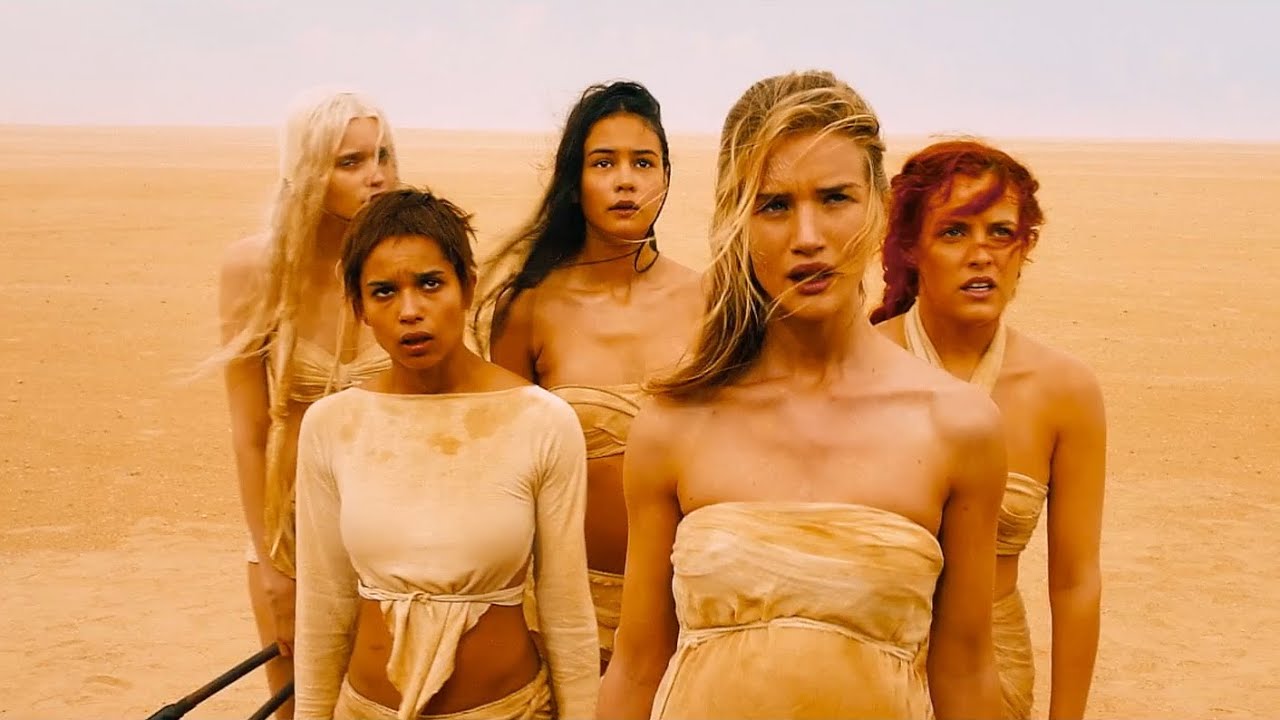
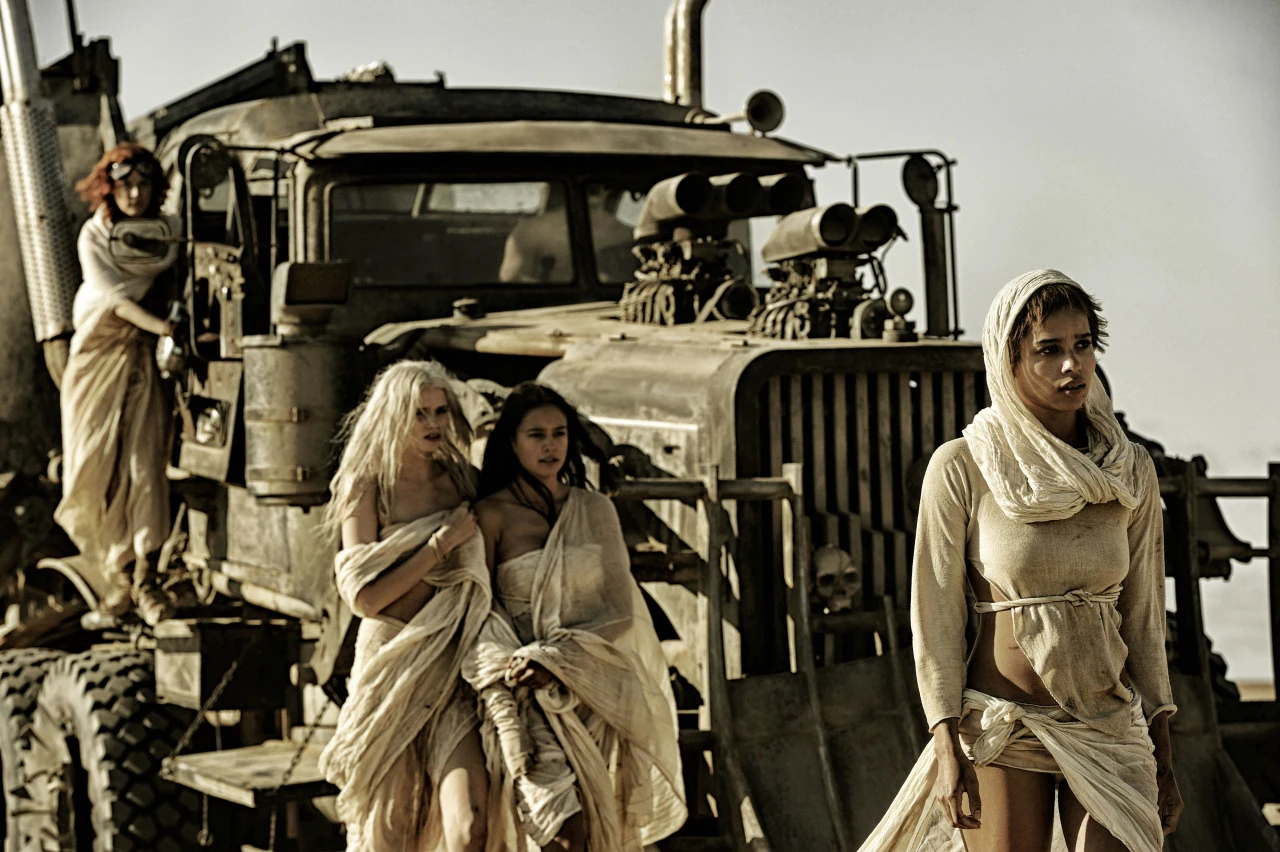
The Wives are a fairly traditional McGuffin. Everyone is after them. For Immortan Joe they're a precious commodity, for the Warboys they are a way vehicle into Immortan Joe's good graces and for Furiosa they're a way to hurt Joe in a way he'll remember being hurt. Many storytellers, I would go as far as to say most Hollywood storytellers, would be content at that. In other words they would be happy writing sexy lamps.

What makes Fury Road unique is that the Wives all have their own opinions, wants and needs. They effect the events of the story by their actions which are based on their own motivations. They use what little power they have to cause changes in the world around them.
So how can you do this in your own story? First of all

Know what your characters want

It always seems to come down to that, doesn't it? Have your characters want something and want it badly. Even if it is for their lives to remain the same, the kind of thing they're comfortable with. Everyone wants something and everyone considers themselves to be the main character in their own lives. On Fury Road the Wives want to live free, and they're willing to die for that.

Make them unique

Let's start with the notion that McGuffins are people too. On Fury Road, the Wives form one huge McGuffin with many limbs in terms of plot. But each of them has something they're good at, something the others don't have. Toast is good with guns, Capable is good at listening, Cheedo has an actual arc that goes from being afraid to being brave while The Dag is all about the future.


Give them agency

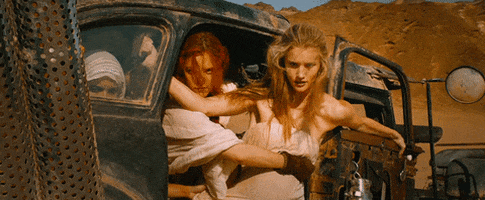
This is a seriously hard thing to do. Characters with agency cause disruptions. They make your neat and tidy plot into a rambling mess. They also breathe life into the story. They create conflict when what they want collides with what the main character wants. This can cause problems if you're not careful since the ancillary characters can easily take over the entire story. But that might also be a sign that your main character is not interesting enough. On the Fury Road the Wives' agency shows up in Cheedo distracting Rictus so she can help Furiosa, in Angharad's lean out of the cab to mess up Joe's shot, in Capable harboring Nux and many other small ways. They don't steal the show because Furiosa and Max are much more interesting than anyone else on the screen.

Homework

You knew this was coming too. Take whatever thing you're working on. Grab one of the peripheral characters you (meaning not the main character or the antagonist), preferably one that has some dialog lines. Grab whatever scene they're in and rewrite it from the point of view of that ancillary character.

Monday, September 7, 2015

Books I should have loved but didn't

Everyone has one, most of us have several. It's that book everyone you know thinks you should read, the book all the reviews rave about, that book that is right up your alley. There's just one thing wrong; that book leaves you feeling kind of... meh.

These are some of mine.

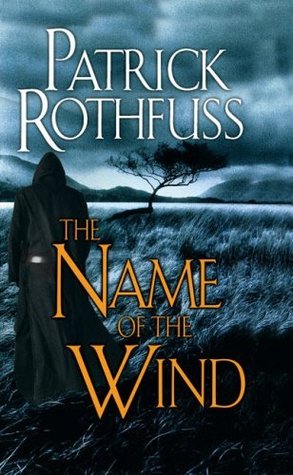
The Name of the Wind by Patrick Rothfuss

I have tried to love this book, really I have. But every time I start to read this book either my mind drifts off or I fall asleep. I really like Patrick Rothfuss as the person he seems to be on the internet and I love how enthusiastic people are about this series but despite having started the book at least three different times I pretty much only know that there's a tavern and the owner is somehow famous and at some point he loses his family to reavers and winds up in the circus or something. Then he maybe goes to some school. Rationally, I know that this is nowhere near to an accurate representation on what the book is about. I may have to try to read it at least once more. I have the sequel too after all. I may have a slight problem with book buying habits.


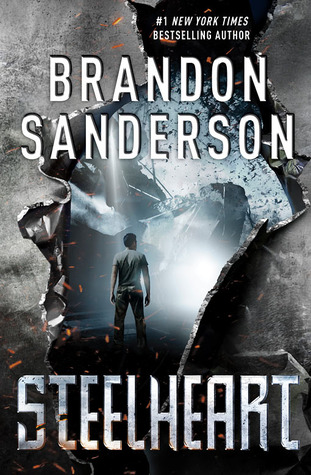
Steelheart by Brandon Sanderson

Superheroes! Consequences to ordinary people! Feeling like an outcast! These are all things I loooove in my fiction, more than I can describe. Heck, some of my all time favorite books are Seanan McGuire's Velveteen books which are all about superheroes set into a world where plowing into a building actually has consequences to the people whose lives revolve around said building, regularly wearing spandex also means no bacon etc. I love it. 

Steelheart presses many of those same buttons for me. It's wonderfully written and I will absolutely recommend it to people. And yet... And yet I didn't love it. I thought David, the protagonist, was whiny and annoying in that special way only teenagers seem to manage. I hated the way his inner monologue went "OMG! GIRL! DANGER! BE COOL!" any time a member of the opposite sex turned up. Basically I just wanted to slap him silly for it. Which is probably not a healthy response to anyone, let alone a fictional character.

At this point I'm still debating myself whether or not I should read the sequel. The first book was entertaining and well written, I just don't know whether I should subject myself to a book that I know going in I'm not going to love.


Song of Ice and Fire -series by George R.R. Martin

Then there's that. I devoured A Game of Thrones back in 2006 while on holiday in Paris and got maybe a third of the way into A Clash of Kings. I came home and completely forgot about the book for years. I finally got through the second and third books in the series around 2012 or 2013. That's also pretty much when I decided that that was going to be it for me and that series. And to be perfectly frank, I only managed to finish the second and third book because of professional curiosity. The series is exciting in a way that few books are exciting, Monsieur Martin is undoubtedly a great writer and so on but the books are just too bleak and hopeless for me. Everyone is such a horrible person that I just can't find it in myself to be invested in their outcomes. And if I don't care what happens to them, I might as well stop reading.


So that's me. What are the books you should have loved but just didn't?

Monday, August 24, 2015

Documenting the writing life

At the time this gets published I'm making my way back from Worldcon in Spokane. I'll be tired and cranky and most likely half asleep from the past week's exertions. I'm writing this during the week before Worldcon so I don't know for certain. What I do know right now that I don't have the time or the brain capacity for another thoughtful Mad Max post, though at least one more of those is going to get made sometime soon. So instead I'm going to talk about documenting my writing life.

Query Tracker 

While querying, it's important to know who you've queried and when. Something that's also nice is being able to see the actual query letter. Query Tracker does all this for me as well as providing the option to search for possible agents using various criteria. Query Tracker provides some statistics based on people's reports but from where I'm sitting they don't seem very robust at the moment. None the less Query Tracker even as it is now is an invaluable part of my writing process.

Duotrope


I write short fiction as well as novels. To be perfectly frank, I've written many more short stories than novels. Possibly even more words in short stories than in novels. Duotrope is very similar to Query Tracker, only focused on short stories. Duotrope has wonderful statistics on all the short story markets I've come across so far. It also provides a calendar with upcoming themed and unthemed deadlines of magazine submissions.

Sink or Submit! 

Finally, with regard to submissions, we come to the gamification of submissions. Sink or Submit! is a super simple game created by another Mary Robinette Kowal alumn, Hilary Bisenieks Brenum and it was inspired by yet another MRK alumn, Sunil Patel. Basically, you get a point for every submission and rejection you get. For every acceptance your point count goes to zero. The point of the game is to reward for behavior that should, in the end lead to something positive but where the road to those positive results is sometimes very unpleasant. A sale is a reward all on its own.

The Magic Spreadsheet

The Magic spreadsheet is a way to gamify the amount of words you write every single day. You get more points for every day that you write at least the magic minimum (250 words). You get one point for 250 words (two points for 500 words, 3 for 1000 words and four for 2000 words) plus one point for every day in your chain. I'm currently on my 44th day of my latest chain which means that I'm getting 45 points for today's 300 words. As you accumulate points, you go up a level at intervals that last about a month if you write every day. As you go up a level, your level specific quota goes up by 50 words. Which is to say, on the second level you need to write 300 words every day to maintain your points. You can still maintain your chain even if you don't write to your level quota but that also drops your chain points back to the level highest level quota of those words. So, if today I wrote only 250 words, I would get only 31 points instead of 45. If tomorrow I wrote my 300 words, I would get only 32 points.

The spreadsheet also sports a leaderboard in which you can compete with people around the world on the number of words you've written total, this month and so on.

Trello

At all times I have at least three projects ongoing; one short story, one novel either in plotting or revision and one novel being written. On top of that I run two of my own blogs and regularly contribute to three others. If I didn't have some type of project management tool, my head would explode. Literally. Or maybe not. Mind meltdown doesn't seem like it would produce that much heat or expansion. Anyway, I'm digressing.  I use Trello to plan my time in advance because it allows me to see most of the moving parts in advance as well as giving me deadlines for upcoming things that I need to get done.

How do you document your writing life? Do you

Monday, August 10, 2015

Books I Wish I Wrote

August is all about wishing here on The Prosers. I have a theory that every writer has at least one book they wish they'd written, something that's taken hold of their soul so profoundly that it's almost like someone had crawled up inside their brain and found the pieces there.

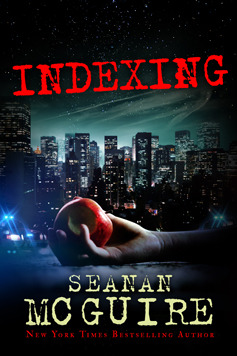
Indexing by Seanan McGuire

A government agency filled with living fairy-tales solving crime? I am there for that. I grew up watching cop shows and murder mysteries. My mother was, and probably still is, addicted to them so I have a permanent soft spot. Granted, my favorites more along the lines of NCIS, Bones and Miss Fisher's Murder Mysteries rather than Hercules Poirot, Inspector Morse and Der Alte but the affinity is still there.

One of the first things that I wrote that I actually remember what happened was a Finnish language assignment of my sister's (she wrote the one she actually turned in but I was so inspired by the assignment that I wrote one just for me); change a key aspect of some fairy-tale and write the story. I've been hooked on subversive fairy-tales ever since.

This book is something that combines both of those elements with dry, dark humor and an episodic story-telling style so reminiscent of all those cop shows I know and love. Every time I read this (I've lost count) I am both in awe of McGuire's work and kicking myself that she got there first.

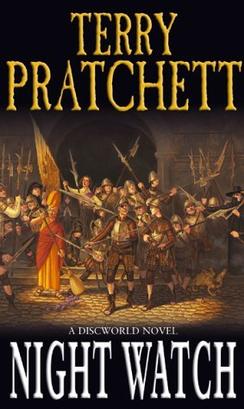
Night Watch by Terry Pratchett

Cop just trying to arrest a mass murderer accidentally goes back to his own past and ends up leading a revolution because that's the job that's in front of him.

Sam Vimes in Night Watch is basically a noir hero who's trying to do good. He's Casablanca's Rick Blaine after Elsa gets on that plane (sorry for the spoilers but it's over 70 years old and spoiler warnings have an age limit). He is mainly interested in keeping the piece and protecting a few people.

What he gets is a whole mess of trouble. The Unmentionables, Ankh-Morpork's then patrician's private police, do not like the man who refuses to hand over curfew breakers to them for torturing. The book is filled with social commentary as well as ruminations on the nature of right and wrong.

Pratchett is one of the first authors I started reading who showed me just how subversive humor can be. Because it's "just humorous fantasy", Pratchett can do and say things that "serious" writers would have to work a lot harder for. Night Watch is very much "message fiction" but because it's also laugh-out-loud funny I've never heard it accused of being that. The book sticks with me and I keep coming back to it at least once every year.

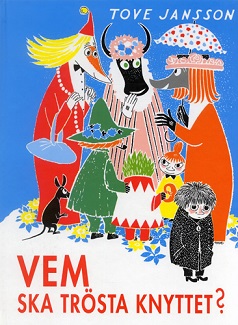
Kuka lohduttaisi Nyytiä? By Tove Jansson

Translated to English as Who Will Comfort Toffle? this one is ostensibly a children's picture book. It's all about Toffle, a little troll who's afraid of the dark, of his neighbors, basically everything around him. He's more or less an introverted, depressive agoraphobic who leaves his home to find a safer space, scared to leave but even more scared to stay. Outside he sees many wondrous things that make him feel even more alone because he's too afraid to approach anyone. He finds a lonely seashore that's calm and makes him not afraid and he makes a home there. Then he gets a letter in a bottle from a girl troll who says she's also scared and needs help. The rest is about him overcoming his own fear because there's someone who needs him. They end up comforting each other and, of course, living happily ever after.

I loved this book as a teenager, heck I still love it, because it assured me that however I was feeling at the time, there were people out there who got me and would love me for me. I know it sounds trite but as a writer I would love to have that kind of impact on another person's life. It is, after all, a part of why I write.

Monday, July 27, 2015

Character Sympathy - Lessons from Mad Max Part 2

As promised a few posts ago, I'm going to get back to talking one of my new favorite movies: Mad Max: Fury Road. This time, particularly I want to talk about building character sympathy. As promised, this time we'll start to think about how to do these things in your own manuscript.

Max Rockatansky

Max is probably the most straightforward of the characters as for sympathy. He's the title character, after all. Even if you haven't seen the previous movies, the monologue in the beginning establishes him as the loner who's just been attempting to survive for a while now. After his two failed escape attempts it's not hard to see why he wouldn't trust anyone. So even though he acts like a rabid animal for the first half of the film, you keep wanting to follow along if just to see how he gets out of his troubles.

Imperator Furiosa

Furiosa is established as a bad ass from the second she struts her way onto the screen. She commands her own war rig and the missing arm seems to be a testament of just how hard won it was. The trouble is, she's supposedly one of the tools of the villain of the story. But it's obvious from the very beginning that she isn't a true believer like the war boys she's hauling. She doesn't react to Immortan Joe's with the religious fervor of pretty much everyone else and seems more anxious to just have it over with. Later when the war rig is attacked for the first time, she proves that it's not an accident that she's in charge. And finally, she's caring for someone other than herself. Her manner may be gruff and fitting the horrors she's been through but she is taking care of someone who's weaker than her. Several someones.

War boy Nux

Nux, even more than Furiosa, is supposed to be a villain, or at the very least a minion of evil. From the beginning he's presented as someone who is deeply into the Immortan Joe religion. He's anxious to give his life in service of Immortan Joe's world domination. In other words he's the very epitome of a cultish suicide bomber. And yet... when he is presented as probably dying in the sandstorm, you kind of feel bad for him. You feel even worse when he's lying unconscious and Max attempts to free himself by blowing Nux's arm away. This is mostly because Nux is presented as an underdog from the very beginning. Before Furiosa leaves for her - shall we say - unsanctioned outing, Nux is more or less dead which is why he needs Max as a blood bag. "High octane crazy blood". Despite being nearly dead, he successfully fights off Slit to make sure he is the only one who drives his car on the Fury Road. Throughout the first chase scene he's almost like a puppy; so anxious and excited to please his master.

How to do it

  1. Make them an underdog
    This is a really popular one, mostly because it tends to work pretty easily. If they're good at what they do, have them face an overwhelming force, such as in Max's first flight. He gets swarmed by war boys who seem to have an unlimited supply of guzzoline, overwhelming numbers and explosive weaponry. No matter how good he is at what he does, there is absolutely no way he's getting out of that situation. That doesn't stop him from trying. It's the Indy rule all over again. In the beginning of Raiders of the Lost Ark Indiana Jones faces numerous obstacles to get the object of his desire which he loses in the end because he gets surrounded by overwhelming numbers.
     
  2. Make them really, really good at what they do
    Think about Furiosa hanging out of her cab to shoot the pursuing scavengers. She barely has time to sight them before she needs to be back in her cab to drive the rig and still she manages to blow the pursuing buggy out of the road. She keeps her cool even when her second in command is trying to strangle her and manages to get out of the situation. Make your character competent. Make her face hardship and get through to the other side. Loss and injury are okay but they need to come out of it victorious.
     
  3. Make them a rebel
    In the Western societies we seem to have a natural tendency to root for the people who fight the power, so to speak. Furiosa's eye roll at Immortan Joe's speech marks her as a rebel even before she takes the detour. It's the whole Cool Hand Luke thing. Here's this stranger who comes to town and starts stirring trouble and yet we like him instantly for it. It makes no logical sense since human societies thrive on stability and rebels make stability harder but there you are. Maybe it's our inner teenager reminding us what it was like to be young and stupid.
     
  4. Give them someone/something to care for
    This is another of those easy ones. You give a character a kid or a dog, something or someone weaker than him to care for and to protect, instant sympathy. See for example Tom Cruise in War of the World. The guy's a douchy loser but even though we don't really care about him per se, we want him to get to his target in tact because of the kids he's trying to get to their mother. The Wives are considered grown-ups but they've led such a sheltered, captive life that despite being, at least technically, adults they're in a much weaker position than pretty much anyone else out in the desert. Therefore everyone and anyone who protects them is automatically more sympathetic than everyone else around.
     

Homework time!

So, homework! You knew this was coming, didn't you? Write a page or less (maximum 300 words) introducing a character for each of the sympathy-inducing writer tricks.

Monday, July 13, 2015

Writing while life happens

As I write this, I am seconds away from having spent the weekend away with extended family. By tomorrow morning my time, which is about sixteen hours from now, I need to have finished this blog post and two separate homework assignments that I've barely gotten even started. Not to mention the short story I really need to get done. A month from now I'll be heading to Spokane for Worldcon right in the middle of the second draft round of my next novel. At this very moment I'm unemployed but I've written with a day job with an hour's commute in each direction. There are a few things that I've noticed that help whenever life happens at me. Of course I'll endeavor to them with you, my fine readers.

Inside the frantic writer's mind. (Assistants and George Frederic Watts - Chaos)

Make plans

Plans are important. They help you know what kinds of  deadlines are coming up and how much headway you need to make in various projects to be safe. Or, if life happens at you unexpectedly, which projects you can push off if need be. This also allows you to let any people who are waiting for your writing know well in advance that you might have trouble delivering said writing on time.

Even if you're not under a publishing contract, it's still a good idea to have deadlines for yourself, if only so you can get things done in a timely manner.

Prepare

If you know in advance that there's a chance that life might be happening to you soon, it's a good idea to  prepare. Work harder to get your upcoming deadlines into a state suitable for life to happen. Also be sure to know your own limits. If it's hard for you to write new fiction while traveling for example, make sure you've got something to edit or plot, whatever is better for you while you're not as productive as you'd like.

Write when you can

There's one post keeps coming back on my dash on Tumblr. It tells all the writers out there to write one sentence. Not to take fifteen minutes here and there to write. Just write one sentence. There's almost always time to write that one sentence. Unless of course you're Kameron Hurley and write best in monstrous, 10,000 word chunks. But even if you are Kameron Hurley, write when you can. Your can will just be different than us in the "write one sentence" crowd.

Give yourself some slack

Whether you're traveling or otherwise indisposed, it's a good idea to be able to forgive yourself when you inevitably fall behind. Just keep writing. Anything. It doesn't have to be the stuff that rocks the world. Just get words down, any words, in a somewhat coherent continuum.

Finally, I'd like to leave you with this: whatever's happening, take a page from Neil Gaiman
Make good art. Make it on the bad days and make it on the good days too.

Monday, June 29, 2015

Show, don't tell - lessons from Mad Max: Fury Road Part 1

Before I begin, allow me to apologize for all the fangirling that's about to occur. Mad Max: Fury Road is the action movie I've been waiting for more than twenty years, ever since I saw Sarah Connor defeat T1000 using one hand and a shotgun. But it's also undoubtedly a magnificent example of storytelling without a whole lot of telling. (Also, please note that this post will contain ALL the spoilers. If you mind spoilers, go see the movie before reading this post.)


This is quickly growing into a pet peeve of mine: people keep saying that nothing really happens in MMFR. There's a lot of explosions and exciting action, but nothing really happens. And I'm here to say once and for all, the people claiming that nothing really happens in Mad Max: Fury Road are wrong.

I can see where the misconception arises. At the very most, the script is maybe ten pages long. And that's if Max's grunting is included. There's almost no exposition and very little happens that is just told to us.

That's where MMFR differs significantly from pretty much every action movie out there. Most movies explicitly state EVERYthing. McGuffin character suffered trauma? Let's make her recount and simultaneously show the explicit rape scene from her past that makes her unidentifiable from a sexy lamp. The main character is defined by the losses he's suffered? Let's start the movie by showing the horrific murder of his wife and - almost always - son.


Fury Road doesn't do that. The titular Max (who's not really the main character but we'll get to that in a bit) is entirely defined by his losses to the point where he's hardly even human anymore. At the start of the movie he can hardly even form words. His story is very much a twisted version of The Jungle Book. Max has traveled the wilderness for years where everything is violent and everyone he meets wants to kill him. He has a severe case of PTSD that keeps triggering him to the point where he's starting to lose the ability to keep himself alive. None of this is explicitly stated. The only thing that even approaches Max telling anyone about his past is the monologue in the beginning (which is also at least half of his lines in the movie).

My name is Max. My world is fire. And blood. Once, I was a cop; a road warrior searching for a righteous cause. As the world fell, each of us in our own way was broken. It was hard to know who was more crazy. Me... or everyone else.
Here they come again. Worming their way into the black matter of my brain. I told myself... they cannot touch me. They are long dead.
I am the one who runs from both the living and the dead. Hunted by scavengers. Haunted by those I could not protect. So I exist in this Wasteland. A man reduced to a single instinct: survive.
So Max's transformation in the end of MMFR is fairly significant. He's made a life out of the hypermasculine pursuit of cars and violence but in the end he takes on the traditionally feminine role of giving life. The moment is made even more significant if you happen to know that it is the first moment in all four movies where he tells anyone his name. But again, none of this is really anything that is explicitly told to us. We see Max wasting War Boys by the dozen, we see the moments he gets triggered, his inability to interact with Furiosa and the Wives. We see him finally give out his name and his blood, both willingly because he recognizes how much the people around him need Furiosa.


Speaking of, Furiosa goes through a very similar arc. Where Max is Mowgli however, Furiosa is most definitely a hyperviolent Pinocchio. In the beginning she is defined by her quest for vengeance. Sure, explicitly she says she's looking for redemption, but that's not really true. She takes the wives, not because she wants to help them or because she even really believes that freeing them will do her soul any good. She takes them because taking them is the thing that will hurt Immortan Joe the most. They are, after all, his most prized possessions. In the beginning, she is one of those possessions too. She is a tool of Immortan Joe's power and though she becomes a tool of revenge, even going out to look for it, what she finds is her humanity. When she climbs up on Immortan Joe's hood, she is once more a real girl.


Nux and the Wives all have their own plot arcs, even though they are not by any means primary characters. The Wives especially are the very definition of a McGuffin but uniquely for not only action movies, but most movies none of them could be replaced by a sexy lamp. They are in the world and by their actions effect change. And despite the fact that they've obviously lived in captivity and faced all kinds of abuse at the hands of Immortan Joe. But instead of divorcing the viewer from the Wives by explicitly making them into victims, Miller decided to show their abuse through their urgency of getting away from everything Immortan Joe. When the Wives first meet Max, for all they know, he's a danger to them. But more important than setting up defensive positions for possible attack from him is to get rid of the Evil chastity belts, by any means necessary.

I could basically pull apart the whole movie, going through it moment by moment to tell you all the plot points that were communicated through showing alone but at this point I'm going to trust you get the point. In part 2 (July 27th) we'll start thinking about how to apply Mad Max into your own writing. Meanwhile:


homework!
Go see Mad Max: Fury Road. Even if you've already seen it, go see it again and focus especially on what are the things you know or think you know about the plot and the characters and how you know those things. Focus especially on the character's body language and how it effects the scenes they are in.

Monday, June 15, 2015

The trouble with "broken"

June here on the Prosers is all about broken characters. When we discussed the themes for this year I expressed some concern for the term "broken" with regard to it being used about people. Someone, I can't remember who at this point, rather brilliantly told me that I should write about my concerns as my post.

Here's the thing: the term "broken" often gets applied to people who are somehow out of the norm. In all cases I have tremendous issues with other people using the term to describe anyone. If someone wants to deem themselves "broken", have at it.

Various dictionaries have the following definitions for the term "broken":
Forcibly separated into two or more pieces. Having been violated. Being in a state of disarray. Subdued totally. Humbled. Weakened and infirm, not functioning.
The definition is a huge part of what I dislike about using the term to describe humans, be they fictional or not. The term, as applied to people, usually just means "not normal" or someone who's been hurt or even victimized. I'm not exactly a fan of "normal" to begin with, mostly because while human beings are herd animals who strive not to be too different, we are also normative in our quest for uniqueness. And "normal" is also and has always been an excuse to bully.

The second problem with broken is that the general feeling seems to be that once something is broken, it's broken forever. And while that may be true of pottery, humans have an incredible capacity for healing. Labeling someone as broken also labels them beyond repair. It is a way for an outsider labeling someone as a victim instead of a survivor.

For those who feel or have felt broken during their lives, I would like to introduce the Japanese term "kintsukuroi". It is the art of repairing broken pottery with gold, silver or platinum. It also means that breakage and repair are not things to be hidden but mark a piece of the thing's history.


And often, if you're very lucky, the thing that was broken and repaired is all the more beautiful for having been broken and repaired.

Monday, May 18, 2015

Promises, promises

I've been listening to the podcast Writing Excuses for about as long as I've been writing seriously. It's been a tremendous source of inspiration and information for me as I've been climbing up the ladder towards becoming a published author. This year they're doing  a Writing Excuses Masterclass where they lead their intrepid listeners through the process of creating a novel from scratch. A few weeks ago one of their episodes was about using promises to outline a story. I've been thinking about promises in fiction ever since.

Promises of genre

The easiest to notice and understand, for me at least, are the promises made by genre. In a romance you'll always want two people who belong together even though they probably don't see it in the beginning. In the end they must end up together. Unless you're Nicholas Sparks but that's a whole other ball of wax.

In science fiction and fantasy which are the genres in which I feel most at home it has much more to do with the subgenre but even that's not a laser-proof indicator of what the story holds. Space opera in general promises adventorous good times and a happy ending with some sacrifices made along the way. It also promises some whizbang cool technology and space travels. The thing is though, that a space opera doesn't necessarily have to have a happy ending to be a space opera, nor does it necessarily need to be an adventure.

Epic fantasy makes different promises from urban fantasy which in turn makes different promises than steampunk. The problem with science fiction and fantasy as genres is that they're pretty young. They're still developing which means that the promises they make to the reader are not nearly as rigid as the promises more established genres like romance and thrillers make. Jeff Vandermeer's Southern Reach trilogy and Asimov's Foundation trilogy are both science fiction but they deliver a very different reading experience.

There are some few authors who manage to transcend the boundaries of genre to deliver a signature reading experience all their own. Neil Gaiman, Nnedi Okorafor and the aforementioned Nicholas Sparks are the three that come to my mind easily. But since most authors really, really aren't one of these people - I certainly am not - it's always a good idea to first and foremost keep in mind the promises made by the genre one has chosen to use.

Promises of tone

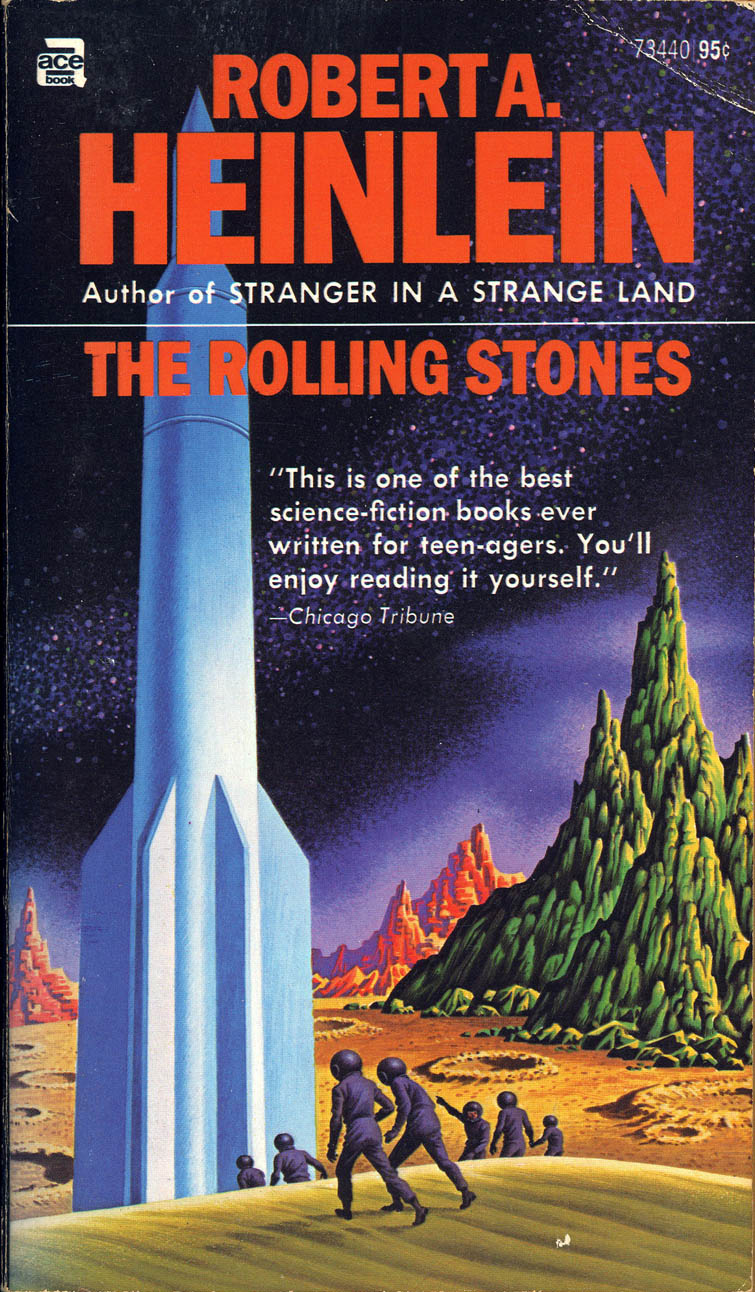
The second important promise an author makes to their reader is tone. Even within the same genre, the promises a dramatic story will give are entirely different from what a comedy gives. Robert Heinlein and John Scalzi deliver structurally very similar stories (according to Scalzi, this is by design) but again, the reading experience is very different. Tone can partly depend on the genre too. A children's book with a light and happy tone is more or less a must for anyone who actually wants people to read it whereas a YA book can be much more angst-ridden, although I'd still recommend adding lighter moments in there.

Of course there's more to tone than that. You couldn't write Sophie's Choice in a comic tone and expect people to go along with it. The dramatic material requires a serious tone. The same goes the other way too. Using a dramatic tone to narrate for example The Hitchhiker's Guide to the Galaxy would entirely defeat the purpose.


Promises of awesome

In my not so humble opinion the biggest promise every author ought to make is one of awesome. Whether that be in the form of transformative prose or the literal awesomeness of Howl's Moving Castle, it's important to endeavor not to waste the reader's time. If David Farland is correct in his theory of fiction being a form of emotional exercise then I think it's fair to say that we should strive to be worthy of that exercise. And we do that by being awesome. Although I'm not entirely sure that's something I know how to plan. Which is exactly what continuing education is for. 

What are the promises you like most? What are the promises you have most trouble with?

Monday, May 4, 2015

An Ode to Wilson Fisk

Along with the rest of the world I am currently slightly obsessed (note, only slightly) with the new Netflix series Daredevil. The show is violent and gory as all get out but in the middle it's also vulnerable and somehow fresh even though it continues the grimdark direction taken by most superhero movies lately.

And I think part of why it's so good at it is down to the villain, Wilson Fisk. (Please note, this post may be somewhat spoilery about Fisk and his past. If that bothers you, please feel free to return after watching the available episodes.)


I've never really loved the Daredevil comic. I don't really know why, it's all about things that I usually enjoy. There's a hero who's at an extreme disadvantage against his adversaries, working class background, taking place in a city, the MC is a complete nerd etc. It should be right up my alley but for whatever reason, I never really connected with it.


That changed with the first episode of the Netflix series. Now, while I'm willing to admit that some of it may be because I fell hard for Charlie Cox (who plays Matt Murdock aka Daredevil in the series) in Stardust, that's not the whole truth of it.

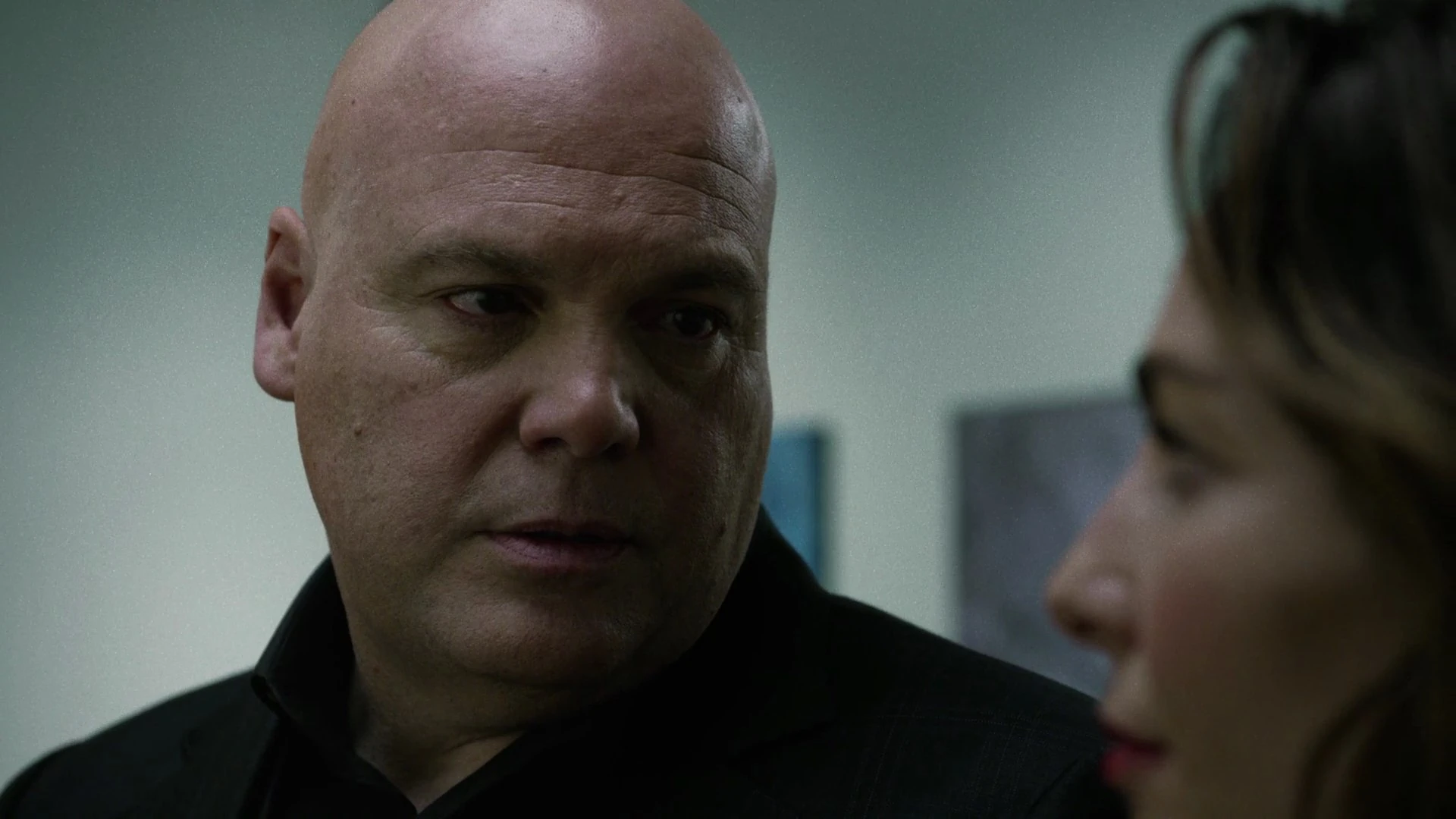
For me the turning point of whether I just liked the show or loved it came when they started to delve deeper into the life of Wilson Fisk. The first time we actually meet Fisk, he is utterly captivated by a modern painting, titled "Rabbit in a Snowstorm" which is basically white paint slathered over a white canvas. The moment could have gone in so many ways that would have made the character cartoonish but instead Vincent D'Onofrio's (previously probably best known for his performance as Private "Gomer" Pyle in Full Metal Jacket) performance made the character into someone who is not only vulnerable but also a force to be reckoned with.

The man in the mirror
Later on, in episode 8, we see Fisk in his morning routine, getting ready to continue the conquering of the city. The kicker comes from the first time he sees himself in the mirror. Here is a man meticulously dressed in the most expensive suits money can buy and he still sees himself as a scared child, trying desperately to please a violent, misogynistic father while staying true to a cowed mother.

I wrote about writing women back in February and the Daredevil series (let's pretend that unfortunate movie never happened, okay?) has certainly applied similar advice to Wilson Fisk in spades. Fisk is a violent, horrific man who uses any and all means necessary to do exactly as he wants. There's a scene in one episode where he literally beats a man to death until there is nothing left of his victim's head. And yet... And yet the writers as well as D'onofrio's performance of him turn Fisk into someone who can almost be pitied. Almost.


Fisk wants something with all his being: he wants to save Hell's Kitchen. He wants to eliminate crime from the streets of the city, make it safe for people like him, people like his mother, people like his girlfriend. The trouble is, in his zealousness he has made deals with all the criminal elements of the city, from the drug cartel to the human traffickers. He doesn't think twice about leveling tenement housing mainly because the inhabitants are poor and some of them commit crimes of the sort he cares about.


The writers of the show keep drawing parallels between Fisk and Murdock and their respective quests to clean up or "save the city". On the surface, the two men want the same things, they just have very different methods of going about it. They're similar in a lot of ways, but their lives have taken different courses which have led them down very different paths.


Wilson Fisk in the series is a terrible example of humanity but as such he is also utterly, irrevocably, undeniably human. Kingpin (as he will no doubt be known at some point of the series) is one of the comic book bad guys who has been very often portrayed as being evil for the sake of evil, a mustache-twirling baddie from the silent films if you will. In this series he is human first and the evil, his evilocity if you will, rises from his humanity and the particular flaws that make Wilson Fisk the man he is.

Monday, April 20, 2015

Research agents to query your little heart out

I don't care how special your book is, have the courtesy to follow the guidlines.While I have never gone from polished to published I am currently in the process of querying my first novel. Well, not really my first but the first that I consider even close to being good enough to query.

Here's the mini-synopsis:

Layla Ballard is just a succubus trying to stay on the straight and narrow in the human world – a feat that would be easier if she hadn't just killed her boss. To hide the murder/snack, and keep cash coming in until she can figure out what to do next, she takes over his P.I. firm, only to catch a case that’s far beyond their usual “cheating spouses” client. In trying to find a missing sister, Layla discovers a slew of disappearances and deaths that point to a culprit that isn't human. Between dodging a murder charge and battling her hunger, can Layla get it together in time to save the sister and stop the supernatural murderer?

It's been quite a journey from first draft to the query pile. I've written before about my experience with coaching. After all of my editing rounds were complete, I sent my initial query draft to Cathy who punched it up quite a lot. Since Sheena already wrote an excellent post about the query process in general, I'm going to focus on one part in particular: researching your prospective agents.

Know what they want part 1

First comes the easy part. Well the super easy part, I should say. Find out what they want. I'm not talking about the genres or anything like that yet. Find out the submission guidelines. If your agent wants the first five pages and a one-page synopsis don't send the first three chapters and a blow by blow outline.

Know what they want part 2

The second step is finding out what they're actually looking for. This is so you're not going to send a serial killer killer trailer for someone who's looking for a sweet romance or science-fiction hard science fiction to someone who's doesn't rep anything speculative. This is also a good point to check that there they actually represent something that is like the thing that you have written. So say for example if you if you write sweet romance and the agent is looking for erotic romance or, say, you write hard science fiction and the agent is looking for space opera you don't waste your time or theirs sending them something that they're just going to reject out of hand.

The reason I'm putting this second is that this can get quite detailed. While you're doing this, you should also have an eye toward the next step, which is:

Make sure you know why you want them

Now there are some agents who just don't care. QueryShark has mentioned several times that she's not interested in any greetings somesuch and that she wants you to start with your book. Most agents are not like that. Many are quite adamant about getting to know the reason you are querying them specifically and not the agent down the street. Even if you are also querying the agent down the street.

Even if you are querying the QueryShark or to be more specific Janet Reid, it's still a good idea to have a clear reason for your own purposes why you want to query that particular agent. An agent doesn't have to be a bad agent to be unsuitable for you specifically. 


Make sure you know how long it takes them to respond

This is more for your own piece of mind than anything else. Most agents can take up to eight weeks to respond and others never do. You should of course track your queries and make sure you know who you've queried, when, and what kind of response, if any, you've received. I prefer QueryTracker myself but there are certainly other ways of doing this, starting from a single CSV format text file.
Most importantly, have fun. The world will not end even if you don't get an agent for this project. It won't even necessarily halt your literary career. There are still plenty of options out there. Meanwhile, as you wait, you should be writing the next book. Preferably in another world.

Monday, April 6, 2015

From Polished to Published - a guest post by Clara Frost

I am, as yet, completely unpublished. I haven't even self-published anything, at least not yet. And since this month's theme is From Polished to Published, I asked my friend Clara to talk about her experience on the matter. Here's Clara:


Let’s assume you've finished a book. Inciting incident, midpoint, climax, resolution, The End. A book. You've read it and edited it and polished it until even your mother is sick of hearing about it. This is A Good Book. A book that will make waves, if only an agent or an editor would give it the time of day. All this is a given, because you wrote it. Of course it’s awesome.

But you’re not willing to wait for an editor. Or maybe you have waited, and you’re tired of waking up to an empty inbox. And say, wasn't 50 Shades being fan fiction originally? You can do better than, right, and how hard is this whole self-publishing thing, anyway?

A question, my fellow inkslinger: is this your first book?

If the answer here is yes, then consider this: TSwift is right. Haters gonna hate. But consider also: your first book is not nearly as good as you think it is. Unless you have spent a decade in the arts or journalism, there are flaws in your book that you are not capable of seeing yet. So please, for the sake of you-five-years-from-now, think long and hard about self-publishing your very earliest work.
That little piece of hard-earned advice out of the way, the question is: how do I do this thing?

It’s really not too hard, and it all comes down to time and money. You need four things to self-publish a book.

  1. Editing. Yes, yes, you've edited your book already. It’s polished until it gleams. If you've had multiple other people reading it specifically for copy issues, then you might be okay. But if not, I recommend finding a freelance copy editor. The book business, sad to say, is not the best paying gig in town, and many folks that edit your favorite authors will be happy to accept your special snowflake... for a fee.
  2. A Cover. While you can create your own cover, it probably isn't the best idea if you want to attract readers. If you choose the DIY route, check out the videos Jason Gurley created in early 2015. They offer a great starting point. If you choose to have someone else create your covers, be ready to do some research and to pay a pretty penny. Kboards is a great place to start. An inexpensive, premade cover can often be had for around $50, but a more professional cover is often $500 and goes up from there.
  3. A blurb. Go read the other blurbs in your genre. Copy and paste them. Retype them with your characters and conflicts. Get a feel for how they flow, and how they hook the reader. The best thing you can do here is to write something that fits with the other books in the genre.
  4. Formatting. This can actually be done fairly well by an average writer, using software tools you already have. Scrivener will produce very reasonable epub and mobi files as outputs. Even a decently formatted Word document will be converted by the major e-tailors and look alright.


There entire books about self-publishing that cover these items in even more detail. Two that I particularly like are Let’s Get Digital by David Gaughran and Write. Publish. Repeat. by Sean Platt, Johnny B. Truant, and David Wright.

Good luck, my fellow inkslingers. This writing game isn't for the faint of heart, and neither is self-publishing, but the steps here will help you avoid the most common pitfalls.

Monday, March 23, 2015

Dealing with rejection

I just finished my semi-annual hope-like-hell-then-get-rejected round of Clarion applications. Rejection is something every writer needs to deal with and since it's been a couple of years since coping mechanisms have been discussed, it is certainly high time for a revision round.

I was afraid you'd say that.

Make it into a game

I'm an alumnus of Mary Robinette Kowal's Writing on the Fast Track course. Last November she set up a Facebook group for all of her students and this year I devised a game to keep us all putting ourselves out there: at the end of the year I will send out two big slabs of chocolate for the person who has managed to gather the most rejections this year.

Author Kevin J. Anderson has an actual trophy, the Writer with no Future, because he had the most rejections - by weight - out of all the authors at a particular convention (750- to over 800 varying by the telling). My personal goal in life is to take that trophy away from him. So, Mr Anderson, be warned!


So shake your, hopefully metaphorical, tail at the rejectioneers and rejoice in every one of them. Then submit your work onward.

Friends can help

If you've had a particularly bad disappointment, even your non-writing friends will most likely be there to buck up your spirits with pictures of owls, kittens and fennec foxes. As well as some sage advice.


Although be kind to your friends and don't complain about each and every rejection, since you are hopefully getting a lot of them by now.

Writer friends are especially helpful at this point since they will have been through this too and will readily offer you whiskey and chocolate to help you recover.

Punch something

If the chocolate and whiskey don't do the trick you might get the overwhelming need to punch something.
Though for everyone's sake, please make sure it's a bag, a pad or someone who doesn't mind getting punched.

In any case, physical exertion is very, very good for you. Working out causes your body to release a chemical called endorphin, which is apparently related to morphine. And much like morphine, it will create a positive feeling, often described as "euphoric" in your body. Just without the negative side effects of, you know, addiction and eventual ruination. So embrace your violent side and sign up for boxing lessons.

Have a good cry and move on

Sometimes you just have to mourn the loss of something that was never yours to begin with. Put on a sad movie if you like.
Have a good cry, eat a tub of ice cream and go to bed exhausted from all the ice cream and crying.

Then the next day get your story out for the next round of rejections.

It'll be easier next time

Maybe not. Okay, so maybe this isn't a perfect plan. But I'm working on it.

Monday, March 9, 2015

Helsinki as a setting

March here on the Prosers is dedicated for a sense of place. What better excuse to celebrate my beloved home town of Helsinki?


For a supposedly metropolitan city, Helsinki is remarkably short. Most buildings, especially downtown, are no more than five stories. I live out on the edge of town and my building can almost be considered a giant at seven (7) stories. Downtown buildings come with tiny, creaky elevators that have twin folding iron gates doing the service of doors and wide echoey staircases and no hallways beyond the first floor. For Helsinki, the houses downtown are really close together and the streets are quite narrow, mostly because they date back to the times when cars weren't common. Which brings me to another thing I love about Helsinki:

Helsinki Botanical Garden by Alexandre Duret-Lutz
On the whole, Helsinki is a very green, very pedestrian friendly city. People from elsewhere in Finland wouldn't necessarily agree because Helsinki is, after all, a big city and comes with the kinds of problems big cities have. But compared to Paris, London, New York, even Copenhagen etc it is. There are parks, of course, but the greenery in Helsinki pervades everything. Trees line all the streets and you can find a piece of grass within short walking distance everywhere in city. There are pedestrian walkways pretty much in all the places. If that wasn't enough to entice to walking, there are things to see everywhere. Even as a citizen, it's fun just walking around Helsinki, enjoying the scenery.

Helsinki - Nykytaiteen museo Kiasma (Museum of contemporary art Kiasma) by jaime.silva 
This is true of Finns as a people but nowhere is it more evident than in Helsinki. We are inordinately fond of culture and art. Most Helsinkians wouldn't call it that, but you know the stories of those small towns in Texas that have churches on every street corner? This is true of Helsinki and museums/art exhibitions. There's a museum for practically anything you can think of in Helsinki. Except torture. For some reason torture never did get on that list.

What can I say? To my mind at least Helsinki is a magical, magical place. Which is of course why a lot of my stories that aren't based in Space (trust me, the capitalization is warranted) are set in Helsinki.