Showing posts with label hunger games. Show all posts

Thursday, April 3, 2014

The Trouble with Dystopians - Part 1

I've been meaning for a while now to write a post about dystopian YA fiction. I finished several dystopian series at once near the end of last year, right around the time the second Hunger Games movie came out. And now, with the Divergent movie having done so well, it seems like the first time to finally get to finishing this post.

Dystopians have been popular for a while, but it really kicked off with the Hunger Games. Theories as to why they're so popular range from high school is like a rigid, dystopian society, to dystopians hold a mirror to society, to my personal favorite - recent dystopian fiction tends to follow the Hero's Journey. Oh, and apparently Edward Snowden is a lot like Katniss.  Anyway, the Hero's Journey theory actually makes a lot of sense - I don't think the Hero(ine?)'s journey is ever going to go out of style. 


Speaking of style issues, let's look at the series I'm going to be discussing:

In a distant, dark future, a sudden event changes a young woman's life, pulling her away from everything she knows. The society as she's known it has always been bad, but it turns out its worse than she thought, and she finds herself at the center of a revolution, and a race to save what's left of society. But is the revolution everything it seems? Who are the good guys? And in fighting the revolution, will she has to sacrifice the boy she loves?
Believe it or not, I actually hadn't noticed this pattern (clearly modeled after the Hunger Games) until I started writing tonight. I'd mentally grouped these books together to compare them more for the plot structure, but apparently they stuck together in my mind for others as well. In case you're wondering, the series are:

The Chemical Garden Trilogy, Lauren DeStefano
The Divergent Trilogy, Veronica Roth
The Matched Trilogy, Allie Condie
The Hunger Games Trilogy, Suzanne Collins (of course)

From what I've read so far, the Crewel, Delirium, and Under the Never Sky series (and possibly Shatter Me**) should probably be in this group, but I haven't finished them yet, and I'm far too lazy to do so by the next post. In any case, for this first post, I'm going to talk about patterns and shared ideas and fiction.

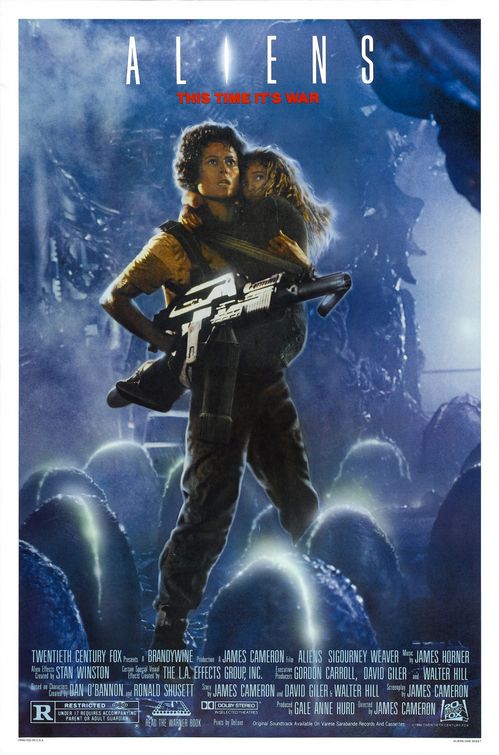
I don't think similarities are necessarily a bad thing. It's a little startling to me how similar these dystopian novels are on that basic level, now that I'm aware of it. But they're certainly not the first time an idea has been recycled. For one, there's the hilarious comparison of Pocahontas and James Cameron's Avatar that's been around for a while. And it's not like I'm going around saying, "Oh darn, too many awesome strong female characters who save the world!" 

And in Fantasy, we have the whole Tolkien subgenre. And Arthurian stories, which I've never liked. I mean, it's a never ending pattern of "everyone betrays each other and then they die." In most stories, you have hope that something good will happen at the end, but with Arthurian retellings, it's pretty much set that everyone dies tragically.

Then, of course, there's urban fantasy. I'm pretty sure Laurell K. Hamilton and Anita Blake are solely responsible for the current trends, though I'm too lazy to Google it to see if I'm right. And yes, I know Emma Bull's War of the Oaks is the real first urban fantasy. But Hamilton is responsible for the vampire/witch/shapeshifter/half (or full) faerie/necromancer/wizard, who lives in a city and hunts the local vampire/witch/shapeshifter/half (or full) faerie/necromancer/wizards, all while fending off her attraction for a darkly mysterious vampire/witch/shapeshifter/half (or full) faerie/necromancer/wizard. Oh, Anita Blake. I remember how awesome you were before you gathered your male harem. All those interesting moral thoughts you had about religion and intimacy? Whatever! Forget those!Though I think I'd probably hate those books if I started reading them now. But at the time, I loved them, and Anita  was in a class of her own.  

So why do we keep seeing so much of the same? I think some of it is comfort - my comfort reads are historical romance. Not sure why, because they're some of the most formulaic of all genres, but there's something soothing about pretty dresses and a guaranteed squishy happy ending. 

But I think there's another aspect at work: publishers will sell what is likely to be successful. That's not necessarily a critique. Their job is to publish books they know people will buy. It can go deeper than that though. Here is an excellent and thoughtful post (WARNING: contains adult language). from the review site Dear Author (they have a ton of amazing and insightful articles there on publishing, self-publishing, authors behaving badly, and more... apart from all the book reviews). 

For those not in the mood to read a post with adult language, or who don't want to click on one more freaking link for this post, here is the conclusion to the article:

Assumptions about what readers want not only reinforce the sexist status quo, but they create homogenized books. Books in which we know what’s going to happen before it happens.... And as the comments from self-policing authors attest, these established norms are self-perpetuating. They’re writing what they’ve read, what they expect to read.
What do readers want? Perhaps we won’t truly know ourselves, until we get to experience all the possibilities.
What do you think? What would you like to see more of in your traditionally published fiction?***

Maybe it will be urban science fiction, with the android/cyborg/alien/space pirate/three-headed space lobster who hunts android/cyborg/alien/space pirate/three-headed space lobsters and fights off her attraction to a  android/cyborg/alien/space pirate/three-headed space lobster.

One can only hope not.


Coming up next week: the second half of the dystopian post, where I talk about what does and does not work in this particular brand of dystopian fiction.


*Blogger flags dystopian as misspelled - and offers 'utopia' as the only correction. STOP TRYING TO WHITEWASH EVERYTHING, GOOGLE! I will not bow to your evil empire!
**A large part of the reason I haven't read this one yet is because the heroine's name is Juliette. I think that would confuse me too much right now.
***Yes, self-publishing is its own thing that might be the solution, but I'm not going to talk about it in this post, because it's late and I'm lazy.

Tuesday, March 27, 2012

Strong Female Characters or Strong Characters that are Female

Watching the Hunger Games movie last weekend reminded me how much I loved Katniss. She was at her best in the first book, tough, resilient, and self-sacrificing, and yet vulnerable and so full of pain and self-doubt. She was strong and weak, smart and blind, compassionate and unforgiving.

She was a strong female character and a strong character that was a female.

On absolute write (a writers forum), someone posted the question about which type of female character do you prefer a strong one who does the rescuing or a weak one who needs to be rescued. My answer is I enjoy both as long as they are interesting and fit the story being told.

There is nothing wrong with a damsel in distress as long as she is not saccharine sweet who would never hurt a fly and is beloved by all woodland animals and small children (or dwarfs). Some idealized version of what some think a woman should be. Or a plot device to show off how amazingly awesome the hero is and a reward for him once he saved the day.


A weak female character can be compelling. She can be a delusional faded southern belle, so damaged that she hides from truth of her past, preferring magic to realism and what should’ve been to what really happened. She can be past her prime and no longer able to rely on her charms and beauty to get by, completely at the mercy of the kindness of others.


A damsel in distress doesn’t have to weak. She could be a strong, smart, witty woman who isn’t afraid to speak her mind and follow her heart but is constrained by social conventions and therefore is unable to save herself and her family from disgrace and poverty. It is okay for a female character to need to be saved especially if she is saved by a hero as awesome as Mr. Darcy.


And sometimes that damsel in distress grows into the strong-save-the-day heroine, and yet is still deeply flawed and emotional scarred by what she knows is coming but can't stop.


Just because a strong female character saves the day does not make her a good character. She can be smarter, stronger, and braver than every male character, but be as two-dimensional as a damsel in distress and feed just as easily into a male fantasy. Just a different idealized version of what a woman should be, only this time with a big-ass gun.


But a strong female character that saves the day can be a compelling and amazing character. One who doesn’t show the men up, but holds her own among them. Who speaks her mind and fights for what she believes is right and even has a maternal instinct. Who isn’t afraid to use a big-ass gun but does so wearing sensible attire.


The thing is that making a female character physically or mentally strong does not necessarily make her a good character, and having her save the day does not automatically make her the embodiment of feminism. There is a difference between a strong female character (a female character that is strong) and a strong character that is female. Explained much better here (read it; I promise it is worth three minutes of your time).

Strong characters (male or female) are ones that are well-rounded, compelling, complex, contradictory, and real. They don’t have to be strong people, they can be weak, but they have to be interesting enough to carry the story.

I think sometimes writers are so afraid of showing weakness in female characters that they go to the other extreme and think every female character needs to be like Buffy (for the record, I love Buffy). But if this strength is forced on the character, she can come across as just us two-dimensional as the Princess who sits in the tower waiting to be rescued.

Don’t be afraid to let the female characters have some weakness, vulnerability, and even be saved every once and a while. Even Katniss was saved by Rue and Peeta, and indirectly by Cinna and Haymitch.

Remember it is more important to have a strong character (male or female) than a character that is strong.

~MaryAnn

Wednesday, March 21, 2012

The Hunger Games Game

Pssst, bet you haven't heard:

The Hunger Games movie comes out Friday!


Early reviews are excellent. So, in honor of the movie, I thought a little question and answer quiz might be fun.


1.  My friend was so disappointed by the actress chosen for Katniss - she didn't look a thing like what she'd imagined. I thought Katniss was perfect, but Peeta, not so much.
So, if you could pick one actor and replace him/her, who would you pick? Why? And for bonus points, who would you rather see in the role? Here is a list of characters.


2.  If you had to be a tribute, what District would you want to be from?


3.  If you were a tribute, what super secret talent would you wow the judges with?


4.  You have a day off and can do anything  you want. Besides Katniss, Peeta and Gale, which character would you want to spend your day with, and what would you do?


5.  If Prim had gone to the games instead of Katniss, which tribute would have won the games?


6.  What are your top three books made into movies that really worked for you?


7.  If Cinna were to design something for you, what would it look like?


8.  Effie effuses: 'May the Odds Be Ever in Your Favor.' What quip would you make up to describe the games?


9.  Who's going to the midnight showing?

~Susan

* Images from thehungergamesmovie.com and imdb.com

Saturday, January 28, 2012

Romantic Subplots, Part 1


“And now I’m looking at you,” he said, “and you’re asking me if I still want you, as if I could stop loving you.  As if I would want to give up the thing that makes me stronger than anything else ever has." (Jace Wayland; The City of Glass by Cassandra Clare)


This topic has been on my mind for a long time. Thankfully, I started writing this post early in the week. I kept writing...and writing...and writing...and realized that I've got a lot more to say than I can possibly fit into one post. So let's just call this Part One in a series of five (?). 

We could call it Subplot Saturday. Or Saturday Smoochies. Or even Saturday Steaminess... 

Yeah. So I'll keep working on that.

I'm going to share one rule a week with you for the next five weeks. Five weeks may seem like an unbearably long time to wait. But never fear. By the end, you'll be able to write a love story that people will tumbl about for years.
*(http://enchantedmusic.tumblr.com/)
Caution: Music will start if you click on this link!!!

What is your idea of the perfect love story?

I suppose the answer to that question is different for everyone. Personally, I don't like the love story to be the key element of the plot. But although I want the love story to take a back seat to the action, make no mistake: I read books for the romance. And I'm not alone.

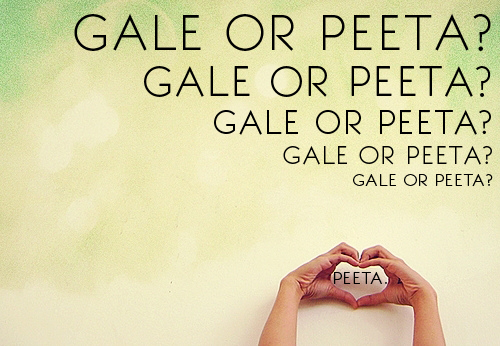
Take the bestselling series The Hunger Games as an example. Katniss's fight to protect her family and keep herself alive should have completely overshadowed  the love triangle between Katniss, Gayle and Peeta. But in the days before Mockingjay came out, what was everyone talking about?


Rule #1:  An exciting story should drive your plot, not the romance

“Really? Are you going to ask him to be your partner?" Isabelle asked. "It's like a cotillion, this partner's business, except with killing." 
"So, exactly like a cotillion," said Simon. (From The City of Glass, by Cassandra Clare)
  
I'll read hundreds of pages for one paragraph that makes my heart flutter. In fact, I submit that the hundreds of pages are a necessary component. This isn't the "Wow, you're hot. All we need is a good excuse to make out," romance. The kind of love story I'm talking about is the one that says, "I know everything about you--your strengths, your weaknesses. We're already an amazing team, and I want it to last forever. And by the way, you ARE hot, and I've been waiting way too long for a good excuse to make out."

My first attempt to tell a story like that was a bit of a failure. That's because I got so caught up in the whole love story that I let it take over. It's a perfectly valid basis for a book, and it was a lot of fun to write, but it's really not what I was going for. What I want is a story that would be worthwhile and fun even without a hint of romance. The romance is the icing on the cake.

If I was a math geek like Maryann, this is the place where I would build a really scientific looking graph showing the fragile relationship between the exciting story going on in your character's lives and their emerging feelings for each other. In the beginning, the driving action has nothing to do with the romance. As with every other sub-plot, the goal is to lay the foundation, so that the reader is not pulled out of the story when things start heating up. As the book progresses, the ratio between action and romance will start to shift, but the action still propels the plot. If anything, the romance complicates it.

When you've stretched out the getting to know you phase as long as you can, and its  finally time to get to the romance, there's nothing like a little adrenaline to make a romantic scene shine. Don't believe me? Watch this:


Of course, your characters don't have to be in a battle to the death when they declare their undying allegiance. They can wait until after, if you want.

*This is my daughter's tumblr. Although she doesn't tumbl about one specific love story, she follows several people who do. My favorite is odair-in-the-underwear.

Tuesday, November 15, 2011

Dinosaurs, Fairies, and Hunger Games

I have two little girls who have wild imaginations. Sometimes I write a story with them, and I've noticed that they all end up being pure wish fulfillment, for example: a dinosaur pokes his head in the window and whisks my girls away to a magical dinosaur world or a butterfly lands on their backs and turns into wings making them fairy princesses.

Whenever I try to add an evil circus owner or the paparazzi, the bad guys are instantly defeated, so we can get back to flying over rainbow lakes. I've just come to accept that my girls don't want any conflict in our stories.

I know eventually my girls will grow up and get bored with pure wish fulfilling fantasies, and we can add villains and battles to our stories. But I don’t think that wish fulfillment ever completely goes away.


Don't we want the boy to get the girl, good to triumph over evil, and happily ever after? Don't we want to feel like everything in the story happens for a reason? Isn't this just wishful thinking; how on some level, we would like real life to be?

Don't get me wrong. I do like a good tragic ending. The Crucible, Braveheart, and Titanic are all stories that I love. But even in these stories, there is some sense of triumph, John Proctor refusing to give them his name, William Wallace crying out "Freedom," and Rose taking control of her life. This is wish fulfillment; that even in tragedy, something is learned, something is changed.

There is nothing worse than a pointless tragedy. Yes, that happens in real life which is exactly why in stories we need the wish fulfillment.

Which brings me to the The Hunger Games Trilogy. I loved The Hunger Games. If you haven't read the whole series yet, stop now and go read it. Go, do it, now. I’ve got spoilers coming.

SPOILERS

I enjoyed all of the books, but the ending of Mockingjay was disappointing to me. This is because my wish fulfillment wasn't fulfilled.

I loved Katniss. She is definitely one of my favorite characters. She is strong, resourceful, smart, and brave, but underneath it all, there is an aching in her. She is vulnerable, self-doubting, and denying her pain over her father’s death and her mother’s rejection.

Maybe I loved her too much because I really didn't want to see her used over and over again, by President Snow and by Coin and everyone else in the rebellion. I didn't want to see her fail at the only thing she tried to do on her own, and I didn't want to see her completely broken.

It's not that I wanted kittens and rainbows or Katniss taking down the Capitol on her own, Rambo style. I expected Katniss to suffer and struggle. I expected her to be irrevocably damaged but not broken. She could have even died as long as I felt that there was some sort of triumph, that she took back her life from those who tried to use her and showed them that they didn't control her, that she would live and die on her own terms.

But that is not what happened. She was manipulated into doing everything she did even the shocking ending. At least that is how it felt to me. And because my wish for her was not fulfilled, the story fell flat for me.

I think it is important to remember what readers want from the story. It may not be a magical tour through dinosaur land, and they'll definitely want lots and lots of conflict and to see the protagonist struggle and struggle and struggle, but in the end, they'll want their wish fulfillment. A satisfying ending whether it is happy, tragic, or bittersweet.

~MaryAnn

Awesome fairy picture is by sgrundy at stock.xchange http://www.sxc.hu/profile/sgrundy

Picture of Katniss from http://www.thehungergamesmovie.com/index2.html