Showing posts with label science fiction. Show all posts

Monday, November 2, 2015

Bring out your WIP!

It's NaNoWriMo time again. I am rewriting a novel whose first draft I started in April's NaNoWriMo and finished sometime around Midsummer. While there were definitely elements in there I really liked, the plot ended up being kind of a mess, the characters being illogical, and the settings unsatisfying. So pretty much everything goes into the rewrite bin and NaNoWriMo is perfect to help with getting that done!

All this being said, here is the first page or so of my second seriously written novel, The Avatar Legacy.

---

The sight of the corpse told Miki Kim that it was time to leave home. Again.

Victoria Bleedwell wasn’t the first corpse Miki had seen, nor was she even the first corpse of a friend and crewmate. Victoria’s wasn’t even the worst she’d seen. But as she stepped fully into the chill of the medical bay currently housing Victoria’s body Miki promised herself that Victoria’s would be the last corpse she would ever see.

Victoria’s nanocolony swarmed over her body, visibly making the remainders of her clothes shift. They were looking for something to fix, just as their programming directed them to. There was nothing wrong with Victoria anymore. Beyond her being dead.

Miki cupped Victoria’s cheek.

“I’m sorry,” she said.

She half expected Victoria to grin and wink at her like she had so many times. When nothing happened, Miki took her hand away and squeezed it into a fist. No room for sentimentality. Not in this life, or this home.

She walked around the table, keeping her eyes off the body. She pushed a wall cabinet open and grabbed a habitat container. She turned to another cabinet and added some feed into the habitat before turning back to the body to coax the colony inside the habitat. They would need to be fed by something and Victoria was no longer producing new skin cells to create dead ones. Miki had once seen what a colony could do to a body when left to sit too long and she wasn’t eager to try that again.

The colony moved into the habitat in waves and soon Miki had to brace the container against the operation table to make sure she didn’t drop it. The colonies always weighed more than she expected them to.

Once no more visible waves were forthcoming, Miki took the container away and sealed it. It would automatically maintain a suitable environment to keep the colony relatively active while also lowering their mobility to the point that they wouldn’t burn out before they were applied to someone else.

Saturday, September 19, 2015

Book review - The Martian by Andy Weir

(Cross-posted from my personal page and from my Goodreads page. Please feel free to friend/follow me there. I love books and love to talk about them!)
I LOVED THIS BOOK. I shall shout about it to anyone who cares to hear me. I listened to it in audiobook, over the course of about 4 days, which is very fast for a 10+ hour audio. (pro tip: listen while you cook dinner, fold laundry, or other mundane household stuff. I also listen on short, long, and medium length drives, and while I walk the dogs. My dogs are very well exercised at the moment.)
What I liked: this book has so much technical depth and detail. While that can be a bit burdensome at times (particularly in audio) I had a lot of appreciation for the manner it was told in, as the technical stuff was all very accurate and very tangible in terms of what the protagonist was doing with the information. No info dumps, just the protagonist dealing with Mars atmosphere and the equipment he had to survive. I mention this first because it’s something that is probably a barrier to some who aren’t traditional science fiction fans. Please, realize that the author isn’t expecting you to solve differential equations nor talking you through the boring bits. He’s focused on the life and death details of space travel. Pressure, chemical reactions, ways to change states, microbes, terrain, distance. These are fascinating when set in the context of an extra-terra exploration. THIS is why I read science fiction. THIS is why I write science fiction.
I also liked the author’s use of humor. There are many laugh out loud moments. To that end, though, a bunch of the humor is due to the very appropriate use of swear words. For example, when Mark has to compute a distance by figuring the length of the long side of a right triangle, and he concludes (since he has to travel the hypotenuse) “Because Pythagoras is a dick.” — I laughed loudly in the middle of chopping something and almost lobbed off a finger. As I try to mention in all my reviews, the curse words are the ONLY mature content (other than a mild reference about a man and woman sharing a room) and to me are an excellent introduction to appropriate emphatic cursing to make your point or convey your aggravation. Definitely fine for 14 and up, but would be appropriate for younger readers so long as you don’t mind the opening of the book which implements the f word several times. To good effect. Conveys mood, attitude, situational details all in a four letter word. Quite economical.
I have always enjoyed science fiction, and this book just blew my socks off because it blended that geeky science-y stuff (which I really don’t have a firm handle on anymore, lo these 20+ years since anyone asked me to care about any of it in detail) and human nature, and the little details of what it would be like in space. I write books about kids in space and like to include the details of what they would eat, whether there would be pets (I’ve come to the conclusion that OF COURSE there will be cats in space. Because cats.) what you do with your hair in zero gee, what you wear, etc. I loved the little details of Mark dealing with his daily routine. The communications with NASA were fascinating. The story kept me engaged the entire length of the book. The audio narrator talent is excellent and I will seek out other books he has narrated. Highest recommendation. Best book I’ve read this year.

Saturday, February 21, 2015

Karen's Secret Weapons

We're writing in February about Secret Weapons in writing. Shh. They're Seeeeeecrit. Actually, not really. Here's some of my fellow Prosers' posts about their secret weapons in writing:


(yes, in case you were wondering, Melanie and I do have a complex about the fact that our names don't end in an "a.")

I have to admit, I'm suffering from Where-I-Am-Right-Now tunnel vision, something that often afflicts writers, I think. I also suffer from it in reading, wherein the *last book I read* is my favorite book and the one I recommend to everyone. Unless we're talking Code Name Verity, in which case I might strap you down and use a Clockwork Orange-style device to keep your eyeballs on the page. Theoretically. Because it's that good.

But ANYWAY - where I am right now as a writer is knee-deep in revisions on my novel, ABNORMALS, which I haven't written the blurb for but is basically about teens with superpowers.

I have a few things I do to make revisions easier, since I really truly hate editing with a burning fiery passion. I thought I'd share them as secret weapons, because they're part of how I motivate myself to do the editing.


First, I edit on dead-tree paper. I do! I'm a tree-hugger environmentalist most of the time, but for my primary editing runs on novels I print the buggers out.

Next, I put the dead-tree paper into a binder. Cool binders are helpful, as I look nifty carrying around this read faux leather number, don't you think? (Sidenote: Office Depot or Max, I don't remember which, and it was only about $7-8! And reusable for the next novel!)

Third, LOTS of red pens. Lotsa. That's a word my kids invented when they were small, and we still use it even though they've long since learned proper diction. It conveys *so much.* How many M&Ms do you want? Lotsa. How many kids were on the bus? Lotsa. How many times should we ride the Harry Potter ride at Universal? Lotsa. See? Very useful word. I use lotsa red pens because it enables me to get the feel I want. One funny thing about working in paper is I can be fussy about the pen, the paper, etc. in a way you just can't be with typing. It's a great way to waste more time! And money if you're as addicted to office-supply shops as I am.


Speaking of paper - I really like grid paper or graph paper. I'm a visual-spatial person (do you know about visual-spatial learners? If not please go check out Linda Silverman's site and see her info about us weird folk) and found long ago that grid paper helps me orient myself on the right/left (east/west) axis of my page the way horizontal lines orient you on the top/bottom (north/south.) I feel better when I write on grid paper, so I have sought out good grid paper for years. This pad happens to be a Levenger (note, price is for a pack of 5. Still ridiculously expensive. I think I received these as a gift…) brand pad, they definitely make the best paper out there but it's the spendiest.

And so, there it is, my super secret writing weapons, a bunch of analog world items that help me survive the editing phase. To be honest, I do the same thing with planning/outlining (dead-tree planning) but without the red colored pens, I use black or blue or ticonderoga #2 pencils (black barrel/eraser preferred. I'm very fussy!) and some really nice paper or a new notebook. I love the smell of a new notebook, and the fresh feeling of possibility I get when opening a new one. Ah, if only that would actually write the words, eh?

What are your favorite meat-world writing tools?

Monday, January 26, 2015

Podcasts you should know about

I like to have something to listen to pretty much all the time. Audiobooks, music, and especially

Fiction

Uncanny Magazine : A new fiction collective of speculative fiction, Uncanny Magazine is run by Lynne M. Thomas and Michael Damien Thomas, the podcast runs non-fiction articles, poetry and fiction published in the magazine also on the podcast. Three episodes old, the podcast is already promising.

Lightspeed : Lightspeed publishes one story a week out of their monthly issue for free both on their site in text form as well as on the podcast. Lightspeed publishes both science fiction and fantasy short stories. Lightspeed is a magazine that continues on the track started by Heinlein and others but also updating it as time moves on.

Apex Magazine : Apex is an online magazine of speculative fiction in both prose and poetry forms. They publish one story on the podcast every month, stories that are always twisted and beautiful.

Nightmare : This weekly horror podcast works very much on the same principle as Lightspeed, is also edited by John Joseph Adams, working forward from the illustrious horror set up by the likes of Edgar Allan Poe, Nightmare is very good at mixing the monstrous and the strange with the merely dark.

Clarkesworld : Clarkesworld publishes all or most of their fiction in the form of podcasts as well as the usual magazine. Clarkesworld publishes stories where style does not exist without substance and vice versa.

Welcome to Nightvale : A weird fiction podcast with an ongoing storyline about community radio host Cecil Gershwin Palmer in the fictional town of Night Vale, reporting the various happenings around town. Weather forecasts in the form of various Indie music, a five headed dragon and a faceless old woman each running for mayor and a Dog Park into which you never, ever go into.

Writing craft

Grammar Girl Quick and Dirty Tips for Better Writing : Mignon Fogarty explains the ins and outs of grammar and writing styles in this weekly few-minute podcast.

Writing Excuses : SFF authors Mary Robinette Kowal, Brandon Sanderson, Howard Tayler and Dan Wells discuss the craft of writing, one topic at a time, "fifteen minutes long, because you're in a hurry and we're not that smart". The ongoing season 10 is acting as a masterclass for writers, leading us from idea to finished draft, fifteen minutes at a time.

Hide and Create : By topic Hide and Create is very similar to Writing Excuses but it is a very different kind of podcast. Current regulars are Debbie Viguie, Michael J. Sullivan, Jordan Ellinger, and Joshua Essoe, two authors, an editor and a reviewer. About thirty minutes long, the topics they cover mostly tackle craft, with a nice mix of silliness and business stuff thrown in.

I Should Be Writing : Author and grand dame of podcasting Mur Lafferty talks about becoming a writer, interviewing people to ask them things that she wants and needs to know as a beginning author. Covering business, craft and most importantly, dealing with the mental problems of being a writer, such as the imposter syndrome, Lafferty is really good at encouraging writers to chase their dreams.

Writing business

Shipping & Handling : two literary agents, Jennifer Udden of The Donald Maass Literary Agency and Bridget Smith of Dunham Literary, Inc. drink wine and talk about what they're reading, what's happening in the business of speculative fiction as well as making predictions for the future.

The Rocking Self-Publishing Podcast : Audiobook narrator and all-around sound guy Simon Whistler talks to various self-published authors about their experiences, and how they've managed to make it

The Self-Publishing Podcast : Self-publishing moguls Sean Platt, Johnny B. Truant and David W. Wright talk a slapdash but very much relevant game about the business of self-publishing with occasional guests, frequent bad ad-reads. Content warning for laddish humor.

The Creative Penn : Thriller and non-fiction author Joanna Penn talks to a number of, mostly, self-published authors, almost exclusively on the nitty gritty of making a living as an author. Past discussions include email lists, street teams as well as tools and marketing strategies.

Just for fun

SF Squeecast : The never ending panel discussion of vague positivity. Regulars include Seanan McGuire, Catherynne M. Valente, Elizabeth Bear, Paul Cornell, Lynne M. Thomas and Michael Damian Thomas.

Galactic Suburbia : Australian speculative fiction professionals Alex, Tansy and Alisa talk about all things SFnal with a feminist slant.

The Skiffy and Fanty Show : A weekly fannish popdcast done mainly by Shaun Duke and Jen Zink that covers everything from films to books to comics and in a meta way, even fandom.

Rocket Talk : Justin Landon hosts the Tor.com podcast, inviting guests, usually two at a time, to discuss interesting topics related to the field of speculative fiction. Past topics include bright and shiny fantasy, living with a writer and reader, writer and publisher biases. Smart people being smart about the things they are excited about.

Monday, December 29, 2014

Those pesky pronouns

A little less than a year ago I was reading Anne Leckie's Ancillary Justice (and if you haven't, you should read it immediately, if not sooner. A lot of people say it starts out slow then proceeds into the breakneck tale of revenge that made it the darling of all. But I'm digressing) and I had this nagging sense that I was missing something, I just couldn't put my finger on what it was exactly. It took Breq explicitly pointing out that personal pronouns were hard for her for me to realize that she was using the same pronoun about all the other characters. My native language, Finnish, has only one pronoun "hän" that is used about everyone. Male, female or in-between. So while my command of the English language is better than some native speakers, I keep getting tripped up on the pronouns. Especially whenever I'm tired I either start mixing them up or just dropping one altogether.

A few weeks ago I took to facebook to note about my slight problem and a friend supplied me with this link: Sex-based and Non-sex-based Gender Systems. It's an interactive map on various languages and the pronouns they use categorized on whether or not they're gender-based. The thing that becomes obvious pretty soon once you start playing around with it is that gender-based pronouns are in the minority.

Map illustrating the prevalence of gendered pronouns across world languages. Image via Wikimedia
This makes me slightly sad. So few speculative fiction titles use the possibilities inherent in the variety of human language. For example in Grebo (a language native to West Africa, roughly speaking Ivory Coast and Liberia) there are four different pronouns, split into two groups; humans and other large, important things and everything else. So, for example a spaceship and a human could be referred to by the same pronouns. And that's just one of the possibilities. Pretty much my favorite possibilities but you know, who's counting?

The few pronoun systems used in fiction that I can think of are all gender-based (with the exception of the Imperial Radch series). Which seems to me very much like a wasted opportunity given the strangeness of all the different kinds of aliens we writers have come up with over the years. In A Fire Upon the Deep the Tines become an actual sentient individual only once four to seven dog-like units form into a group. In the book, the Tines speak in a 20th century American accent, which was apparently a conscious move on Vinge's part, to make it easier to relate to the aliens given how strange they were to begin with. How many other fully fictional, but humanoid races, however culturally and biologically different all nonetheless operate under the same gender-based pronoun system as native English speakers? Why is it naturally assumed that however much languages vary based on culture that all of them would still have the same pronouns?

Probably mostly because it's easy. Some of it may also be about our own blindness to the assumptions we make based on the culture we live come from. I am fully aware that I'm mostly blind to this myself. Until a few weeks ago I couldn't imagine there being a pronoun system that wasn't either based off some definition of gender (which is a whole other post) or a "one pronoun to rule them all" type situation. But I also think it's a colossal waste of potential in terms of reader transportation.

So, given the variety humans can come up with, given their different cultures but biological similarities, what is the pronoun system of your alien race?

Saturday, December 13, 2014

Holiday Book Recommendations

Looking for a book to pick up this holiday season? Shopping for a young adult/middle grade reader on your list? I've got some recommendations that are both on my to-read and have-read piles.

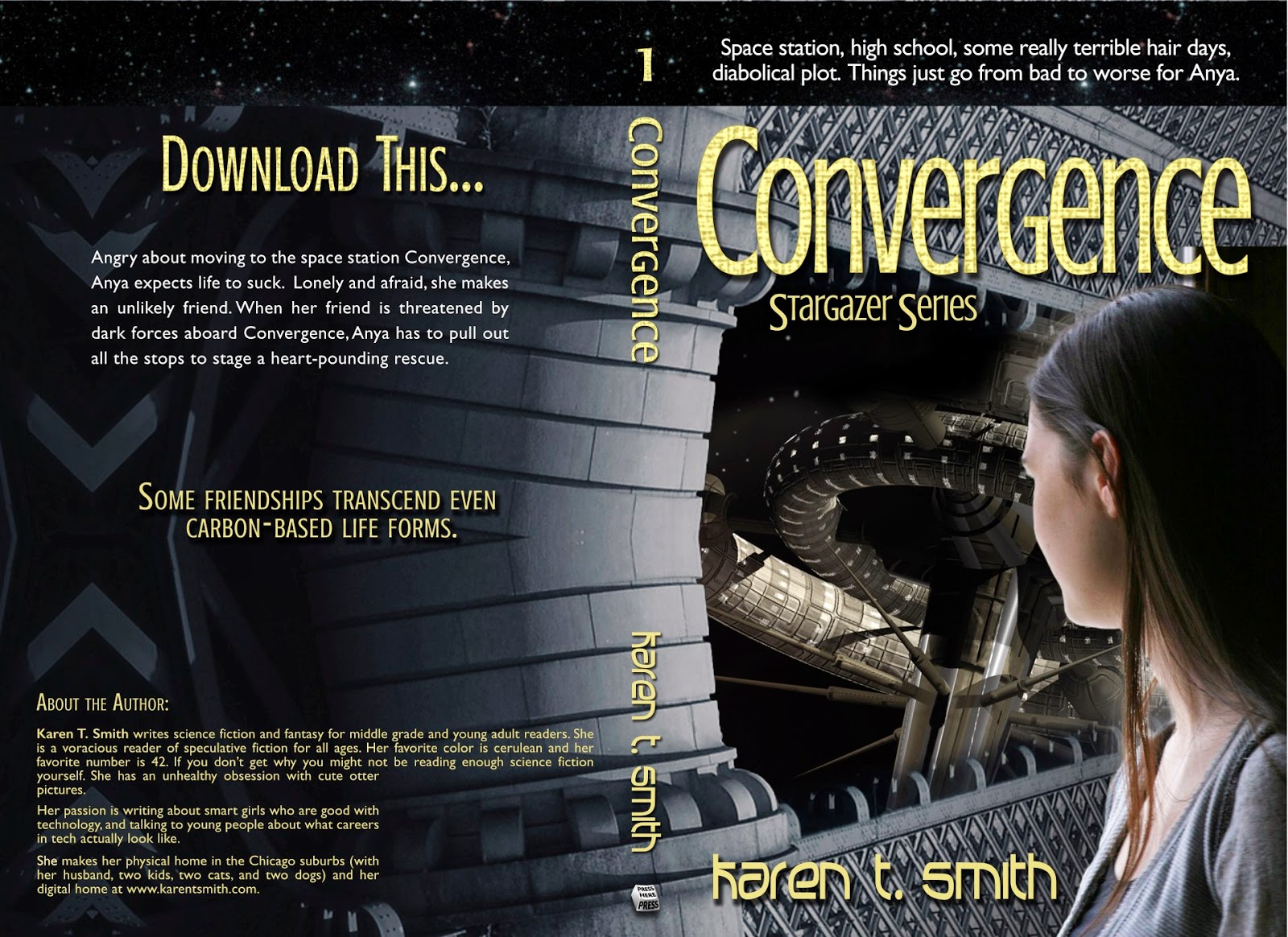
First, of course there's this great up and coming author of YA and MG Science Fiction that you should TOTALLY read. Her space-set book CONVERGENCE is really fascinating, a great read for kids (ages 10 and up or so.)
(buying link here - available in paperback and ebook. This is my SF novel, just in case you hadn't caught on yet.)

How about a little steampunk train fantasy which feels just a wee bit science fictiony? My kids and I really enjoyed The Mark of the Dragonfly by Jaleigh Johnson this spring, and it's worth a look for readers of all types.

How about military SF cyberpunky stuff for teen readers? Very appealing to boys? The series that starts with the book INSIGNIA, by SJ Kincaid, is excellent. Another bonus, the series is complete, which means you don't have the long wait for another book in the series. YES, I'm looking at you, STEELHEART! (Steelheart is a great book for teen readers featuring a future Chicago with superheroes, only the superheroes are the bad guys. Excellent story, but the second book is only JUST coming out in January. Firefight's publication date is listed as Jan 5. We've waited so long!)

What else is out there? In fantasy, we adore the Magic Thief series by Sarah Prineas, and this fall a fourth book in the series came out, called Magic Thief Home. This one is great for younger readers, too. My kids began reading this series around 2nd grade. There are a few dark bits but not too much, and the books tend to end on a hopeful or upbeat note.

In older kid fiction, I'm really enjoying Blue Lily, Lily Blue, which is the final book in the Raven Boys series by Maggie Stiefvater. I recommend it to (older) teen readers and adult readers alike. It's a complex story of magic set in the modern day. I think what I like the most about this series is the complicated relationships the author sets up between the characters. Here in the third (last) book, I find myself just *understanding* the relationships between characters so deeply that their reactions to situations make sense even at the beginning of the book. I love an author who can characterize so deeply. There's also such a dreamy quality to the way the author describes the area, she clearly both knows and loves the environment she set this book in. Due to some strong themes of drug/alcohol use and abuse in the second book in particular, I don't recommend this younger than teenagers.

I'm just finished with a long bout of audiobook listening (a listening jag? Does that even work) of the Lois McMaster Bujold Vorkosigan series. It was an absolutely stunning ride, I'm still smiling. I love these books and as a friend suggested, I'm going to make my wishes known to my family that if ever I'm in a coma and they don't know if I'll recover, I want them to play these audiobooks in case I can hear. You, dear Prosers Readers, are responsible for reinforcing that wish if it ever comes up. I recommend starting with Shards of Honor. I really enjoyed this in audiobook, loved the narrator, but it would work in print as well. It's an older teen and up book, though, not for kids.

No matter what direction you read in this holiday season, I hope you read, read often, read lots, and share books with those you love. I've become "that crazy aunt who gifts books" and…I like it. (Gave my nephew a signed copy of The Mark of the Dragonfly, from above, for the holidays!) Enjoy!

Saturday, November 15, 2014

Work in Progress - Karen

Oy, have you missed me? I've missed me, have you seen my October and first half of November? Shoot. Me neither. Nor has my nanowrimo project seen me…I'm a few…thousand words behind, alas.

But have no fear, I'm here now, and I have WORDS to SHARE!

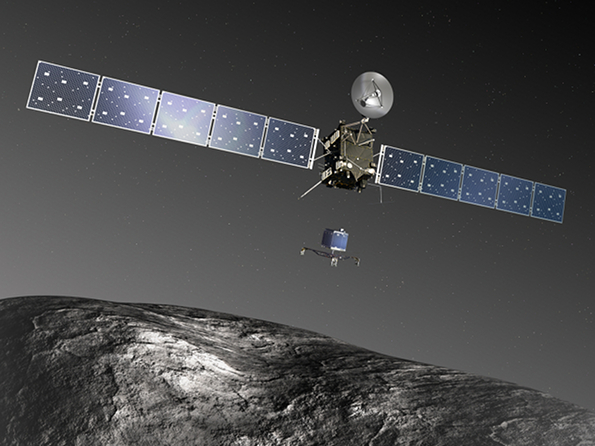
And what a week in which to share them! This week, humans have landed a SPACE SHIP on a COMET! Are we awesome or what? I love it when I'm writing science fiction and the scientists go off and make science fact. Best part of this job. The Philae is now sleeping, as it unfortunately bounce-landed into a spot that makes it difficult to charge its batteries, but I predict this isn't the last we'll hear of the little lander, nor its orbiter, Rosetta. Cool stuff.

I'm working on a sequel to my 2009 Nanowrimo project ('09 project is called A Star to Lead Me.) This year's project is called Guide Me Through the Deepspace Night. (Ridiculous side note: This is a trilogy, the three titles make a haiku. I'm a word nerd. I changed the title of this project this month and had to keep it 7 syllables. You'd be surprised at how many 6 and 8 syllable book titles you can come up with when trying to find a 7 syllable one.)

I'm slow this November because I've been overtaken by events (World Fantasy 14 in D.C. last weekend, the kids' school's book fair all last week. Lots of books to sell! Always interesting to be a bookseller for a week and see what people are interested in, what they buy.)

And now I'm trying to get back into the habit. Funny how difficult it can be to get into a writing habit when you're not in a daily routine. I have talked before about how I'm a burst writer versus a daily writer, something that's a little different than what you'll hear many writers spout as the One True Thing About Being A Writer (the whole "write every day" business) -- but yet there is some wisdom to that thing!

I'm really quite certain most of Guide Me is pretty terrible at the moment, but here's a bit from the story as-is. Quick plot recap/summary: Brynne is on a colony spaceship headed for the Gliese 876 system with 6000 of her close personal friends (not.) When her ship enters the solar system orbiting the Gliese star, all the adults and anyone thirteen and over on the spaceship falls into a mysterious sleep. Brynne and the other kids have to figure out how to operate the ship and keep chaos from descending, oh and while they're at it they should probably figure out what that unknown energy signature making a beeline for them is. Aliens? Brynne's going to have to figure it out and soon - her thirteenth birthday is in a couple of days!

In this scene, Brynne has been talking to Hunter and Sampriti, two friends who are spearheading the work on the ship's navigation systems:

“And a pilot?” Brynne asked. 
“Yeah, we’ve got … where is she?” Sampriti said, looking around the room, her eyes finally resting on the girl laying on her back on the table. “Oh, there she is. Halley. Named after a comet and now she’s going to have a chance to pilot us out of this mess. She’ll work the engine burn. We’ve run,” she sent a wry look in Hunter’s direction, “dozens of scenarios and her reflexes are fastest and she’s got most of the equations in her head already.”
Brynne looked back at the girl, still gazing at the ceiling. Upon reflection, Brynne realized that perhaps rather than staring at the shadows of her fingers, perhaps the girl was drawing ship trajectories in the air. But she looked so young. Before she could vocalize the thought, though, Brynne squashed it. The girl doubtless was young, as were all of them. Age ceased to matter when the stakes were life or death. Either burn the ship’s engines in the right manner and sequence to change the Selenium’s trajectory, or meet certain doom in the debris field or planet atmo of the gas giant they were current pointed at. 


Tuesday, September 2, 2014

Lunatic Space Pirates Falling in Love During Free Fall-- Sheena

For this blogaround, we're all sharing a prompt to show how we would write a story based on the trigger
Lunatic Space Pirates Falling in Love During Free Fall.

Okay, so the first thing I do is stare at those words for a few... minutes. In that time,  phrases start to separate.

 Space Pirates, for example tell me the genre. We're talking scifi. And pirate means thief to me, so we know the character's motivation is to steal something so rare they had to go to space to find it.

The free fall is interesting to me. I don't think it's falling if there isn't something to crash into, so the location of my story will be far above a planet. A dangerous not earth planet, so if they survive the fall, there's still a story there. And since they are in space to steal something, it could be the planet that houses the thing they are trying to steal, because the very thing a thief fears more than death, is getting caught.

So a story is starting to emerge. High above a red swirling planet, something bad happens to the ship, and brings the notice, (and weapon fire) of the people on the planet below, so these thieves silently escape their ship, and then something else bad happens, and they are cut off from control, so they are free falling to certain death on this red swirling planet below them, and even if they survive the crash, (and the fall) they might be caught, but still they are hopeful that there's a chance for them to steal this thing they really need, and getting away.

Okay so now I have to figure out what this thing is, and why they really need it... but I got nothing.

Maybe to do that I should go back to the prompt.

Falling in love reflects a story arc. It's a process with a beginning, middle and end. It also reflects the action of the story which is falling to their deaths.

And then there is the word lunatic.

To be honest, lunatic was the word that made my creative side perk up on the very first reading, so I saved it for last, so I can savor it. I love stories where the POV character is slightly crazy. I love exploring madness in all its forms.

 And falling towards one's death is a high stress environment. Anyone could go crazy in the vacuum of space.

So this is where my twist happens.

POV Character is all alone, trying to retrieve something...a medicine, a get out of jail free card, something necessary to save the person they will be falling in love with. Because the story arc needs a beginning, it's a person who the POV character finds slightly annoying, but still is attached to. They aren't in love yet, or at least they don't know yet that they are in love. Something goes wrong, and draws attention of the antagonist, and POV character could run away, but must sacrifice their own safety in order to try to get this thing for this annoying person who they are probably cursing out right about now.

New plan. New disaster, and again the character chooses to keep going instead of finding their own safety, and disaster number three happens, and POV person is falling uncontrollably in space towards certain death. Attempt after attempt to save themselves fail, but eventually the hero get the spinning under control, right when cracks appear across the visor. And the stress sends POV character into a descent of madness. They see this annoying person they are trying to save falling with them, which is impossible since they are on their deathbed, or imprisoned somewhere, and after telling them all the ways they are stupid, their hands meet, and the person falling realizes that they can't live without this person. There a joke or a moment of beauty, trying to distract from the danger, and the POV wishes the person could be there for real. Then right before an insane delusion of a kissing scene, or an almost kiss, there's an interruption. Shrapnel, or a bullet, or pain, and the person wakes up from their insanity, tries one last Hail Mary attempt to save themselves, which doesn't work, and they realize they are about to die, and then one of the early attempts finally works, and last second they are able to save themselves...or maybe they won't. I love tragic endings too.

And now the last thing I decide. The character. I always choose the character last, because I need to know what they will lose before I decide who gets to lose it. Because falling in love, for someone who wants to fall in love, isn't a sacrifice, so it's not something to lose. Falling towards death is really bad for someone with a fear of heights.

So this is a person with a history. Someone broke this person's heart, or trust, and they don't want to trust anyone ever again. This is a person who has cut ties with their history, maybe even with their former name and planet, and left on a space ship, so that because of relative time, everyone they know is dead by now. So this person is seriously prickly... Or maybe they aren't. Maybe this is a person who faced heartbreak, but didn't let it break them. Maybe they are nice to everyone, except this one person who reminds them of the person who broke them. Or maybe they were friends, and this person thought it meant something more.

Time to make some decisions.

My first instinct is to make this person a girl. I love the dichotomy of a girl saving a boy, and then realizing she's fallen for him, but... I don't know, it feels done, like that is a story I've told before, so...yup. I'm making this POV character a dude. And yes, I know a boy saving a girl has also been told a thousand times, but not by me, so I'd rather surprise myself.

So it's a guy... A guy who has lost everything, and still chooses to smile. He's smart, and resourceful, and not afraid to steal, so that means he thinks everything sort of belongs to him. He's confident, but afraid of heights, and afraid of attachments. Now he sounds like Captain Kirk, so I've got to change something.

He doesn't have any legs. No, he's covered in acid burns, from the thing that made him not trust people. No that might make it too dark. He needs more flaws, and more humanity.

Got it. He has a tangled family history, and HE made a mistake that made him lose everything. HE hurt someone who trusted him, and HE is carrying so much guilt he doesn't feel lovable.

Except maybe by this girl. There's this girl he met somewhere who makes him laugh, who makes him into someone kinder. When he's with her, he's someone he can like. He knows he could pursue things with her, except that he doesn't want to put her in the position where he could hurt her. Although he trusts her, he still doesn't trust himself.  So he walked away, even though he knew it meant hurting her, it was the lesser kind of hurt, the kind she could survive.

But when he left, something bad happened, and she got caught up into something, a scheme I think to earn enough money to start a different life. She was caught by the same people who own said treasure, who live on this planet. I.E. The antagonist.

Oh, a love triangle. The girl is caught, and the guy who owns the treasure is super handsome.

That's been done. The girl is caught, and the LADY who owns the treasure is surprisingly kind.

Erm. The antagonist (no gender yet) needs the treasure for a reason. It's medicine? No, that's too easy. It's something terribly important, like the last peg to an engine, or the last chance to go to this planet where the Antagonist's family is. Erm. It's a valuable piece of art painted over a sheet of unobtainium. It's a thing of tremendous value, but is sentimental value to the antagonist. It's a person, the child of the antagonist, who was born with amazing abilities. It's an animal, the last of its kind, and its bones when ground become a drug that is so rare and worshiped, because it gives the user magical abilities.

Oh. I like that.

So the Antagonist, (no gender, because it's an alien who has a different kind of gender than humans recognize), is a protector of this really rare swimming animal. It breeds them, and then sells the bones, but a strange disease caused most of the animals to die, so there's only a few left. The antagonist owns the entire planet, and has enough resources for major weapons, and security to protect the animals. When the girl was caught, she was going to be given to the animal as food, but the animal protected her. Once bonded with this strange swimming creature, she was given the job to start taking care of this animal.

So she doesn't want to be rescued.

Delicious.

Okay, so now we have a story that is complicated enough to start to plot.

My next step would be to create and plot out secondary characters. And since this story just moved beyond the free fall, the hero will survive, and will need help. so maybe the pilot of the ship, other Animal caretakers, Allies on the planet that can help hero reach the girl-- maybe an ally who's purposes run cross-ways from the hero. Then I'd figure out the rules of the world, the way the science and technology of the world work, aspects of drug culture that have shifted society, figure out the moral line of the characters, and then I'd figure out what a happy ever after would look like. Oh, and figure out how long the hero's insanity will last, hopefully a good long time. Because...yummy.

Then I'd plot out archetypes.

Hero- Dude McDudehead (Goal to save the girl, and steal the bones in order to release the girl)
Antagonist- Alien Druglord (Goal to protect its creatures, and its bottom line)
Sidekick- Pilot of Ship, friendly but at a distance. (Goal to help friend, and get the payday)
Skeptic - Ally on planet. (Only in it for the payday)
Guardian- GIRL McLoveinterest (Moral line, Goal to protect Dude McDudehead and Protect the Creatures)
Contagionist- Ally on Planet who wants to take down the Antagonist, by any means necessary, and will betray hero
Emotion- The Animal itself. Strong emotional telepathy.
Reason- Girl McLoveInterest's friend and fellow caretaker. (Possible love triangle. Does she choose to stay with logical dude and take care of this Animal she loves?)

Then I go through and assign gender to the archetypes.

Sidekick, Skeptic, and Contagionist all need genders and ages. Let's make them all girls, because we can.

Sidekick is an older lady, like Mags. She's the touchstone of the story. Common, kind, loyal.
Skeptic, is a sassy alien type. Short. Fierce. Lots of guns, bombs and knives. Swears in her native tongue.
Contagionist. She's the Mrs. Brown of the story. Human. Ambitious. Knits. She's a plotter. Widowed with a significant fortune. Former buyer of Whatever Dude McDude was selling.

Then I do some character analysis, and figure out all the specific details about these characters. They need a name, age, a nationality, a backstory, character quirks, catchphrases, personal style, fears, inside jokes, attachments.

Then I'd plot the full story from the Dude's POV, The Girl's POV, the Antagonist's POV, and the Contagionist's POV. And possibly Reason's if I choose to go the love triangle route. Which I will.

There's a good chance you've started skimming by this point, if not stopped reading altogether. I'm betting plotting isn't as interesting to read as it is to write.

But in case you are reading these words, I thank you. This is how I plot. I take an idea and twist it, until I find something that has been done before, and then I twist it again, and again, and then again. I find one failure after another, and choose my hero based on what they have to lose, because the common theme of all my stories is making the absolute worst thing happen to the character so that they can survive it. The hero must be someone who fails, and sacrifices, and keeps going.

Happy plotting!
~Sheena

For more Space Pirate plots, check out these by...
Karen
Trina
Melanie


Saturday, July 26, 2014

Making a dead-tree book

I recently had a new baby. Thankfully this one's labor pains were more psychological in nature, less physical. ;) I created the paperback version of my novel, CONVERGENCE. This is a task I've meant to do for a LONG time, so the fact that I did it is worth celebrating, hooray!

But for you, dear reader, I thought I'd go through a few of the details of producing a dead-tree book in case you haven't done it yet. This was my first, although I've created ebook versions of many of my books and stories.

By way of reference, since I use Scrivener for my primary writing tool (you should too - I can do a post about this in the future but I really love composing in Scrivener) I find the ebook creation process takes no more than 2-3 hrs per title, sometimes less. The dead-tree version was a bit more involved, and I had to configure my Create Space account, tasks that are one-off and now that they are completed I won't need to do again. But even with these, I'd estimate it took about 8-10 hours total to produce the paper book, which is not a bad investment.

So what does the process look like from a high level?


  1. First you need your wraparound cover. If you're a graphic designer, awesome (and more power to you!) If not, find yourself a good cover designer. I personally use The Cover Counts, helmed by my good friend Renee, but you can find cover designers in many places online. Renee participates in a group called The Cover Art Collective, which is a group of cover designers. You can also find a few links via JA Konrath's blog and others. NOTE: Until you know exactly how many pages your manuscript is once it's formatted for print, your cover designer won't be able to finalize your wraparound because one key variable is the page length (which dictates spine width.) However, since a cover can't be produced overnight, it's best to get the cover in-process before you get too far down the path, hence I list it first. You will need to write whatever blurb or tagline for the front cover that you want, plus the back cover blurb and any about the author or other info you want to offer. Give that all to your cover designer at once, simpler for you and for them.
  2. Go to Create Space and create an account. Spend a little time filling out all the background info (including bank info, since presumably you're hoping to get paid for your books somehow!) It'll save you time later in the process. 
  3. Decide what kind of "trim size" you want. There are many options. I stuck with 6x9, which is a pretty standard size for paperbacks these days, indie published or not. 
  4. Decide what color you want the interior paper. I went with ivory, because I've read that fiction is more commonly done in ivory. Bright white tends to be more common in non-fiction, and I had no desire for my science fiction novel about a girl on a space station to get confused for a non-fiction title! ;) Plus I thought it would look lovely. I am very happy with this choice. 
  5. Download one of the templates that matches the size you chose for trim. These are MS Word templates, so I used a final .rtf export of my Scrivener file as my base for my MS Word document. The advantage of using an .rtf of the document is that it had very light formatting, which meant I had to do less tinkering. 
  6. Tinker. ;) Formatting is formatting. I followed the guidelines from Create Space as much as possible and used their pre-defined styles as best I could. If you don't know how to use styles, it would be a good idea to read up on this first. It's much easier to manage a complicated book formatting project if you're prepared. 
  7. Upload your file to Create Space and use their previewer to see how you did. I found I didn't like the way the pages fell (which one was on the left/right) at the beginning of the book, so first I tinkered until I had them the way I wanted. I ended up creating an interior cover page so that I have a place to sign, when and if I get so famous that people want me to sign their books. I also ended up adding in a graphic to break up the end of the book so that my two "About the Author" pages faced each other. 
  8. Figure out your current page count and let your book designer know ASAP. 
  9. Get and upload your final wraparound cover. 
  10. Preview again. This is one of those "measure twice, cut once" kinds of pieces of advice. Just take another detailed look. Page through. Look at what you have on the header/footer on a dozen or two pages, makes sure the page numbers are working properly, that the left/right pages are set the way you want (from my perspective it was difficult to tweak this without screwing other things up, so try to limit your tweaking to one single additional page, which should push everything one page over.) 
  11. Cross your fingers and submit! Create Space will take 24-48 hrs (or whatever their website says at the time you submit, this may change over time) to review your title. Then PREVIEW AGAIN! Just to be sure. 
  12. Lastly - order your personal copies! Create Space will recognize you as the author of the book and offer you preferred pricing, which should just be a few dollars per copy. If you've set up distribution using Create Space channels, you may be surprised to find your paperback book available on sites like Amazon and Barnes and Noble almost immediately! And, this cracks me up, you may find your book available even on extra sites like you can find on the "New from xyz$" panel on a product's information page. Makes me feel just that wee bit more famous! FYI, your cut is a little higher when you can direct people to purchase directly from Create Space, so offer that on your personal sites and when you market your book, if at all possible. 

So there you have it, my tale of dead-tree publication. Any questions or corrections? If you've put out your own books in paperback, have you found any tweaks to this process that help streamline things for you? 

Go forth and publish! Thanks for letting me share my book baby with you!


Wednesday, July 16, 2014

Blogging from Taos Toolbox - a Master Writing Class in Science Fiction and Fantasy

For two weeks I am in Taos, New Mexico at an advanced writer's workshop called Taos Toolbox held by Walter Jon Williams and Nancy Kress. So far, it has been quite the learning experience. There are things I've known on the periphery but never fully understood the importance of until discussion and explanation crystallize their importance here.


The setting is beautiful, high up in the mountains. There can be some issues with altitude. More than a week in and I still get a little more winded than I should going up a flight of stairs, but not as bad as the first day. We've seen squirrels and chipmunks, mule deer and some of went on a horseback ride even higher in the mountains. Some people have gone to the gorge, others to Taos Pueblo. Sounds like a lot of fun, and it is. But mostly we've been working.


My purpose in coming to the Toolbox is to improve my plotting skills. I want to write novels, but I'm never sure how to sustain tension and interest over the course of 100,000 words. This is almost funny because usually, when I sit down to write a short story it ends up a novelette. Writing long comes easy. But spinning threads and adding layers and texture, which requires world building in addition to plotting isn't just about writing long. You have to do a lot of things to keep you reader in suspense, wanting to turn the page. That's one of the many things I'm learning here.


I will tell you, there is nothing better than sitting around with a group of smart, like-minded people who are kind enough to lend their energy and time to help you hammer out your plot. In Hollywood it's called 'plot breaking'. I call it, 'thank you all so much for helping me figure this monster out'. Mine especially, since it's a science fiction mystery, has a lot of different threads, with different color post-its. I needed tags for not only the plot and sub-plot, but for clues, red herrings and the crazy neighbor. Yes, even though there's murder, it's a lighthearted tale.

Don't misunderstand, the workshop covers character and world building, as well as many other things. It's just that plot was my bugaboo, and thus, my focus.

The other great thing about workshops like this are the wonderful, creative people you meet. It's a room full of support and friendship where you can geek out to your heart's content and no one is going to look at you strange; heck, they'll join in. These are people I will be calling on in the future when I'm looking for help and support and I expect and hope they'll do the same. These are people I'll always hope to see at cons, or have dinner with if we're in the same town. These people are awesome.


We have three more days, and while there are things I'm missing from home, I'm going to miss these people, and the whole learning experience, when I leave. If/when you're ready, check out the Taos Toolbox. It's a workshop you'll never forget.

Wednesday, May 7, 2014

Writing a Novel in 90 Days

I lost a month. April disappeared, acted like it never happened. One minute it was Fool's day, the next, it was May Day. Sheesh.

"How do you lose a whole month?" you ask.

Well, I started a story in March that turned into a 16,000 word novelette. And because I was in a bit of a slump, I committed myself to finishing this monster piece no matter what. I continued on, even knowing there will be very few markets to send it to. And then suddenly I realized that Taos Toolbox is only two months away. This advanced workshop I will be attending focuses on novels and I want to walk in with a project in progress. Crumbs. I'd better get to work.

Enter, The 90-Day Novel by Alan Watt.

This book takes you from the humblest beginnings of an idea to a finished first draft in 90 days. You know what almost sounds crazy? You don't start actually writing your first draft until Day 29. Impossible? I don't think so. The first part of the process is all about exploring your characters and story in a loose, free-write style with no pressure. There's a big emphasis on 'holing your story loosely' so that it has a chance to evolve and grow. This actually makes a lot of sense and can prevent you from launching into a story you're not ready to write. I am currently on Day 6 and I will give you my impressions so far. In future posts, I will include an update on my progress so you can see how this unfolds. This is going to be an interesting experiment.

My project: A hard-boiled science fiction mystery set on a planet far, far away. At the beginning of this, I have a 700-word scene introducing the crime. Nothing more.

The first couple of days were fun and easy. Writing didn't feel like work at all. Since I knew this was just an exploration, I got a notebook and a pen and dove in. I don't expect any of this material to make it directly to the page or I would work on the computer. I hate typing from hand-written material. I find a nice bit of freedom working like this. It's a method I can easily see myself applying in the future to help loosen my brain.

By Day 4, I noticed some things I liked and some I didn't. I like the low pressure approach. With every exercise Watt makes sure you know that none of what you're writing is committed in stone and encourages you to explore different facets of your story. This is good. The down side is that a number of the questions presented in the exercises to explore character are rather repetitive. You know, like those personality tests that ask the same question in different ways to see how you respond. I found this a little tedious and if it continues to happen, I will probably start skipping the repetitious questions.

One other thing that is not really a down side but something to note is that the book is geared toward new writers. There are recommendations about how long you should spend on the process and other didactic remarks that a writer who knows their abilities can adjust and work at their own pace.

If you write science fiction or fantasy, I've been warned that little time is left for world building. I'll need to either do my world building separately, alongside the book's exercises, or I will have to allow more days than the 90-day program suggests. Also, I'm expecting this novel to fall in the 60-85k range, but if I were writing an epic 120k monster, I might expect to take more than 90 days. I see both of these solutions as acceptable while staying within the concept of the book. Ninety days is an ideal, not a deadline.

On Day 6 I was supposed to write a one to two paragraph synopsis of my story. I wrote two pages and plan to write more tomorrow. My justification is that my story is a mystery and it requires more plotting than some novels. I had to figure out who the villain is and what his motivations are before I can go much further. Also, this is my first time writing a mystery and I'm very concerned about plotting and creating a good puzzle. The character generation that Watt's book is taking me through this first week is something that comes natural to me and I've been hankering to get into the meat of things.

That leads me to my current feeling about The 90-Day Novel. It's a good concept and well executed. If you're new to novel writing I would suggest following the program pretty closely because I think it takes you through a lot of important steps. If you're a more experienced writer I still think this is a good program, but feel free to deviate from it as needed to suit your style and your story's needs.

If all goes well I will be walking into Taos Toolbox with a solid outline and about 30k words written. This feels like a good place to be. Wish me luck.

PS: Above I linked to the product page on Amazon, but if you're interested in buying the book, I strongly encourage you to find it in your local book store or ask them to order it for you. We need all the independent book stores we can get. Show them your support.