Showing posts with label writing exercises. Show all posts

Monday, September 21, 2015

McGuffins and sexy lamps - Lessons from Mad Max: Fury Road part 3

Yes, I am still on about Mad Max: Fury Road! This time we're talking about ancillary characters. Before we really get started, let's define two concepts:

MacGuffin (a.k.a. McGuffin or maguffin) is a term for a motivating element in a story that is used to drive the plot. It serves no further purpose. It won't pop up again later, it won't explain the ending, it won't do anything except possibly distract you while you try to figure out its significance. In some cases, it won't even be shown. It is usually a mysterious package/artifact/superweapon that everyone in the story is chasing.

- Read more: http://tvtropes.org/pmwiki/pmwiki.php/Main/MacGuffin#ixzz3mLYYlk8Y
and:
If you can replace your female character with a sexy lamp and the story still basically works, maybe you need another draft.

- Kelly Sue Deconnick
Which means that it's time to talk about The Wives!


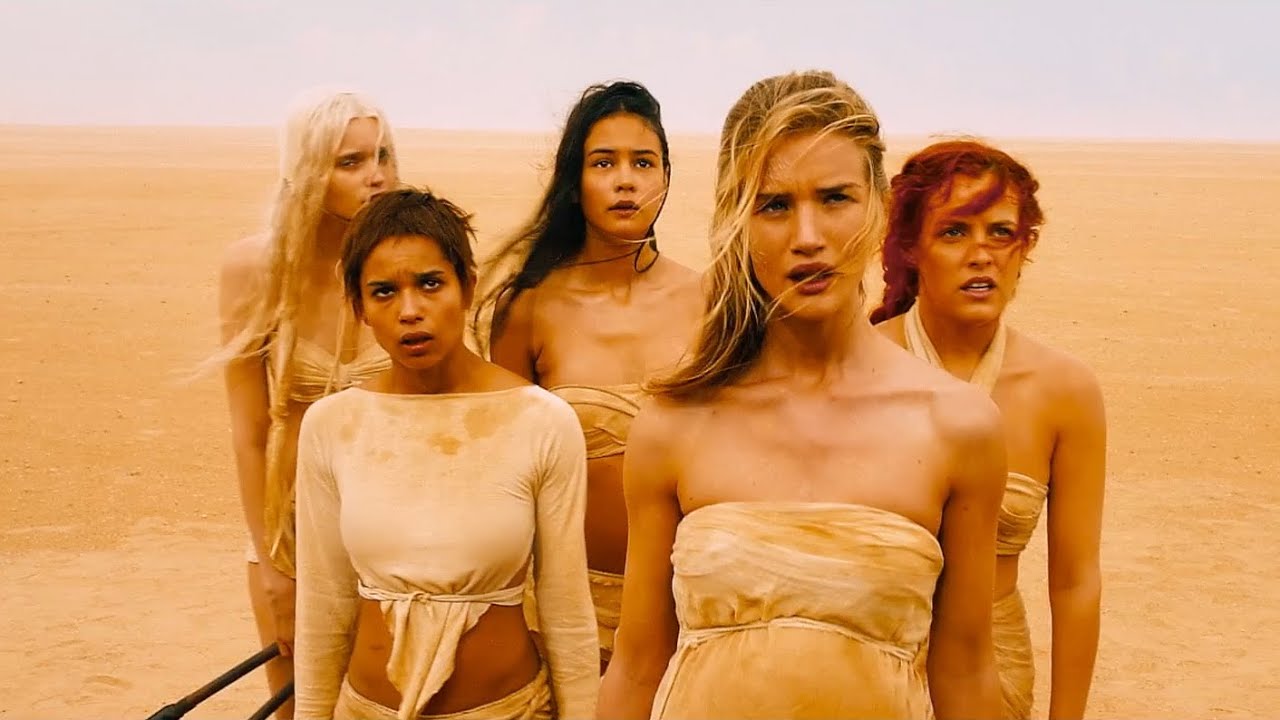
The Wives are a fairly traditional McGuffin. Everyone is after them. For Immortan Joe they're a precious commodity, for the Warboys they are a way vehicle into Immortan Joe's good graces and for Furiosa they're a way to hurt Joe in a way he'll remember being hurt. Many storytellers, I would go as far as to say most Hollywood storytellers, would be content at that. In other words they would be happy writing sexy lamps.

What makes Fury Road unique is that the Wives all have their own opinions, wants and needs. They effect the events of the story by their actions which are based on their own motivations. They use what little power they have to cause changes in the world around them.
So how can you do this in your own story? First of all

Know what your characters want

It always seems to come down to that, doesn't it? Have your characters want something and want it badly. Even if it is for their lives to remain the same, the kind of thing they're comfortable with. Everyone wants something and everyone considers themselves to be the main character in their own lives. On Fury Road the Wives want to live free, and they're willing to die for that.

Make them unique

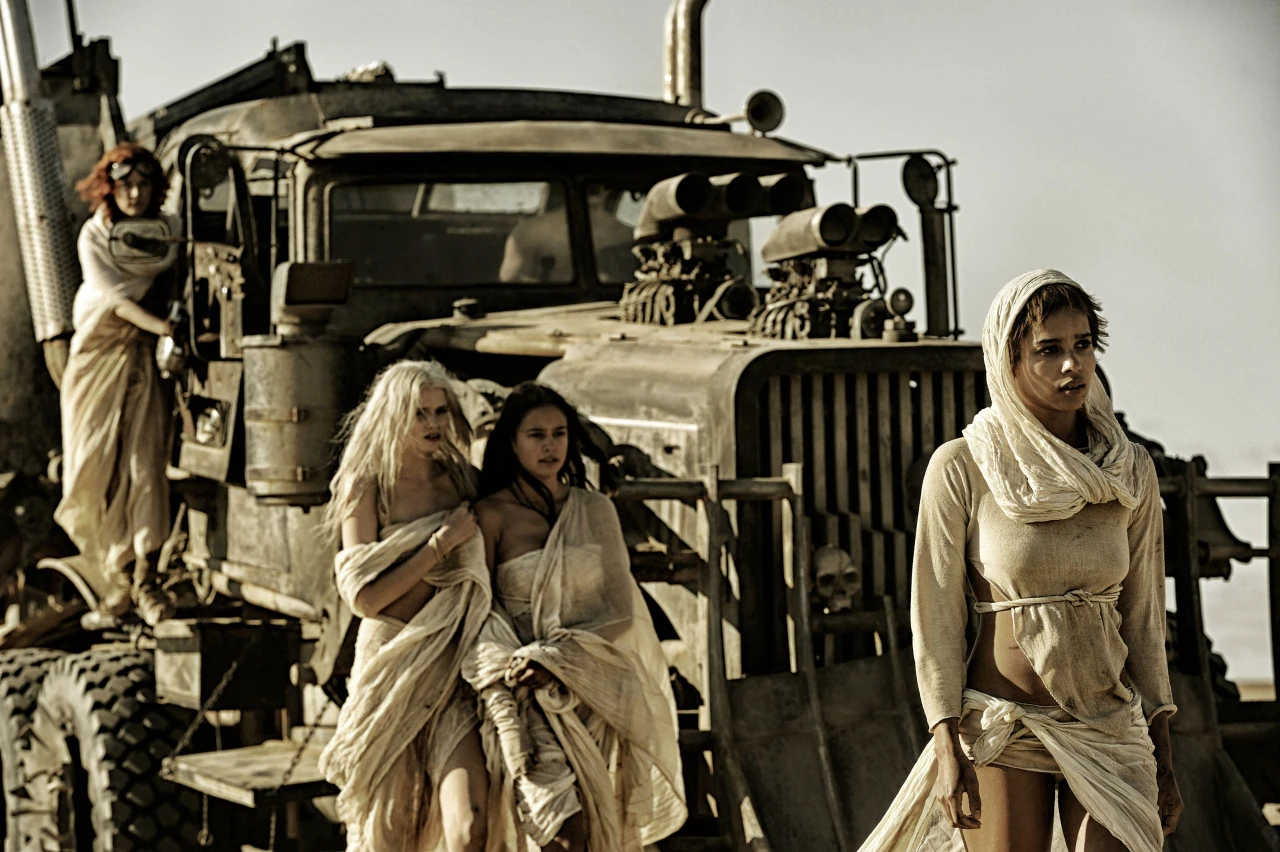
Let's start with the notion that McGuffins are people too. On Fury Road, the Wives form one huge McGuffin with many limbs in terms of plot. But each of them has something they're good at, something the others don't have. Toast is good with guns, Capable is good at listening, Cheedo has an actual arc that goes from being afraid to being brave while The Dag is all about the future.


Give them agency

This is a seriously hard thing to do. Characters with agency cause disruptions. They make your neat and tidy plot into a rambling mess. They also breathe life into the story. They create conflict when what they want collides with what the main character wants. This can cause problems if you're not careful since the ancillary characters can easily take over the entire story. But that might also be a sign that your main character is not interesting enough. On the Fury Road the Wives' agency shows up in Cheedo distracting Rictus so she can help Furiosa, in Angharad's lean out of the cab to mess up Joe's shot, in Capable harboring Nux and many other small ways. They don't steal the show because Furiosa and Max are much more interesting than anyone else on the screen.
Homework

You knew this was coming too. Take whatever thing you're working on. Grab one of the peripheral characters you (meaning not the main character or the antagonist), preferably one that has some dialog lines. Grab whatever scene they're in and rewrite it from the point of view of that ancillary character.

Wednesday, May 2, 2012

Fight! Fight! Fight!


There's no doubt about it, learning to craft words so that readers are swept up to another world is hard work. Writers must paint captivating scenes, create believable and sympathetic characters and then have them do amazing things to boot. The real kicker is, everything has to be pictured crystal clear in the reader's mind.

One of the trickiest times I've found to pull it all together is when writing fast moving action sequences - especially fight scenes. So, I thought I'd share a few of my own super secret action scene combat techniques that I picked while trying to figure this out for myself.

Study Up

I should probably read up on the theory of writing action sequences, but you know, for some reason, I haven’t yet. What I have done is picked up a lot of action-y books and read the fight scenes very closely (observation is a great education). Here are a few things I've learned:

  • The build up is just as important as the actual action. The time for inner dialogue, explanations and innuendo is before the characters put up their dukes. The anticipation heightens a reader’s response to a fight scene. (Which, btw, is also probably one reason why starting a story with a major fight scene rarely works. We have no background and no investment in the characters, no matter who they are.)
  • Be extremely concise. Say what you mean, mean what you say. Which is actually really hard. Now is not the time to be flowery.
  • Fight sequences are usually brief. Oh, there might be a few of them stacked together to finish the scene, but they can often be broken down into discreet, manageable pieces.
  • Please silence your inner dialogue during the action scenes. Please don’t do any flashbacks in between karate chops. Don’t wonder why the opponent’s eyes are so blue, or how he got that minuscule scar above his left eyebrow. Save it for after your mc’s knocked him out and he/she has time to look.

How to Write Fight Scenes Step By Step

Okay, this is probably extreme, but sometimes I just get so hung up that I can’t move forward even to do a hold-your-nose rough first pass. This is how I’ve worked through it successfully. And yes, I do realize it’s overkill on thinking-things-through, but this is how I function.


Write up a to-do list sequentially of every little, tiny thing that needs to happen in the scene. For instance, if I was writing this passage from A Conspiracy of Kings (I wish I could write like mwt), my list might look something like this:

  •  Get into the room.
  • Find the sword under the couch.
  • Unsheath the sword.
  • Someone’s coming in.
  • Get up, ready to fight.
  • Kill the enemy.


The study had a door and a window. I jumped through the open window because it was faster and fell to the stone floor on my stomach, scrabbling in the dust under the couch until my hand closed on a stiff leather strap. I dragged the sword free of its sheath with difficulty and turned, still on my knees, as a man filled the doorway. Coming from light into the dark, he was looking ahead of him, not down toward me. My lunge, as I came to my feet, took him in the chest as I drove the sword upward with the strength of my legs. Even rusted, the sword slid through him, and I found, for the first time, how easy it is to kill a man. (A Conspiracy of Kings, p. 8 - Megan Whalen Turner)


Below each bullet item, write one to three short sentences that tell exactly what happens. Here’s how a piece could potentially begin as short sentences using a passage from Graceling:


1She jumped and kicked at his chest. 2He crashed to the ground / and she threw herself on top of him, / struck him in the face once, twice, three times, / and kneed him in the side before 3he was able to throw her off. 4She was on him again like a wildcat, but as / she tried to trap his arms 5he flipped her onto her back / and pinned her with the weight of his body. 6She curled her legs up / and heaved him away, and then 7they were on their feet again, / crouching, circling, striking at each other with hands and feet. 8She kicked at his stomach / and barreled into his chest, / and they were on the ground again. (Graceling, p. 78 – Kristin Cashore)


See if that order makes sense. Switch bullet items around until it does.

Flesh out the short sentences. Either combine them, or add a little more detail etc.


Go back and proof it a final time. Is the action clear? Is it in order? Run it past someone and see where they get confused. Proof it again. Voila, the perfect action scene.

Halfway to the trees an awful sound reached his ears – the hoofbeats of a single horse closing in. Daring a glance back, Alek saw a horseman on the other side of the stream, riding hard. His carbine strap was wound around one arm.

He was ready to fire…

Alek turned away and scrambled up the bank. The rye in the fields was chest high, tall enough to hide in. A shot rang out – a geyser of dirt shot up a meter to his right. He dove into the rye, thrashing away from the stream on hands and knees.

The carbine cracked again, and the bullet sliced past Alek’s ear. His instincts screamed to run farther in, but the horseman would see the tall grass moving. Alek froze where he was, panting. (Leviathan, p. 129 – Scott Westerfeld)


HTH

~Susan

Monday, April 16, 2012

Mining Your Family History for Story Ideas

One of my favorite TV shows (which my children and husband tease me about) is Who Do You Think You Are. On the show, celebrities, (and almost celebrities) research their family history trying to find a connection to their past, or find answers to some unknown family secret.

It's awesome.

My mom is a genealogist. That's what she does as for fun, money, and milkshakes.

Sarah Heald
Personal Hero
So I've always known about where I came from.

 I've always heard stories of my great great grandmother Sarah Heald, who sang for the Queen (or was it King?) of England, and then gave up a promising opera career in England to join the Mormon church and settle in a small town in Idaho.

I've always known about Annie Welker and her corncob pipe, who as an early Mormon pioneer, asked her husband to marry her widowed niece in Canada.

William Brewster has my nephew's eyes
I've known about king Niall of the Nine Hostages, who is my ancestor ( along with basically everyone else with Irish blood).

  I've known that both my mom and my dad are related to William Brewster who came over on the Mayflower.

 It's part of who I am to know where I came from.

When I look back at these names and dates written on a pedigree chart, I can't help but wonder what if felt like to grow up when they did. I can't help but wonder how my great great grandparents met, and what flowers adorned their wedding. I can't help, as a mother, to sympathies with my great (and great great grandmother) who lost children. I wonder what it'd be like to be the unmarried younger sister, whose name never continues on in perpetuity.

I think every person on this earth has heartbreak, and therefore, every person on this earth has a story. To me, I think  about the worst thing in the world that could happen is to be forgotten.

But there's just so many of us on this planet. So many people live and die, and never do anything that lives on or is remembered. But that doesn't mean our stories aren't important. It doesn't mean our heartbreak isn't real and important.

As the product of these strong men and women, whose choices and heartbreak determined how and where I was born, I have to go back and tell their story. Their stories. Because who else is going to do it?

If you don't happen to have a genealogist mother, or great aunt, or second cousin in California that does this kind of research, maybe you are the one who can start. Maybe you have an adventure in front of you in discovering where your people come from.

Here's how you start.


  1. Ask those who know. If your grandparents are still living, ask them about their family, about their parents, their upbringing. Ask your mom, and your cousins, and just keep your eyes and story net  open for stories.
  2. Look online.  Familysearch.org and  ancestry.com, are two awesome resources to get started finding your story. Just type in your name, and look at what has already been discovered. 
  3. Look in your community for resources, like heritage centers, or libraries, historical societies. You never know what stories await you, until you look.


One thing else to think about, is that you don't need to research until you find the end of your line in order to find stories. My favorite episode of Who Do You Think You Are was the episode with Rita Wilson. She wanted to find out more about her father, and the secrets she uncovered about her recently passed father could break your heart. It's amazing what we don't know, at least until we look.

It's not about finding dates, and birth records. It's understanding who your parent really are, and what your grandparents felt, and why you were born where you were. It's about finding out where you got your curly hair, or your nose, or stubbornness, or maybe to explain away your children's rebel streak.

It's about connecting the dots, and doing the math, to find out how old someone was when they were married, or lost children, or died. It's about discovering the real life characters who made you who you are.

As a storyteller, doesn't that just make you curious?

Friday, March 9, 2012

Sarah's Poetry Corner: A Cacophony of Words

Peter Newell - Through the looking glass and what Alice found there 1902 - page 20
"The Jabberwock, with eyes of flame, 
Came whiffling through the tulgey wood,
And burbled as it came!"
Illustration by Peter Newell
We don’t usually think of cacophony as a good thing. It’s the word people use to describe an orchestra warming up—a hundred insruments playing, none in sync, none in harmony. It sounds… bad.

Poetry often evokes thoughts of something smooth and fluid, pleasing to the ear. This is euphony. Sounds good, right?

But in truth, poetry is image in rhythm and sound. And it takes all kinds of rhythms, and all kinds of sounds.

Why is a Proser writing about poetry, you ask? Three reasons:
  1. All writing seeks to elicit emotions in the reader. Poetry just  does it efficiently.
  2. Almost all poetic techniques can be applied directly or adapted to the novel.
  3. I dig it.
According to Encyclopædia Brittanica's entry on euphony and cacophony, “Inadvertent cacophony is a mark of a defective style.” There's a simple answer to this: Don't do anything by accident.

Sometimes an unpleasant image or emotion requires sound effects to match. Something scary can be made scarier by clashing, dissonant words. Or it can be made scarier still by unexpected euphony, like opening a horror movie with a lullaby.

Perhaps the most famous example of cacophony is Lewis Carroll's Jabberwocky:
Twas brillig, and the slithy toves
  Did gyre and gimble in the wabe:
All mimsy were the borogoves,
  And the mome raths outgrabe.
“Beware the Jabberwock, my son!
  The jaws that bite, the claws that catch!
Beware the Jubjub bird, and shun
  The frumious Bandersnatch!"
Contrast the fluid melodies of Edna St.Vincent Millay, as in Sonnet XLIII:
What lips my lips have kissed, and where, and why, 
I have forgotten, and what arms have lain 
Under my head till morning; but the rain 
Is full of ghosts tonight, that tap and sigh 
Upon the glass and listen for reply, 
And in my heart there stirs a quiet pain 
For unremembered lads that not again 
Will turn to me at midnight with a cry. 
Thus in winter stands the lonely tree, 
Nor knows what birds have vanished one by one, 
Yet knows its boughs more silent than before: 
I cannot say what loves have come and gone, 
I only know that summer sang in me 
A little while, that in me sings no more.
And because I can, I'll self-blog-publish an exercise I did with writing teacher/genius Jack Grapes, which he calls "teeth and mouth." The point of the exercise is to write something that will exercise your mouth and use plenty of teeth when you read it out loud, which is similar to cacophony. That constraint forced my mind to come up with some unexpected images. (Do try this at home; you won't believe how fun it is.)
Newspaper-Sourced Instruction to California Nature Enthusiasts
Should you come across a cougar,
hiking through sagebrush, rattlesnake country
caressed by the central star's direct heat foiling spf fifty—
Should you come across a cougar,
resist urges prompting statuesque stillness,
the benedict trick temptation to cower
from the stalker's muscular dance of strength
that shames your thumb-gifted awkward carriage.
Should you come across a cougar,
first clutch straggling children close.
Scream, stretch, enlarge,
throw backpacks, keys, recyclable bottles, rocks, twigs, shoes,
flap your unzipped puffy quilted vest to mimic the hawk's expanse,
ornithological person-beast cultivating cowardice in
the black-belt kung fu sharp-toothed rabid mouth
ultimate fighting champion
of rippled silk furred physique.
Do not approach
to waste opportunity on stupidity's cruel punishment.
You have without coincidence happened upon a puma
who arranged the tête-à-tête
in the shadows of your casual hiker's gait.
Fight back if attacked.
Emerge from this match a braggart
back in your choking concrete habitat,
but forget not gratitude
for fortune's pickled choice
for each sacred creature
for a park ranger lecture on cat-specific technique,
and for the fact
that it wasn't
a bear.

Note 1: This blog post originally consisted of only the above poem without an accompanying discussion. Apologies to my intrepid initial commenters, who may have been, ah, confused.

Note 2: MaryAnn recommended another poem: The Panther, by Rainer Maria Rilke. The words flow in a quiet melody that beautifully enhances its meaning. Rilke was known for his musicality, and if you listen to the German version, below, you will get a sense of that music even if you don't speak a word of German. Translators have a lot to think about, don't they?

Friday, December 30, 2011

Journaling Ideas for Mental Health

I do not keep a journal. I do not record the details of my life or of my emotional state with any regularity. I do not have a daily writing ritual or a treasured notebook in which everything is meticulously recorded.

I have nothing against journaling, except in the specific case of my own emotional health. We depressive types are often lovely people—really!—but many of us share a certain thought pattern: rumination. Because I am most likely to seek the company of pen and paper when I'm least suited to being with actual people, my attempts at journaling used to end up like this:
I'm the worst housekeeper ever. The kitchen's so gross it will take me an hour, and then I’ll be even more tired and I won’t get any writing done. What is the point? WHAT IS THE POINT? There is no point. It’s all utterly pointless. Do the dishes, then more dishes get dirty, then do more dishes, again and again forever as I hurtle towards a meaningless death. Everything sucks.
See what I mean? The journal is not a healthy outlet for rumination. Expressed mathematically:

But still... I need to write like I need food and air and very occasional interaction with human beings. So what's a writer to do? Here are my tips for avoiding the tornado:
Low-to-Zero Expectations:
If I buy a notebook, I do it with full acceptance of the following:
  • It may get used off and on for years or be filled in a month.
  • I’ll have at least two other notebooks in rotation at the same time because I write in whatever I have handy.
  • It will be an unsorted mish-mash of fiction, stream-of-consciousness drivel, grocery lists, and important dates and phone numbers. I will never remember to transfer those important dates to a calendar.
  • Eventually, I will let the kids doodle all over it at a restaurant.
  • At some point, I will spill water or coffee, rendering most of the pages unreadable.
  • 99.9% of any notebook is too boring to re-read.
Take out the trash
Sometimes I need a brain dump before I can settle in to my "real" writing. I set a time limit or a page limit, and I just let go. I don’t dwell on one idea or try to give myself a pep talk. I write about what I need to do, what I don't want to do, what I dreamed about, why I hate my novel, etc. I don't go too deep and I don't try to analyze. When I reach my limit, I stop and move on to the work of the day. The key difference between this and ruminating is that I don't see the negative stuff as anything but taking out the trash. That mindset is critical; you can't believe everything you write.

Wax Poetic

While simply writing down bad feelings isn't very helpful, transforming them into poetry can be. Include line breaks, choose each image and each word carefully, and you might find yourself more involved in crafting a poem than in whatever emotional crisis started your journey into free verse. There's a creative objectivity that goes along with art, and it often gives me the distance I need to get though a bad time.
Her worth was the dusty trail’s
desire.
She puts lotion in her hands,
always dry now,
and in the geometry of her skin
sees the cracked desert clay
no water for her thirst.

Get Kinky

There's freedom in writing stream-of-consciousness, letting yourself get as random and weird as your mind will allow without regard for logic or meaning. The following is utter nonsense, but writing it rescued me from a pint of Häagen-Dazs.
Diet Coke + Mentos = Awesome
Devil peals out of my car's subconscious keychain and I'm laughing out loud the nocturne, gentle and slow. Why is that cat clawing at nothing, air, a vacuum, a blue blinding hell-born light?  My mind is bottled up and fizzy and minty-fresh, vaguely European. I'm a Mentos, a science experiment, imploding in the sand. My toes call me and plead to feel the sun.


Try it, really. Your brain will thank you.

Moment by Moment

(Not my actual husband)
Feelings are like leeches—slimy and sticky at the same time. You can't pin them down, but the act of trying tends to make them hold on tighter. So don't write feelings. Write moments. Was there a penny on the floor? Heads or tails? Were you twirling a stolen hotel pen in your fingers? Was there sunlight or lamplight or the flickering of a fluorescent bulb? A moment during a conversation with my husband, between lines of dialogue:
I held the last glass from the dishwasher; it dripped water from its concave base onto my hand. John stood against the counter, slurping the last drops of Kellogg-sweetened milk from a blue ceramic bowl. His sandy hair stuck out in eighty different directions, and his left arm had a bright pink pattern of sleep creases. The children whispered about their cereal being poop, which meant they were eating poop and that made them poopyheads. I pretended I couldn’t hear them over Elmo’s World.

Letting Go

When you're working on a story, sometimes it flows and sometimes it's really work. That's just the writing life. Don't let a journal become an obstacle. If it isn't working for you, put it away. Go make some memories. Let life happen, and if the best times never make an appearance in your stack of notebooks, that's okay. There's more to the writing life than writing.