Showing posts with label help please. Show all posts

Monday, October 6, 2014

Working with a writing coach

To tell you the truth, I suggested we do a theme about education as a writer because I wanted to talk about my experience with a coach. But now that I'm actually here, I'm not entirely sure what I wanted to tell you. So I'll start at the beginning.

Back around the end of May I finished the first draft of my fourth novel. It is also the first of my novels that I'm actually planning to have reach publication of one form or other. And yet it is deeply flawed on a number of levels, not least of which being the fact that the original ending was the most contrived thing to be contrived since Home Alone 2.
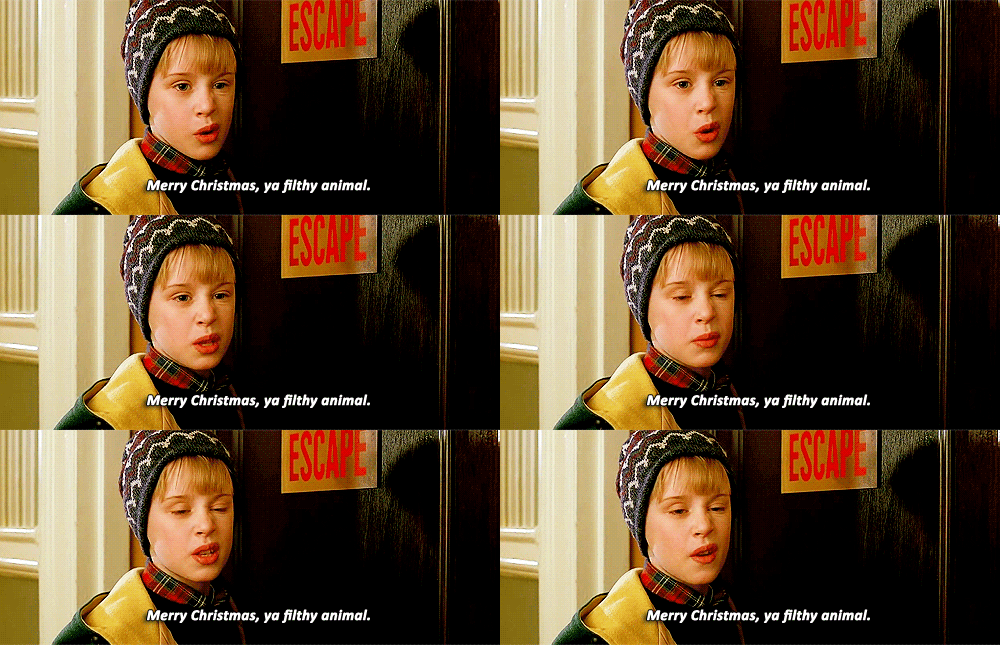


Like a good little planning-to-be-pro writer I started working on the outline of the next book I'm planning to write while I was letting my novel rest for the recommended month. Since I haven't yet found a novel plotting method that would completely work for me I was also reading Cathy Yardley's Rock Your Plot. Cathy's site Rock Your Writing has some lovely free dowloads to accompany the books and while I was there, I took a look around (something to think about, marketing wise) and it turned out Cathy had a range of services to offer, including revision coaching. I bet you can guess what happened next.
Ryan Gosling understands my pain

Pain! That's what happened next. Pain and suffering though thankfully no bloodshed. Cathy's coaching package consists of four one hour calls by phone or Skype and email answers to any questions. On our first call we went through character motivations then Cathy had me read through the whole manuscript, making notes and taking down scene motivations. It's a good thing I subscribe to the "dare to be bad at first" school of writing because reading through that book left me feeling more or less like I'd been run over by a series of trucks.

It's a far better thing that Cathy has been doing this for a while. I sent her a scene outline of the first draft as it was, warts and all and in two consecutive calls we went through it scene by scene, cutting mercilessly where necessary, adding new scenes and revising character motivations as well as tightening tensions all round. The result was an outline for a much better book and a plan for revisions. As I write this I am in the middle of executing said revision plan and outline and I have one more call remaining to use when I eventually melt down in the middle of my revision round.
That's nice of you, Ryan, but I know you're just saying that because you love me.
I would highly recommend working with a coach, especially when you're starting out. My experience with Cathy has brought me that much closer to finally understanding novel structure and I'm going to end up with a great book because of it. Going through my first draft with someone more experienced has given me perspective that I might have gotten without it but it would have taken me a long, long time more than it did with Cathy's help.

Now all I need to do is finish my revisions, get my query letter in shape and start working the rounds.

Oh yeah, there's that too...

Thursday, May 29, 2014

Writing music: Zoe Keating (reposted and updated)

I was saddened to hear last week that the husband of Zoe Keating, one of my all-time favorite musicians, has been diagnosed with late-stage metastatic cancer. They have health insurance, but apparently it does not cover nearly enough of the very, very expensive treatment.

And to make matters worse, apparently the hospital didn't send Blue Cross the proper paperwork, so Blue Cross sent her family a letter saying, "Coverage for the requested service is denied because the service does not meet the criteria for “medical necessity” under your description of benefits...  we cannot approve your hospital stay for cancer. We do not have enough facts to show that it was medically necessary." Later, when talking to a representative, Zoe learned that apparently this is the form letter they send out when they don't get proper paperwork from the hospital detailing what care was provided/needed. Wait, what? The letter is not even a "Sorry, we need more info before we can cover." It's instead 'YOU ARE DENIED." Yeah, Blue Cross (who is my insurance company), you might want to work on that wording.

So! If you are in the mood to acquire some great cello music, now would be a good time. Here is the link to Zoe's Bandcamp page. She doesn't have a straight donations page at the moment, but bandcamp allows you to pay any amount over the asking price for an album. You could also buy Zoe's music on ITunes, but she gets a greater percentage of the cost of the album if you go through bandcamp.

Here is my original post.

*****


For my last music post, I talked about a group whose music I used to create a dark, atmospheric mood for writing. But this time, I’ll switch to music that still has dark undercurrents, but is also lovely and even hopeful at points. At least, that’s how I hear it.

I first came across Zoe Keating many years ago when she was the opening act for Imogen Heap. One woman and her cello seemed an odd opening for an electronica artist, but I was almost immediately transfixed. I desperately wished for a seat so I could close my eyes and focus on the sound, rather than the jostle of other concert-goers and the fact that I’d stupidly worn heels to a standing-only concert. In any case, I've been hooked ever since.

(Permission through Zoe's flicker album; shared under a partial license, as long as I attribute the work to its original source - flicker album here). 
The cello is one of my favorite solo instruments (my other favorite is the oboe, though it’s harder to find solo oboe music). Zoe creates gorgeous, layered compositions, so it sounds like it's an entire symphony playing. It's hard to explain, so just listen to some of the music (thank you, Zoe Keating's official Soundcloud!)

  
EXURGENCY 


Legions (War)


Here's a live performance:

I listen to Zoe's music when I need inspiration, or in writing any bittersweet passage. I listened to Fern continuously when writing the last chapter of my novel, Graveyard.

You can also hear a longer selection of her music on her Soundcloud page.

Take a listen, and have a lovely summer evening.

Thursday, May 31, 2012

Rationalizing magic


I've been thinking a lot lately about how I write stories, and how my methods might be causing me some difficulty.

As I've mentioned before, ideas are the easiest for me. However, they come in bits and fragments, rather than whole story ideas.  For example, I imagined a girl tripping and falling through shadow into another dimension. Marbles that hold bits of memories and music. A society where the young people never see summer, because of a plague that happens only then. And an area so contaminated that no magic can exist there.

The problem I have is making those bits of ideas work in the context of a whole story... and a logical worldview.  I can get so frustrated with the rationalizing process that my interest in the story wanes.

Let's take the example of the place so contaminated that no magic works there. I liked the idea of there being sites around the world where no magic can exist. I've been reading about several case studies - Fukushima is always in the news. And about Japan's Minamata Disease, caused by years of chemical factories spilling tons and tons of organic methylmercury into the ocean, leaving thousands of people with nerve damage and developmental disorders (note: do not google Minamata Disease, especially pictures, if you have a weak stomach or want to be able to sleep  tonight.  I'm referring to descriptions of effects on children and a few horrifying photos).  Fukushima, of course, is always in the news.  And, of course, Chernobyl (last year, I read Voices from Chernobyl, made up entirely interviews with survivors. It's one of the most amazing and heartbreaking works I've ever read).

An abandoned grand piano in Pripyat. Photo attribution Timm Suess, from Wikimedia Commons.

So it all seems great - poison, toxins and radiation disrupt magic. But how? The scientist in me wants to know, the reader in me hates when things don't make sense.  Never mind having no idea how toxic metals might interact with magic, I don't know enough about physics to explain how radioactive iodine and other particles might interfere with whatever energy defines magic. In the current short story I'm working on, I don't go into it too much, except to state that magic comes from the energy of all living things, so anything that disrupts or corrupts that flow of energy corrupts magic.

So how about you? As a reader, how much logic do you expect from magic systems? Do odd magic systems and ideas bother you in a novel or short story if they're not properly explained?

And how do you, as writers, handle ideas that seem cool but don't make immediate logical sense? How do you explain them without getting frustrated?

Thursday, January 26, 2012

Multiculturalism


Just a quick post from me tonight – volcano story is due in six days (eep!). It's not nearly as far along as it should be, but then, I've always been a terrible procrastinator. I've got most of the story plotted out, but there's still a lot of work to do.  I'm not sure I'm going to be able to get it read before I have to send it in (Tuesday night at the latest), which is not ideal, but I'm going to see how it goes.

The story still needs a title. Does "Fading into Fire" sound like an interesting story title, or like I just threw darts at a dictionary?  It might not be suitable anyway (and plus alliterative titles are rather overdone).

Here's what the story has come to be about:  
Centuries after a new ice age pushed the arctic tribes to the brink of extinction, Nini's people live safe in the haven created for them by their god, Ummat.  But in recent months, Ummat's power had become unstable.  The volcano that is the heart of his power rumbles, and demons mass at the borders of the sanctuary.  When a stranger comes with claims that he has been sent by the High Gods to take the place of the ailing Ummat, the tribe fears that they have no choice but to accept the help they are offered.  Nini senses that something is not quite right with the deal, but how can she argue with the word of the High Gods? How can she make contact with Ummat when even his shaman can't make contact? And what is one woman's word against the doctrine of the heavens?

(Note: The whole thing about substituting one god for another makes much more sense in my story, but would take too long to explain here.  Well, fortunately the market doesn't require me to submit a summary.)

In this story, I've chosen to attempt to portray, for the first time, a non-European culture.  Nini and her people are loosely based off the Inuit tribes of Northern Canada and Alaska.  I've learned as much as I can in the past month, but I still wonder if I should have made the effort without proper time to research. The thing is, the story itself isn't dependent on their identity as Inuit, though the Arctic setting of the story is (I could have also gone with the Saami or Yupik, of course, but there were more resources in English available on the Inuit). 

I'm lucky enough to live in close proximity to the Geisel Library at UC San Diego.  Not only is there an enormous weatlh of books, but the design is incredible. I felt like I should have been researching spaceships!


So what do you all think?  Is it a bad idea to portray a culture that one doesn't thoroughly understand (i.e. lived in, visited, or know someone well from the culture)?  Is portraying a culture that one doesn't understand an empty exercise in multiculturalism? In this case, does my good intent triumph over whatever poor results I may produce, especially given that in my story their culture may have been modified by the Ice Age and the conditions of the sanctuary?  How can I do this better next time?

(And yes, I am seeking honest answers. I'll probably still keep the story the way it is, but I want to be sure to make good, respectful choices in the future).

Wednesday, January 18, 2012

Easy Peasy - Newb!


 I think to get to the point of this post I'm going to have to start with some background first. You see, I've only been writing  for about two years (on my second writing anniversary coming up in a few months, I’ll tell you the story of how the American Red Cross almost killed me and how Jason Bourne saved my life – or at least jump started my writing career). Believe it or not, before that event there had been nada, zilch, not a creative word from my brain since high school.

Because of my fledgling status as a writer, I often feel insecure when I post about writing - like people are rolling their eyes saying, “Sheesh, Newb! I knew that a decade ago, at least!” Which is probably the truth (yes, even you there checking in from Malaysia – you know more than me). You’ve all just been too kind to say anything.

I’ve tried my best, though, to learn the craft of writing and practice, practice, practice. And now I find myself in possession of a bright, shiny manuscript. Or a stack of scribbled pages. Or a pile of hogwash, depending on how I feel the day you ask me about it. My novel has everything it needs to be a good story – a boy and a girl and a setting and some conflict and a few bad guys thrown in for good measure.

But what it really needs is a good editing. And editing is killing me (even now, just thinking about writing this post about editing I feel the urge to take a break and go watch another episode of Burn Notice).  In every stage of writing I’ve gone through I’ve thought, ‘Oh, it will be so much easier when I’m doing X,Y, or Z.’ If I’m brainstorming, outlining will be easy. When I’m outlining, I think the actual writing will be easier. And now that the writing’s done – well, editing isn’t easier; it’s dang hard.


 What I’d really love to do is turn this post over to all of you who know what you’re doing so you can share some hints on how you edit successfully – I could use the help.

Maybe to jump start the conversation, I’ll share with you my woefully Newb understanding of editing:

First, begin with examining the big arcs. Are your characters and their character progressions compelling? Does the storyline have enough meat to carry the tale to the end? Have you got your secondary storylines all tucked in at the right places? Does it all make sense? What are the gaping holes that need patching?

Second, look at each scene. Does it move the story forward, reveal information or help the reader connect with the characters? (technically scenes should do all these)

Lastly, look at sentence structure and word choice. Are sentences of varying lengths and construction? Have those pesky adverbs and weak words been culled? Does it flow smoothly when read out loud? Does it really say what you think it says? (Outside eyes are often a must on this part.) And, hardest of all for me, how’s your grammar and punctuation? (Me and commas - we’re not friends.)

Technically that seems like a straight forward plan. The hard part of writing is done, right? So editing should be easy peasy, right? Not so. Here are a few other things I’ve picked up on this learning curve from Hades. Netflix Streaming is not a writer’s friend. Chocolate might be my friend, but it is not the friend of my waistline. The thesaurus is only my friend if it doesn’t take half an hour to find that one special word. My husband remains my best friend even when his shoulder gets soggy from me crying on it.

And the number one thing I’ve learned about editing – start at the top of the above list, not the bottom. Do NOT begin with making pretty sentences because you will end up killing them (and kill most of your writing time, too). Get the plot in order, get the scenes in order, and then get the words in order.

Easy peasy.  (And there’s still probably time for Burn Notice, too.)
How do you successfully edit? (Please share. Please!)

~ Susan

Thursday, December 8, 2011

Wait, does this need a title too?

In Sheena's post on Monday, she asked us for tag-lines, and my brain veered onto the superhero route (Prosers: It's a bird! It's a plane! It's a 3000 word sprint!). And that made me think of my own strengths and weaknesses. Now, I know it's bold to declare my weaknesses as a superhero writer where the whole world could see, but I'm just crazy like that (I don't fear you, Malaysian spambots!)

It's not the general weaknesses that we're going to talk about tonight. No, we're going to talk about the really, really irritating ones. The things that it seems inexplicable that anyone could fail at. In my case:

-I can't make fried potatoes to save my life (no matter how many tips people give me).
-It takes me freaking forever to open those stupid plastic produce bags at the grocery store. (THIS SHOULD NOT BE HARD)
-I can't wear clothes for five minutes without getting something on them, no matter if I haven't drank, eaten, or left my house (I don't own a lot of white).
-I'm terrible at naming things

They taunt me with their delicious crispy goodness!


It's the last, of course, that causes me the most trouble as a writer. I do okay naming characters, but as a fantasy writer, I'm always trying to create new worlds and places, all of which seem to require names. The Steve* Forest might be funny at first, but you can't name everything in your world Steve without causing great confusion.

I've searched around for tips, but none of them seem to work for me. I fail utterly at making up random words, and though I can sometimes entertain myself by playing with Google Translate, coming up with names by searching random words in 20 plus different languages is not very time efficient.

hat whole situation is annoying, but what's really bad is my inability to come up with titles for a story. And titles matter. I myself am guilty of judging by titles. I certainly picked up A Fistful of Sky by Nina Kiriki Hoffman because of the title, and it was an awesome book. Now she's one of my favorite authors, but I wouldn't have made a random selection of the book if the title hadn't grabbed me. It works the other way around as well. For example, I haven't read The Name of the Wind by Patrick Rothfuss yet in part because of the title. It's supposed to be really, really good, but every time I see the title I think, "The name of the wind is 'Steve'!" And then I snicker to myself for a few minutes before picking up a different book.

I'd always known this, but the message was really driven home for me recently. After years of sending around my story "Marbles" and not getting it accepted, I finally had the brilliant inspiration to call it "Music in Glass." And yes, it did take me years to come up with that alternate title.

The problem continues – one of my short stories in progress is currently called "Curse Story" because I have no other ideas for titles. And my novel is currently called Graveyard, which would be kind of boring even if a certain famous author hadn't just won every award imaginable for The Graveyard Book.

I prefer to wrap up posts with a positive note and solutions, but I really have no clue on this one. Any magic suggestions for how to find great titles for stories would be much welcome. I've tried all the standard things here too (looking at other titles I like and adjusting them to my story, for example), but none quite work for me.

And to not make myself seem like a complete incompetent, here are a few pointless things that I'm really awesome at:

-Identifying gulls in winter plumage to species level**
-Baking chocolate chip cookies
-Drawing stick figure zombies

What are your random strengths and weaknesses?


*Sincere apologies to anyone named Steve. I actually do this with a multitude of names, but this is the one that went in the post tonight.

**It is impressive! I swear! At least other ornithologists think so...