Showing posts with label writing tools. Show all posts

Monday, September 21, 2015

McGuffins and sexy lamps - Lessons from Mad Max: Fury Road part 3

Yes, I am still on about Mad Max: Fury Road! This time we're talking about ancillary characters. Before we really get started, let's define two concepts:

MacGuffin (a.k.a. McGuffin or maguffin) is a term for a motivating element in a story that is used to drive the plot. It serves no further purpose. It won't pop up again later, it won't explain the ending, it won't do anything except possibly distract you while you try to figure out its significance. In some cases, it won't even be shown. It is usually a mysterious package/artifact/superweapon that everyone in the story is chasing.

- Read more: http://tvtropes.org/pmwiki/pmwiki.php/Main/MacGuffin#ixzz3mLYYlk8Y
and:
If you can replace your female character with a sexy lamp and the story still basically works, maybe you need another draft.

- Kelly Sue Deconnick
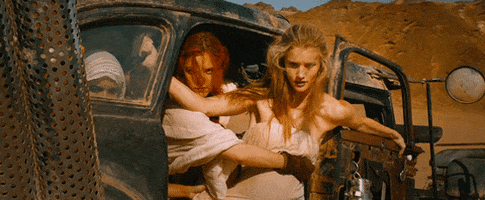
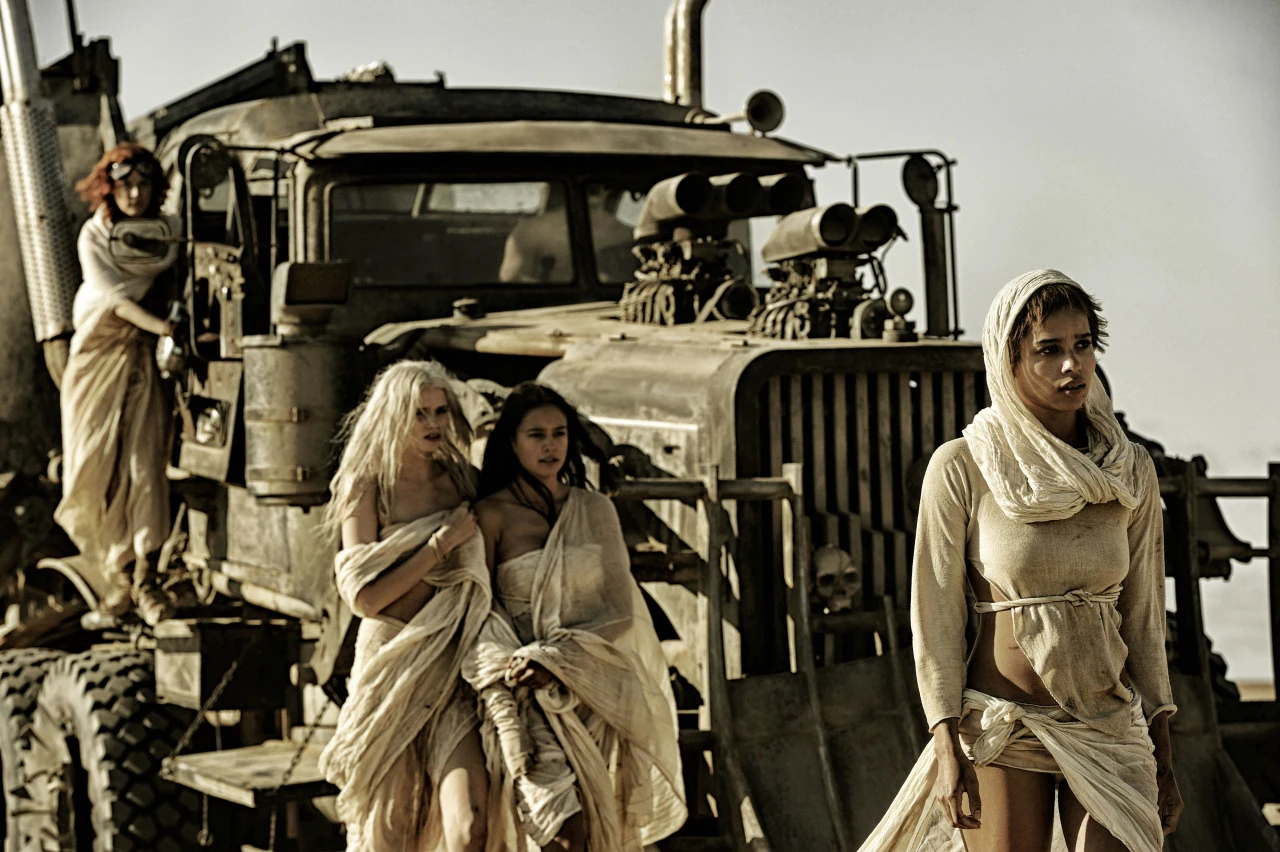
Which means that it's time to talk about The Wives!


The Wives are a fairly traditional McGuffin. Everyone is after them. For Immortan Joe they're a precious commodity, for the Warboys they are a way vehicle into Immortan Joe's good graces and for Furiosa they're a way to hurt Joe in a way he'll remember being hurt. Many storytellers, I would go as far as to say most Hollywood storytellers, would be content at that. In other words they would be happy writing sexy lamps.

What makes Fury Road unique is that the Wives all have their own opinions, wants and needs. They effect the events of the story by their actions which are based on their own motivations. They use what little power they have to cause changes in the world around them.
So how can you do this in your own story? First of all

Know what your characters want

It always seems to come down to that, doesn't it? Have your characters want something and want it badly. Even if it is for their lives to remain the same, the kind of thing they're comfortable with. Everyone wants something and everyone considers themselves to be the main character in their own lives. On Fury Road the Wives want to live free, and they're willing to die for that.

Make them unique

Let's start with the notion that McGuffins are people too. On Fury Road, the Wives form one huge McGuffin with many limbs in terms of plot. But each of them has something they're good at, something the others don't have. Toast is good with guns, Capable is good at listening, Cheedo has an actual arc that goes from being afraid to being brave while The Dag is all about the future.


Give them agency

This is a seriously hard thing to do. Characters with agency cause disruptions. They make your neat and tidy plot into a rambling mess. They also breathe life into the story. They create conflict when what they want collides with what the main character wants. This can cause problems if you're not careful since the ancillary characters can easily take over the entire story. But that might also be a sign that your main character is not interesting enough. On the Fury Road the Wives' agency shows up in Cheedo distracting Rictus so she can help Furiosa, in Angharad's lean out of the cab to mess up Joe's shot, in Capable harboring Nux and many other small ways. They don't steal the show because Furiosa and Max are much more interesting than anyone else on the screen.

Homework

You knew this was coming too. Take whatever thing you're working on. Grab one of the peripheral characters you (meaning not the main character or the antagonist), preferably one that has some dialog lines. Grab whatever scene they're in and rewrite it from the point of view of that ancillary character.

Saturday, February 21, 2015

Karen's Secret Weapons

We're writing in February about Secret Weapons in writing. Shh. They're Seeeeeecrit. Actually, not really. Here's some of my fellow Prosers' posts about their secret weapons in writing:


(yes, in case you were wondering, Melanie and I do have a complex about the fact that our names don't end in an "a.")

I have to admit, I'm suffering from Where-I-Am-Right-Now tunnel vision, something that often afflicts writers, I think. I also suffer from it in reading, wherein the *last book I read* is my favorite book and the one I recommend to everyone. Unless we're talking Code Name Verity, in which case I might strap you down and use a Clockwork Orange-style device to keep your eyeballs on the page. Theoretically. Because it's that good.

But ANYWAY - where I am right now as a writer is knee-deep in revisions on my novel, ABNORMALS, which I haven't written the blurb for but is basically about teens with superpowers.

I have a few things I do to make revisions easier, since I really truly hate editing with a burning fiery passion. I thought I'd share them as secret weapons, because they're part of how I motivate myself to do the editing.


First, I edit on dead-tree paper. I do! I'm a tree-hugger environmentalist most of the time, but for my primary editing runs on novels I print the buggers out.

Next, I put the dead-tree paper into a binder. Cool binders are helpful, as I look nifty carrying around this read faux leather number, don't you think? (Sidenote: Office Depot or Max, I don't remember which, and it was only about $7-8! And reusable for the next novel!)

Third, LOTS of red pens. Lotsa. That's a word my kids invented when they were small, and we still use it even though they've long since learned proper diction. It conveys *so much.* How many M&Ms do you want? Lotsa. How many kids were on the bus? Lotsa. How many times should we ride the Harry Potter ride at Universal? Lotsa. See? Very useful word. I use lotsa red pens because it enables me to get the feel I want. One funny thing about working in paper is I can be fussy about the pen, the paper, etc. in a way you just can't be with typing. It's a great way to waste more time! And money if you're as addicted to office-supply shops as I am.


Speaking of paper - I really like grid paper or graph paper. I'm a visual-spatial person (do you know about visual-spatial learners? If not please go check out Linda Silverman's site and see her info about us weird folk) and found long ago that grid paper helps me orient myself on the right/left (east/west) axis of my page the way horizontal lines orient you on the top/bottom (north/south.) I feel better when I write on grid paper, so I have sought out good grid paper for years. This pad happens to be a Levenger (note, price is for a pack of 5. Still ridiculously expensive. I think I received these as a gift…) brand pad, they definitely make the best paper out there but it's the spendiest.

And so, there it is, my super secret writing weapons, a bunch of analog world items that help me survive the editing phase. To be honest, I do the same thing with planning/outlining (dead-tree planning) but without the red colored pens, I use black or blue or ticonderoga #2 pencils (black barrel/eraser preferred. I'm very fussy!) and some really nice paper or a new notebook. I love the smell of a new notebook, and the fresh feeling of possibility I get when opening a new one. Ah, if only that would actually write the words, eh?

What are your favorite meat-world writing tools?

Wednesday, July 3, 2013

Plotting and Plotting Again

This past school year my daughter spent a lot of blood sweat and tears learning her multiplication tables. She was so proud when she'd finally got them down. The funny thing is, I know that come September, she'll do it all over again. And the next year, too. Each time it will be a little easier, and she'll go a little faster until she'll wonder why they keep having her practice this 'baby stuff.'

I've come to think that writing is like that, too. We start out feeling like we expend a lot of blood sweat and tears learning the basics of plot and dialogue and enough description (but not too much). We go along for a while, pretty proud of ourselves for finally having got it.

And then we realize that we're still a little wobbly. Maybe the basics just don't come as easily as we'd like. Maybe we can see what our stories could be, but trying to get there seems beyond our current abilities.

I feel like that's what I'm facing in the area of plotting. And so I started going through the basics again. As I've read and studied (much of it stuff I'd already read before), I've realized that I'm able to build on what I already know and understand things in a deeper way. Hopefully it will translate into better - and more decisive - writing.

So, I thought I'd share two things that have helped me immensely this go around and how I morphed them in my own special and diabolical way :)

First the 9 box plot method. The easiest place to find this is on Cynjay's website. But it actually originated as a post by Chasing My Tail on the Verla Kay Blueboards (scroll down to Feb 6, 2009).

You really ought to try this out. Stories are visually plotted using a paper broken into 9 boxes (like a tic tac toe game). The connecting boxes help you see how the different parts of the story relate to one another - go ahead, give it a try. It's pretty neat.

Second is a website I stumbled upon that really spoke to me. Alexandra Sokoloff has a huge series on writing. She comes from a screenwriter's background and so she emphasizes pacing and specific events taking place in each act of the story.

Okay, and here's my own special take on it all.
  • My goal was to use the 9 box plot method on a board big enough to hold my whole story. 
  • I wanted to be able to remember all the specific advice from both the 9 box method and Alexandra's posts. 
  • I wanted to use sticky notes so I could rearrange to my heart's content.  (Somehow it gets muddled if I try to plot on the computer - that, or I get sucked into endlessly watching Youtube videos.)
  • And, I wanted the whole thing to be portable and not embarrassing to work on in public (nothing like hauling around a giant cork board wherever I go). 

Impossible you say? Not so fast.

Here's how I worked it out.

First, cut nine 7x7 inch squares from file folders. Tape them together so that they can fold along the seams.


The tape doesn't really look that shiny in real life.

Second, print off a synopsis of events for each of the Nine boxes. Paste these along the bottom of each corresponding square.
Third, paraphrase other pertinent info (I got mine from Alexandra's posts). Print and glue it to the left and/or right sides of each corresponding square. 
Fourth, cut sticky notes into fourths so you have long, 3/4 inch strips. Each square holds up to 16 strips without overlapping, so hopefully there's lots of room to tell your story.


See how easy it is to tell where I'm having problems - aargh boxes 7 &8

Best of all, it folds up so that you can work on just one row or even one square at a time.


And when you're on the go, the whole thing folds up to a seven inch square. It fits nicely in a folder with any notes or other stuff you might have.


Now you have a reusable plotter. Whether the story is long or short, you can (hopefully) tell if you're hitting all the right notes.

hth
~Susan

Wednesday, July 25, 2012

Product Review: Master Edit

Master Edit was one of the first writing tools I acquired (my dh got it for me), and I still find it useful, so I thought it would be worth mentioning to all of you.

The best way to explain Master Edit is probably to view the YouTube clip below, but I'll also fill you in on the basics.

First, to use Master Edit, a block of text is pasted into the text box. After that, the program will scan for a number of different writing gotchas by simply clicking on the menu at the bottom of the page.

Weak words (was, were, look, felt, etc.) can be highlighted along with the number of times they appear.

In a similar vein, repeated phrases can be checked (this is probably one of the most useful features for me - how many times do I want 'someone searching someone's face' anyway?).

Sentence length is analyzed and displayed using different colors so you can easily see if your paragraphs are varied enough.

A lot of other features are also included, such as checking for dialogue tags, -ing words, conjunctions etc.


This isn't a tool to use at the rough draft stage, but I have found it quite useful for a final tightening of my work and to catch mistakes I would have otherwise glossed over.

Overall, I would recommend this product. For more information, the Master Edit website is: http://www.masteredit.net/

hth

Wednesday, July 18, 2012

Molasses... Snails... Children at Bedtime...


Turtles... The last five minutes of the workday... My writing...

Sometimes I think writing is not so much a journey as a steeplechase. I find myself writing along, thinking I'm doing alright and then, BAM, there's this giant hurdle in my prose - unnecessary adverb usage that just has to be surmounted, or writing realistic dialogue, or how the crud do I plot this thing, anyway? And just when I think I've gotten over one obstacle and take a  few steps on firm literary ground, BAM, I recognize some other hedge holding back my writing.


My latest barrier is the speed of my writing, which, as you may have surmised from the title of this post, is

SLOW

Not a little tardy, but S... L... O... W...

Stephen King writes 2k every morning without fail (except maybe that one time he got hit by that car). Shannon Hale has a sitter come over four days a week, locks herself in her room and forces herself to write for hours. She consistently publishes a book a year. Thousands of people doing NaNoWriMo somehow find the gumption to write 1,667 words every day in November.

The truth is, professional writers put words on paper in a regular, dependable way. And to become like them, I'd better do it, too.

So, if my hurdle is your hurdle, here are a few tips I've picked up recently to help with consistency, substance and output:

On why a bowl of coco-crunchies and visiting that website for the 10th time in the last 15 minutes may seem more important than putting words on the page but really isn't:
"Is the Fear Monster Eating Your Words?" from Amanda Hannah over at YA Highway

A few reasons why writing consistently is essential:
EveryDay

A reason to keep you writing right now:
Write or Die

And the icing on the cake...(I'm using ellipses a lot today, aren't I?)... I linked previously to this great post by Rachel Aaron about how she bumped her writing up from an already amazing 2k per day to an astounding 10k. Well, Lindsay Smith (whose blog I've just run across, and love), has gone one better. In the spirit of  Couch to 5k, she's hosting
Block to 2k
She's up to week 4, but it's never too late to join in.
I am.

hth


Wednesday, July 11, 2012

I'd die without...

Okay, it's mid- summer. By this point, we're all probably feeling some degree of lazy, sweaty or frazzled (depending on our level of activities, air conditioning and family on hand). So, maybe it's time to kick back, grab a strawberry lemonade and play a game of:

I'd Die Without...
(metaphorically speaking, of course)

Since oxygen, food and water are fairly obvious answers, let's put on our writing hats and answer these like authors would. Maybe we can learn a bit about each other and pick up some new tools and tricks to help us improve our prose. Give your answers in the comments and I'll update them into the blog proper for ease of reference.

1. The Old-School Writing Tool I'd Die Without...


My trusty 1962 Roget's International Thesaurus Third Edition. It was my mom's and she passed it on to me when I was in high school. Oh, I've tried other thesauri, but I always come back to this one. I love thumbing through the numbers in the back - it's like a treasure hunt for words.

Spiral notebooks--I have a thing about not throwing them away because on a page somewhere inside there is probably a brilliant idea that I wrote down and promptly forgot about.

 I could not do without the backs of receipts to scrawl random ideas on here, there and everywhere. I have a drawer full of them.

Paper and my favorite rollerball pen.

 Reading. That's as old school as it gets.

2. The New-Cool Writing Tool I'd Die Without...


Scrivener has won a very firm place in my writer's heart. I am an outliner and a re-re-re-writer and so the set up is perfect for me (left column: outline, right column: deleted stuff, middle: my current work). The trial is free, and the program very reasonable (I got it 1/2 price when they were doing a promo for people who completed NaNoWriMo a couple years ago).

My laptop.

 Laptops count as new school, right?

 My laptop (except that my laptop died, and I didn't.) Maybe my iPhone. The Internet, in general, and Wikipedia, specifically.

Computers. I know there are those who swear by writing by hand, but if it weren't for computers, I think I'd stick to oral storytelling.

3. My Writing Would Have Died W/O This Writing Book...


Love, love Stephen King's, On Writing. I've never read one of his novels (me and scary do not not not mix), but I found so many gems and so much encouragement in his book. Truly excellent.

Orsons Scott Card's How To Write Science Fiction and Fantasy
Chris Baty's No Plot? No Problem

 I've actually only read writing books in the most scattered of ways. But my writing most definitely would have died without Hatrack.

Any and all the books in the Elements of Fiction Writing series.

OSC Writing Sci fi and Fantasy, and King's On Writing.

4. My Writing Never Would Have Started W/O This Book...


At 12, Anne McCaffery's DragonSinger made my fantasy heart soar, but it wasn't until The Riddle Master of Hed Trilogy by Patricia McKillip that I just had to write.

Twilight. Yup. It's true.

I don't have a particular book that I started writing for, but I adore Patricia McKillip. I first read the Riddlemaster trilogy at 12, and it stuck with me where many other books from that time faded away.

 I would never have begun writing if it hadn't been for Graham Dunstin Martin's books Giftwish and Catchfire.

 Tamora Pierce's Alanna Series.

5. Besides The Prosers, The Writing Website I Have To Visit Every Day...

Hatrack was the cradle for my fledgling writing self. It's populated by incredibly kind and supportive people. Love it.

+1

 goodreads.com

 Duotrope.

 Pub Rants. Kristin Nelson is my hero.

6. A Non-Writing Site I Have To Visit Every Single Day...

Oh, this is a bad one to have to decide (and I'm the one making up the questions!). I make the rounds of news sites and frequent some fabulous home sites like this and this, but I can't think of a particular favorite. Why don't you give me something new to look at by telling me your favorites?

Regretsy (not the nicest of sites, but it makes me laugh like nothing else. NOT for anyone under 18 for the occasional image of nekkid people)

Cakewrecks.com is a hilarious site to waste a few minutes (or hours.)

I check out utahrealestate.com more than is healthy for a human person.

7. The Muse-Satiating Food I'd Die Without...


Chocolate.
You don't actually expect me to narrow that down, do you? Good, because I can't. (I often pity the poor pre-Columbian European women. How did they ever survive!)

+1

 Carrots. That's my story and I'm sticking to it.

Nachos, made at home, chips and cheese and onions broiled with fresh tomatoes on top (and occasionally chicken, avocados, and black beans). 

 Macaroni and cheese. But not the box kind, I'm talking about the read deal.

 Cereal. Especially Cocoa Roos, or any kind of cereal that makes Chocolate Milk.

8. The Writing Tip That's Kept My Writing Alive...

Okay, I'll give you a two-fer on this one, since it's a toss up. First, Stop Inging. Stringing sentences out using ing, thinking it will keep your sentences flowing isn't working. Stop Inging, Sue, just stop it! Second, BIC TOI WNW (Behind in Chair, Turn Off Internet, Write New Words). Okay, still desperately failing at that one, and frequently getting depressed about it. Think I need to refer back to #7 now. Sniff.

Get the story on the paper before you worry about making it shiny.

That writing is just as much perspiration as inspiration, and that you'll get better with practice. I held on dearly to that during the early years of constant rejections. And guess what? I have gotten better.

"It can be fixed." I've written this inside the cover of every journal and notebook I own.

Use your own voice, and write your own stories.

9. My Writing Would Die If I Didn't Rejuvenate By...

Talking and spending time with real live people. Most often my hubby, then the kids, friends and neighbors (family if they visit). Keeps me out of writer's tunnel vision, and, especially with the kids, gives me lots of inspiration.

 Running, and my family support (oh and the prosers and ex-proser support too).

Visiting nature.

 Walks: my best method for getting through convoluted plot points.

 Getting in the car, cranking up the radio, and just going for a drive.

Taking showers. My best writing comes from zoning out with the water pouring on my head.


What would you die without? 
Thanks for playing!