Showing posts with label anti-heroes. Show all posts

Saturday, May 16, 2015

Why I Hate Villains

So we're talking about villains this month on the Prosers. And I have to confess something. Even after decades as an avid reader, and closing in soon on a decade as an avid writer, I really, really dislike villains. (Sidetone: while looking for an image to use to headline this post, I came across this amusing blog post about a Villain Chair. I want!)

There. I said it. Yep. I dislike bad guys. Intensely.
Image via Flikr User Sam Lavy shared via a Creative Commons license

I've spent a lot of time considering why this is, so let me unpack some of the reasons.

First, most bad guys are written pathetically two-dimensional. Or even just one-dimensional, if you want to get into theoretical geometry. They have a single-minded focus on ruining the life of the protagonist. Their only story purpose is to make life crappy for the main character, or scare the beejeesus out of the main character to keep him/her on the run. Or to kill the main character's mother/brother/uncle/dog.

These kinds of bad guys don't work for me for the primary reason of: WHY? What the heck is motivating bad guy to so single-mindedly pursue our treasured main character? And why does bad guy continue doing so even after a point at which most sane people would stop the pursuit? Mostly because it serves the story's purpose, not because it makes any kind of logical sense.

I also dislike the deep, dark baddie because I have trouble believing in that sort of person. Sure, there are some deep, dark baddies in the world and we read about them in the news, but they aren't as commonplace as popular fiction (genre or otherwise) wants you to believe. Of course the counter-argument is that we only tell stories of great conflict and a juicy bad guy helps create that great conflict, but ... yeah. Ugh! Isn't there more to a great story than just a nasty meanie who wants to make life miserable for the main character?

Even when the "bad guy" is part institution/part person, it still falls down for me. Primary example: Hunger Games. I have a hard time believing in the whole story premise because the badness of the government is so great, and the nasty man at the head so nasty, it starts to feel like watching a bad cartoon. I think I have a greater dislike for institutional baddies than most other types, perhaps due to reading too much dystopian fiction.

So what is the alternative if I don't want to see such nasty bad people? How to make a story work without a Big Bad for the main character to be set in opposition to?

Well one of my favorite kinds of stories are the kind where the conflict stems from the main character and some antagonist/oppositional force being at cross-purposes to one another. Stories where there is one character with goal A and another character with goal B and the pursuit of goals A or B mean thwarting the achievement of the *other* goal.

These are hard stories to pull off, but often tremendously satisfying. This usually requires for an investment in time on the part of the author to draw the antagonist/oppositional character fully. Often this is done by giving the antagonist the moral opposite characteristics of the main character. Since real people are morally complex and carry many different views about things, done well this can create a nuanced character that can be difficult to pigeonhole into a "bad guy" category.

Tamora Pierce does this to amazing effect with the last in the Beka Cooper series, Mastiff.

Maggie Stiefvater's Raven Boys series includes some weird stuff and several characters at cross-purposes to the main characters' quests (including a caricature or two of the traditional "bad guy," though she takes us into the POV of one in an effective way.) There's even a character in the second book in the series who is semi-antagonist, semi-mentor role, showing one of the principals how to use his magic. It's definitely a more compelling series to read than many others due to this layered complexity to the "bad guy" aspect of the story.

Isaac Asimov used to play with this quite a lot in his books, an example of one I recently read was Currents of Space. In this book, there is a "bad guy" who put the main character into the bad situation he finds himself in, but that character turns out to be a very minor player, instead the primary conflict is driven by information the main character learns gradually (coming out of an amnesiac episode) which is in direct opposition to how the institutional system the main characters live in operates. It's a more satisfying read because of this complexity, I believe.


Have you seen this in movies you've seen or books you've read? What about movies like Night at the Museum, where much of the conflict is driven by the weird magic of that world, although there's a few baddies as played by the old security team. (But even they aren't really "bad guys" but rather trying to achieve their own goals, which are somewhat understandable and sympathetic.)

What other examples can you think of?

Friday, November 2, 2012

Heroes!

Before I get into my rant, I need to tell you a little something about my husband. He doesn't watch TV. He doesn't watch many movies. He doesn't even read much, with a few non-fiction exceptions. He's very happy inside his own head, which is a completely foreign concept to me. Inside my head is a dangerous place, but that's a topic for another day.  

At the end of a long day, sometimes all I want to do is turn on the television and cuddle up with that man on the couch. It doesn't happen. And curling up on the couch all alone is a lot less fun when I can hear him in the kitchen doing the dishes I ought to be helping with. So I do most of my television viewing while he's not around.

Up until recently, though, there was one show I could count on having him watch with me. It was The Event, which we watched at the infinitesimally slow rate of about one episode every two months, but at least we were watching it together (except that one night last year when he watched one without me, which just about knocked my socks off!)

I'm not certain what it was about The Event that got his attention--the fast paced action? The jig-saw puzzle quality of the story-telling? But I can tell you exactly why we stopped watching it. I'll try to do it without too many spoilers, just in case.

Shawn Walker
There's a guy in the show. His name is Shawn Walker, and he is an everyman turned hero--a software engineer who isn't thrilled to be caught up in a government conspiracy.  All he wants to do is rescue his girlfriend from...well, from lots of things. Things do keep happening to that doe-eyed lady.

I don't remember exactly what episode we were watching that fateful night last week. It was somewhere between episode 15 and episode 20, though, so relatively far into the season. Suddenly, out of nowhere, really, this resourceful, morally straight guy (Shawn, not my husband J) lost control. How to say this without a spoiler...

Nope. There's no way. ***Spoiler alert!***

He tied up one of the minor characters (who might or might not have betrayed him. Shawn's evidence was flimsy) and threatened to torture him if he didn't reveal some important information that the man claimed to not know. And then he made good on his threats, hurting this man very badly. I'm not sure how badly, because at that point, my husband turned the TV off, and that was the end of the only television show he was really interested in. I was never interested enough in it to watch it for its own sake, so I may never know the fate of that poor man.

***
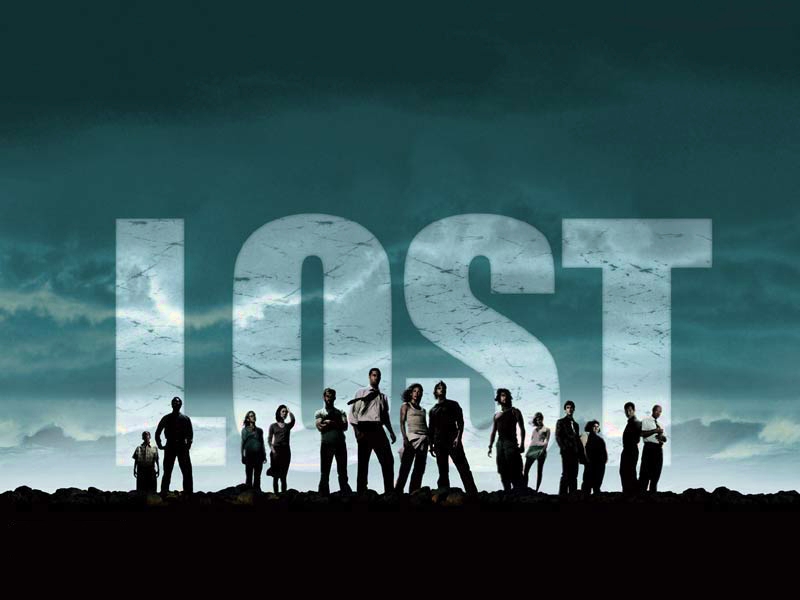
Oddly enough, on my own time, I happen to be watching another show that has a storyline involving torture. I'm a bit late in the game to the TV show Lost, and I'm watching a few episodes with torture scenes from season 2. And there's a difference. Maybe it wouldn't have been enough to keep my husband watching, but Lost is a character-driven show. The characters had different reactions to the idea of torture, and both before and after the scenes, they had to deal with what torturing someone did to their soul, and then they had to decide if they would ever torture anyone again. There was no cookie-cutter answer. Again, I didn't watch to see what happened, but it would have been very odd for anyone on The Event to take time for deep introspection. It's an action oriented show. The most they would do is stare off into the distance, shake their head sadly and continue blundering blindly down their chosen path. (Simon is the exception to that, and he was by far my favorite character.)

Sawyer
Sawyer is my favorite character on Lost, and I can tell you exactly why. Sawyer has a moral code. You don't see it at first, and he does a lot of things that would be reprehensible in anyone else. OK, so they are reprehensible when he does it too, but there is a line in the sand that he will not cross, and he knows exactly where it is. There are also lines he's crossed before and had to live with the consequences, and so he won't cross them again. He's an anti-hero.

(Again, I just finished season 2, and with the whims of television writers being what they are, I have no idea what Sawyer turns into by the end of the show, but I've got my fingers crossed.)

So today I have been thinking about my character's moral codes. What drives them morally? Truth? Justice? Family? Love? Duty? Do they expect more from themselves than they are willing to give? At some point, a hero will sacrifice something they desperately want because they will not cross a moral line. And they will be forced to cross lines they never thought they would. (Your people are torturing my family, so I am going to torture you until you promise to take me to them...) But IMO, these choices only work when the writer sees them for what they are--character defining moments. Not action scenes.

What are your thoughts about the moral codes of characters? Are anti-heroes more sympathetic than archetypal heroes? Have you ever lost interest in a character when they deviated from their moral code?