Monday, April 8, 2013

G is for Growth

Characters have to grow. The story should change them in some way. So does that mean that at the beginning of the story the character has to be weaker in order to grow into someone strong? Do they have to be grumpy, or evil, or annoying, or selfish, or vindictive, in order to grow into someone better?


Also, they can't be too weak or evil or whatnot, or else the readers won't like them. That's kind of the kiss of death for a reader, or editor (or so I've heard. I happen to like unlikable characters. But then again, I'm weird.)

Character's have to be likable. Yet, characters have to grow.

Which rule is more important?

These are some guidelines I've come up with that have worked for me.

 1. Make the character real. 
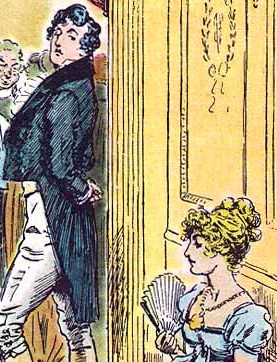
Real people are obnoxious. They are selfish, and weak, and creatures capable of change.

Mr. Darcy really is a proud boring snob at the beginning of Pride and Prejudice. Austen allows us to see him change, and doesn't hold back Lizzie's opinions of him. I couldn't stand Mr. Darcy at the beginning of the book. My opinion changed as he did.

Eugenidies is not perfect either, but Megan Whalen Turner allows us to witness his growth. The story changes him, and we stick around because he's in pain during the process, and therefore worth our sympathies. Don't be afraid to make a character imperfect. Imperfection is beauty!

2. Make them just likable enough to root for them.

Hugh Jackman in character in a boxing pose in front of a large boxing robot in a similar pose. There is a line inside every character that separates a good guy you root for, and a bad guy you want destroyed. It's like in the movie Real Steel. Hugh Jackman's character was about the worst human being I've ever seen as a hero. He's selfish, and the world's worst parent. The first half of the movie, I could not stand him.

 But then, we come to the line in the sand of what kind of a human being he would be. His child is in a precarious position, and perhaps it's testament to how well the writers did their job, but since they showed him being such an uncaring self-absorbed shmuck you have to wonder if he's even going to bother an attempt to save his own child's life. But he does. Once you see where his line in the sand of being a good person is, then you start to root for him. And because you like him, you believe him, when he starts to change.

Now I very well might have walked out of the theaters earlier on, and I'm sure there were other audience members who did just that, but that's the risk you take when you write characters that change. The bigger the change, the higher the cost, but also the higher the reward. I loved that character by the end, and creating a character that the audience hates and then grows to love, means that you've created a character that the audience won't forget.

3. Real  characters change slowly. 

You might be tempted to start right at the line when the character become likable. But real people don't change overnight.  A character has to fight a small dragon before the audience will believe they can fight an army of dragons.  It's the small challenges, even if it's a challenge that they fail to win, that teaches a character what they need to do the next time up at bat.  Real characters take the time necessary to learn from experiences in order to move on to the next challenge.

 Because of this, readers might not even notice the character has changed.
Cover of the novel, showing the title in white text on a black and grey background, above a depiction of a gold pin featuring a bird in flight, its wings spread and an arrow clasped in its beak.

 In The Hunger Games Katniss changes
                              SUPER SSSLLLOooooooooOOWWWLLLYYY.

In fact, I'm not a hundred percent sure she changes at all. She starts the same way she ends, as an amazing survivor who wants to protect innocents. If she changes at all, it's in learning to trust/love Peeta, and she does that at her own expense. She stubbornly clings to her self-reliance as if she were about to die at any second. I wonder why. Because of that, she's not really the first character I think of as someone who grows. She's more a character who ADAPTS against her will. During the course of the series, she grows in power, and celebrity, but at the end, she has thrown away everything about her that changed. From the first word to the last word, she's the same character.

I love her for that. A character doesn't need to be massively changed throughout a story in order for the story to change the reader. The character only has to be real. So don't change just for the sake of changing.

Be true to your characters, even if they aren't perfect yet.

Perfect people are boring.

4. Refer to the beginning at the end. 
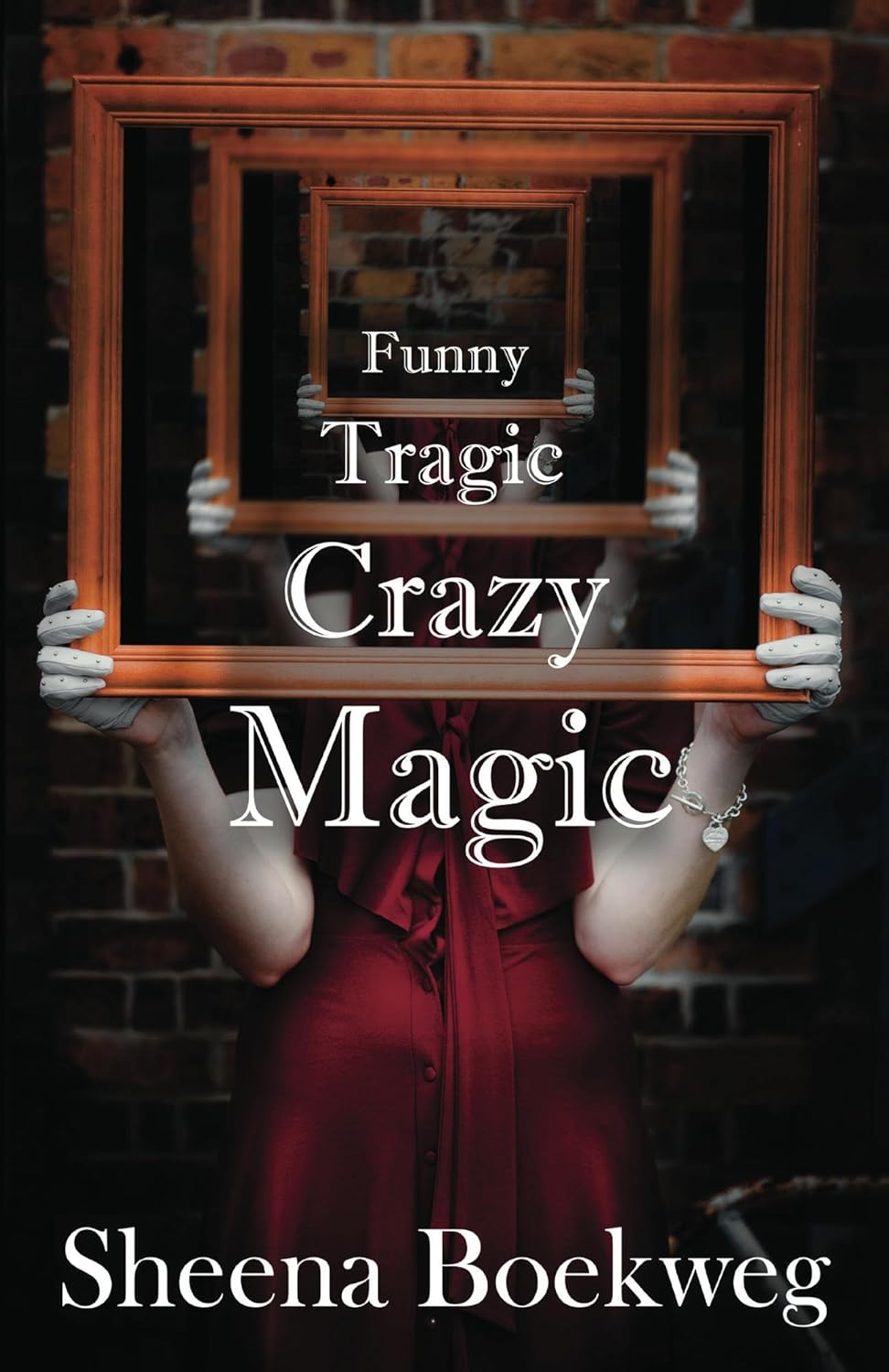
This is probably just a personal preference, but I LOVE it when a story refers to the beginning at the close.( See what I referenced there?) If you've read my book, you'll notice I do just that in Funny Tragic Crazy Magic. Available here. Shameless plug.

Referring to who the character is at the beginning, when the character is at the end, brings a completeness to a story.  Wheel of Time, refers often to the sheepherder Rand once was. Samwise Gamgee wonders at the peak of Mount Doom about who he'd be if he hadn't left the shire.

Referring to the past is a natural thing that all real people do.

Nelson Mandela said,

 There is nothing like returning to a place that remains unchanged to find the ways in which you yourself have altered.

Use that in your writing. Returning to the beginning can tie everything together. It's also a great way to show change.


I think character growth, as it is with most things, is about balance and doing what is right for your story. Trust your own story, and trust your characters enough to let them evolve.

~Sheena

Saturday, April 6, 2013

F is for...Becca Fitzpatrick

Any other Patch fans out there?  C'mon, I know there are.  Who wouldn't love a bad boy in black with the whole 'fallen angel in search of self-realized redemption' complex going on?


Nora and Patch's story in Hush, Hush isn't the reason I seriously love Becca Fitzpatrick, though.  I'm crazy impressed with anyone that can dedicate 5 years to a single book, never giving up on her dream.  That's an intense dedication, and I only hope I'll be able to hold on to the same drive for my own books.  In fact, if you have a second, check out her web site, here, and read about the story behind Hush, Hush.  She wrote the first draft in a matter of weeks, but was really unhappy with most of the story.

What's a newbie writer to do when she hates most of her story?  Shelve it for a few months.  Then come back and cut all but the first three chapters.  Then shelve it again.  How disheartening, right?

Finally, months after initially writing the first draft for Hush, Hush Becca Fitzpatrick figured out the last piece of the puzzle.  She'd struggled from the beginning with what Patch's secret was going to be, and with that secret finally revealed, the story opened up.

Now that is what I call extreme editing.  She cut everything but the first three chapters.  I don't know what the story was before she made that call, but I can't imagine Vee being a backstabbing, fake best friend, and I can't picture Patch as anything but a fallen angel.  Still, to cut so much of a story must have been heartbreaking.

Ultimately, Becca Fitzpatrick is a great example of sacrifice and dedication, putting the story before herself.  It's easy to fall in love with every word you write, but if you want to have the best possible story on the page, it's important to remember sometimes you have to delete paragraphs, pages, chapters, even entire sub-plots to make room for the true story.  That way, when you start querying agents, you're giving them the best you've got.  Who knows, maybe you, too, will end up with a four book deal and a movie optioned by LD Entertainment.

Friday, April 5, 2013

E Is For...The End


If you are following both The Prosers and my personal blog, you should know that although the beginnings are similar, the 2 posts are very different, so keep reading!

I'm a great starter. A finisher? Not so much.

I became aware of the direness of the situation when Sheena, Sabrina and I finished the rough draft of Ironwood, and for some reason, I was completely pumped up about starting the sequel--immediately. For various reasons, which probably included sanity, Sabrina and Sheena were not ready to dive right into writing another book, and there was only so far I could go without their input (to be precise, I could write one chapter. One stuffed full of stuff chapter.)
  
In an effort to direct all that energy somewhere, I brainstormed a whole new story, which became novel number 11 on my list of unfinished manuscripts. I was surprised how much I liked the idea I came up with. Usually I allow my ideas to start more organically, but it was almost like this one had been in my head all along, waiting for me to notice it. I was having a fantastic time plotting and developing characters when I stumbled upon some correspondence from several years ago. I was struck by one thing--my writing career hasn't really changed much over the years, except that my stack of rough drafts has grown exponentially.

We aren't being true to our stories if we never get them into good enough shape to share them with the world. Besides, I'd be lying if I said I didn't hope to make a few dollars at this hobby of mine. How about you? Where is your novel on the journey to the finish line? Take this little quiz and find out:

The Finish That Novel Quiz by Melanie Crouse
Your score for this quiz is the number which most accurately reflects your book's current condition:

1. I have lots of ideas floating around in my head, but I never seem to find the time to turn them into a novel. Someday I'm going to write one though.

2. I'm in the middle of writing a book.

3. I've written a manuscript, but it needs so much work, I've put it away for now. It's resting.

4. I get lost in the maze of editing. When I first wrote it, my book seemed nearly perfect, but once I sent it out to be critiqued, I became very discouraged with how much there was to do.

5. I polished that manuscript until it gleamed. And then I let it sit there. I really want to go the traditional publishing route, but it seems impossible.

6. I've looked at the pros and cons of traditional publishing versus self-publishing, and I've made my decisions. I've got a plan, and I'm moving forward in a systematic way. Meanwhile, I've started writing something else.

7. It's been published! Now I have a marketing plan, and I'm out there. I never thought I'd end up being a salesman, but apparently that's what waited for me at the end of this road.

Scoring:
1=Just beginning.
Wherever you are on the list, stop fretting about getting to 7. Your goal is simply to move to the next level.
7=The End! Congratulations! but don't stay here. I hope you are already lower on the list with another book. The End is no fun all by itself.

I hope you can use this quiz to help you move forward. This is how it helped me:

First, I made a list of all my rough drafts. That was harder than you might have thought. One book was stuck in a folder of another book's stuff. One book I apparently wrote three times. (Completely different versions. Seriously.) You can see my complete list here. Then I committed to move 2 of my novels to the next stage, with 2 more on the backburner to move forward when the opportunity presents itself.

Where are you and your novel on your journey?

The End 

Thursday, April 4, 2013

D is for Discworld


Finally, it's my turn! And for my first A-Z post, I'm writing about my favorite all-time book series: Discworld by Terry Pratchett. Here are the reasons that these are some of the most awesome books ever.

The Characters

I think one of my favorite things about Sir Terry's characters are that they resemble actual people rather than the general tropes of fantasy. No Mary Sues here. And the secondary characters are wonderfully developed.  There are four main groups of characters that the books follow (Rincewind and the wizards; Granny Weatherwax and the witches of Lancre; Death and his granddaughter Susan, the City Watch), with various characters popping up in every novel.

Commander Sam Vimes of the City Watch is one of my very favorites. I even named my kitten after him:


Close resemblance


The Humor

Pratchett’s humor ranges from dry to silly to pure satire. Rewards are given to those who pay attention. For example, a joke first mentioned in the early part of the book may be resurrected 100 pages later. For the most part, the humor is situational and builds over the course of the story, which to some degree makes quoting hard. Here are a few of my favorites:

“Bad spelling can be lethal. For example, the greedy seraph of Al-Ybi was once cursed by a badly-educated deity and for some days everything he touched turned to Glod, which happened to be the name of a small dwarf from a mountain community hundreds of miles away who found himself magically dragged to the kingdom and relentlessly duplicated. Some two thousand Glods later the spell wore off. These days, the people of Al-Ybi are renowned for being unusually short and bad-tempered.”
-Witches Abroad

“Artists and writers have always had a rather exaggerated idea about what goes on a witches’ sabbat. This comes from spending too much time in small rooms with the curtains drawn, instead of getting out in the healthy fresh air.”
-Witches Abroad
::surreptitiously gets up and opens curtains::

“Drinking in The Drum has been likened to diving in a swamp, except in the swamp the alligators don’t pick your pockets first.”
-Interesting Times

"King Verence was very keen that someone should compose a national anthem for Lancre... Nanny Ogg figured that it would be easy money because national anthems only ever have one verse, or rather, they all have the same second verse, which goes, "nurr... hnur... mur... nur nur, hnurr... nur... nur, hnur" at some length until everyone remembers the last line of the first verse and sings it as loudly as they can."
-Carpe Jugulum 


The Footnotes

This is one of my favorite parts about reading a Pratchett novel. Frequent readers of the blog (all three of you) may note that I copy this technique in my posts, because it's awesome. Here, again are some examples:

Talking about one of the witches (Witches Abroad):
“People like Nanny Ogg turn up everywhere. It’s as if there’s some special morphic generator dedicated to the production of old women who like a laugh and aren’t averse to the odd pint, especially of some drink normally sold in very small glasses. You find them all over the place, often in pairs.*
 *In front of you in any queue, for a start.” 

Discussing chaos theory  (Interesting Times):
“And instead of getting on with proper science* scientists suddenly went around saying how impossible was to know anything, and that there wasn’t really anything you could call reality to know anything about.

*Like finding that bloody butterfly whose flapping wings cause all these storms we’ve been having lately and getting it to stop.”

When the Archchancellor of the Unseen University (a school for mages) wants to have a meeting (Lords and Ladies):
“A less direct Archchancellor would have wandered around looking for everyone. His policy was to find one person and make their life difficult everything happened the way he wanted it too*.”
 *A policy adapted by almost all managers and several notable gods.”


All that sounds great! What novel should I start with?

I’m a firm believer in reading series in order. But the thing is, I don’t like some of the earliest Discworld books. They’re too dense for my liking (and Rincewind is not my favorite character). You miss some context from starting a little later in the adventures of a particular group of characters, but not too much. I recommend starting with the slightly later books, like Guards! Guards! (#5), Witches Abroad (#12), or Sourcery (#5).  My personal favorite Discworld books are Men at Arms (#15), Hogfather (#20), Night Watch (#29) and Monstrous Regiment (#31).

There's a (reverse) chronological list of books at Terry Pratchett's website.  Go on, give one a try. Guaranteed you'll like it or your money back!*


*But only if you go to a library and don't put any money down in the first place. 


Wednesday, April 3, 2013

C is for Contests

Seven Reasons Why Contests will Improve your Writing, Increase your Productivity and help you Find the Motivation you've been Missing.


Pick your poison, writing contests are everywhere. One line pitches to full length novels. With the internet, there's a contest to fit any genre and any taste. Contests can be a great way to boost your writing and broaden your skills, and I've got seven reasons why straight ahead.

But, before we dive in, I'd better give you the warning spiel. If you're entering the world of writing contests, make sure you pick your poison wisely, little grasshopper. Do your research into any contest you may be entering. Look into the sponsors and their credentials. Consider what rights and responsibilities they, and you, will retain when it's all over. It may save you a lot of headaches in the end.

And now, on to:
 
Seven Reason Why You Should Be Entering Writing Contests

Tick Tick Tick - Is That a Deadline I Hear?
Admit it, having a deadline is a great motivator. And having one set in stone  - by someone else - that you can't fudge - is even better. Committing to a contest pushes you to prioritize your writing. And that, my friend, will make you write more. And we all know that more writing tends to improve our writing. Bonus!

GPS for the Writer's Soul
Many writing contests have some theme or quote or idea as a jumping off place. (On the Premises is a good example of this). Sometimes half the battle of writing is finding that spark to get you thinking. Well, here's your spark. Themed contests may also help your imagination flow in new ways, opening you to different perspectives and new writing experiences.


Word Bean Counter
 Micro? Flash? Short? Novel? Each length has its own pacing and flow that makes a story work well. Experimenting with different lengths is a great way to understand your writing. You may be surprised at the insights you discover about your strengths an weaknesses. Need I add that shorter lengths will force you to learn how to tighten your writing?


UnCovered!
Many contests, particularly those hosted on writing websites, have an element of peer review or critiquing. This is a fantastic opportunity! You have the chance to see how a diverse audience views your work. Always consider everything people say, and not just about your own work. Critiquing others is just as useful. As you go through this process of give and take, you'll pick up so many valuable insights.


Finish It, Already
Quite frankly, contests are about the only thing that gets me to 'The End.' I could fiddle forever, changing this word, or that phrase and still never be satisfied. Are you the same? A contest forces you to 1) finish and 2) admit you're finished. That alone, for me, is worth the price of admission


Adrenaline Rush
There's nothing quite like the maniacal surety as you write that your story is the most awesome thing ever to come into existence. The butterflies as you hit send. The pins and needles of waiting. And the roller coaster as the results come in. Win or lose, the ride is addictive.
 
Fabulous Prizes
Okay, of course, the best reward is finishing, the camaraderie of fellow participants and getting those invaluable reviews. But, in  your heart of hearts, don't tell me you haven't secretly dreamed of Fame, Glory, and/or Monetary Gain. Also, ARCs, professional crits and all that other good stuff. Oh, aren't I the materialistic one to actually admit that on paper pixels?


Anyway, just a few reasons. But, if you haven't given contests a try, or if you're only an occasional participant, I'd recommend giving it a few more minutes of your consideration. You might just find something there worth writing about.

~Susan

Tuesday, April 2, 2013

The Key to Characterization: B is for Backstory

Picture from stock.xchnge
Every time a character just doesn’t feel right or isn’t developing or I just can’t figure out how to make him/her work, I always find the answer in developing the character’s backstory.

Backstory is the history of the character or everything that has happened to the character before the story begins.  Sometimes it is necessary to go back even further to the lives of the character’s parents, grandparents, etc.  For me this is the most crucial step in characterization.  If I don’t know where a character has been, I don’t know where that character is going.   I always find that if I don’t have a good handle on a character, I need more backstory.

I watched a documentary not too long ago, Nova's Mind of a Rampage Killer, which examined mass shootings and what could cause some individuals to go on these murdering rampages.  And while there is no easy answer, there certainly were some common experiences of neglect, abuse, exclusion, and extreme bullying.  None of these killers had a happy, carefree childhood.  There were some biological similarities as well shown by brain scans and genetics.  Ultimately the take home message I got, was that an individual’s personality is formed by a complex interaction between their genes (nature) and life experiences (nurture).   I think it’s about 50:50 on the nature vs. nurture debate.  But certainly their life experiences led them down that path.

Think about how you get to know a person.  I know that I tend to ask questions about a person’s past, where they grew up, how many siblings, birth order, high school experiences, etc.  I always seemed to delve into someone’s personal history if I really want to understand who they are.  Their favorite color and food doesn’t tell me as much as whether they were popular in high school or an only child.  On some level, I think we all can see patterns in these life experiences that make us who we are.  And characters will be more believable if readers can see similar patterns in them.

I know that I tend to create pretty extensive backstories for my main characters, but I only put enough on the page so the reader can understand the characters’ motives.  I believe that what is held back helps to create a depth to the characters.  The reader can sense that there is more to the character than what is on the page, and that makes the character more complex and more interesting.  What you don’t show but know is just as important as what you do show.

So delve a little deeper into your characters’ backstories.  Your characters will be richer for it.

Want more advice on creating backstories?  Here are some awesome links.


~MaryAnn

P.S  Tune in tomorrow for our continuation of Blogging from A to Z.  Our fabulous Susan will be blogging about C.  I can’t wait to see what she does.

Monday, April 1, 2013

...And Blast Off!


Do you want to know what my dreams look like?

They look something like this.


Or maybe...


Funny Tragic Crazy Magic

List Price: $13.99 

Authored by Sheena Boekweg
Edition: First EditionKeep your head down.
Don't make waves.
Don't let anyone know you're a freak.

LARISSA ALVAREZ is a witch. Magic was useful enough to make her pretty,
but beyond transformation runes, Larissa has ignored her mom's pleas to
learn about her magical heritage on the grounds that it's just too weird.

But when her family is killed, and the powerful book of runes Larissa
was supposed to inherit disappears, she realizes she's not going to
survive without magic. Worse still, she's falling in love with her only ally,
her best friend Joe, who has a secret that could kill them both.

Now magic is the only way she can reclaim her heritage and save the
boy she loves. Larissa dives into the world of magic she's always ignored
and finds herself caught in the middle of an age-old war between
Witches and Mages.

She may be poorly trained.
She may not have anyone to trust.
But it's time to start making waves.


Publication Date:
Apr 01 2013
ISBN/EAN13:
1482793792 / 9781482793796
Page Count:
306
Binding Type:
US Trade Paper
Trim Size:
5.06" x 7.81"
Language:
English
Color:
Black and White
Related Categories:
Fiction / Romance / Fantasy


But mostly...


They look like this.


Funny Tragic Crazy Magic is now available here, here, and here. And now on goodreads.
~Sheena

p.s.
Next week, I promise to talk about something other than my book. Like writing stuff. For realsies. And thanks A-Z Challenge people, especially Arlee Bird for starting up the challenge. I'm looking forward to meeting so many new people!